

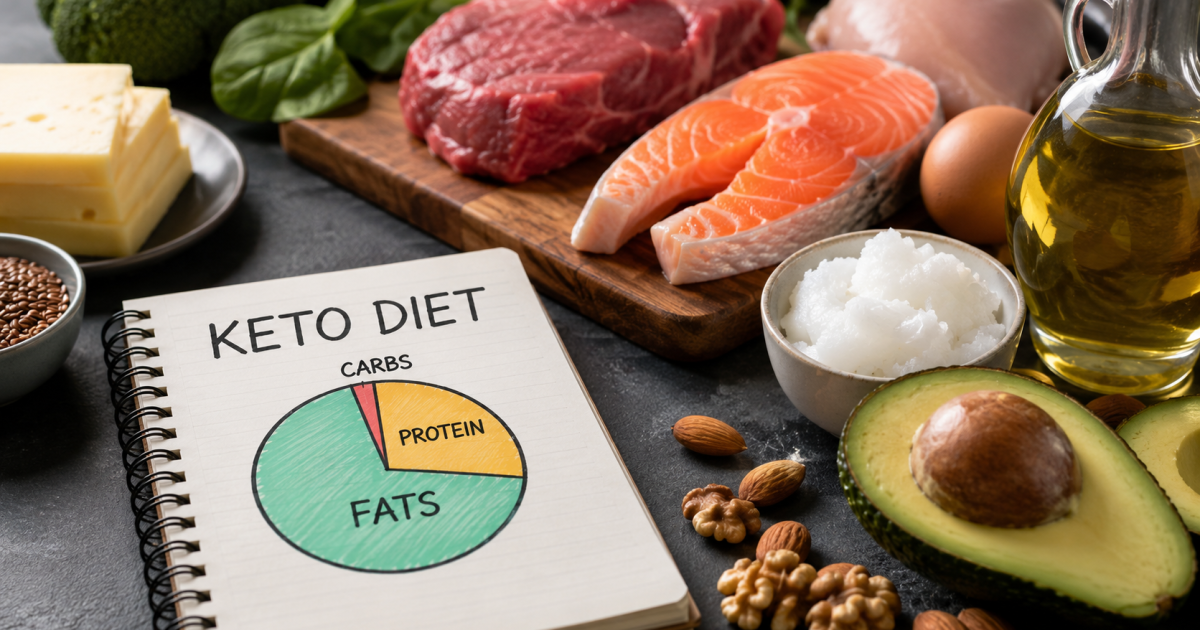
Much of the keto diet’s popularity has been built on a seemingly simple and enticing idea; If cancer cells consume glucose extensively, depriving them of carbohydrates and forcing the body to burn fat may limit their energy sources and slow down their growth.
The diet, which was originally developed to help control some cases of epilepsy, has spread to many areas, including weight loss, neurological diseases, and cancer, but scientists have not yet reached a unified picture of its effect on the various organs of the body.
A recent study conducted by researchers from the Massachusetts Institute of Technology and published in the journal Nature reveals that the same diet may leave two opposite results within two adjacent parts of the digestive system. It helped increase small intestine tumors in mice genetically susceptible to cancer, while continuing to reduce the formation of colon tumors.
One diet and three combinations
The researchers divided the genetically modified mice susceptible to developing intestinal tumors into three groups; One received a regular diet, the second ate a high-fat, low-carb ketogenic diet, and the third ate a high-fat, high-calorie diet commonly used to induce obesity in experiments.
The results showed that the mice that ate keto were more likely to develop tumors in the small intestine compared to the group that ate the regular diet.
Although her weight did not rise to the level of obesity, her tumors appeared at rates that approached – and sometimes exceeded – the rates recorded in mice that ate the obesogenic diet.
Here lies one of the important messages of the study: Maintaining a low weight does not necessarily mean that the diet does not leave profound effects on cells and tissues, as food can change metabolic pathways and cell activity even in the absence of apparent obesity.
The result is reversed in the colon
On the other hand, the keto diet replicated a finding shown in previous research; It limited the growth of colon tumors in mice. Thus, the diet itself became associated with an increase in tumors in the small intestine and a decrease in the colon.
This paradox warns against treating cancer as a single disease that responds to food in the same way. Tumors vary depending on the organ, cells, and surrounding chemical and microbial environment.
The small intestine also differs from the colon in its functions, method of absorbing nutrients, and composition of stem cells and microbes, which may partly explain the difference in response, but the researchers stressed that they do not yet know why the diet produced two opposite results to this extent.
It was widely believed that ketone bodies, especially beta-hydroxybutyrate, were the main factor behind the potential effect of diet on cancer.
However, the researchers found that increasing or disabling the production of ketones did not significantly change the growth of intestinal tumors, nor did changing the cells’ ability to consume them lead to the expected result. They concluded that ketones were more of a companion element, rather than the main driver of what happened.
Fat is the engine
Instead of ketones, the results pointed to the process of burning fatty acids within intestinal cells for energy, a process known as fatty acid oxidation.
The large influx of fat activated proteins called PPARs, and these proteins then sent signals that prompted the intestinal stem cells to multiply at a faster rate.
Increasing the activity of stem cells helps the body in normal conditions to repair the intestinal lining after injury or inflammation, but the increase in the number of active and dividing cells also increases the number of opportunities during which mutations or changes may occur that lead to the formation of tumors.
Thus, the same activity has two aspects: It supports tissue regeneration on the one hand, but it may increase the possibility of cancerous transformation when it becomes excessive or occurs in an organism with a genetic predisposition to the disease.
Does keto cause cancer?
The study does not provide evidence that the keto diet causes cancer in humans; Experiments were conducted on genetically modified mice that have a high susceptibility to intestinal tumors.
The researchers explained that the closest human condition to this model is familial adenomatous polyposis, a rare genetic disorder that greatly increases the risk of forming tumors in the digestive system.
It is also not possible to equate all forms of keto with each other; A diet heavy on saturated fats and processed meats is not the same as a diet containing fish, olive oil, nuts and low-carb vegetables.
Knowing the influence of type of fat, duration of diet, age, and genetic condition requires long-term human studies before conclusive recommendations can be issued.
Ketone supplements are not a substitute
The results suggest that drinks and supplements that raise blood ketone levels do not necessarily replicate the benefits or risks of the diet; Because the observed effect came from intestinal cells dealing with dietary fats, and not from the rise in ketone bodies alone.
This distinguishes between entering a state of ketosis through a high-fat diet, and taking a supplement that raises one of the compounds in the blood without causing the same nutritional and metabolic transformations.
Diet is not a cure for cancer
The results do not mean that every person who follows keto will develop a tumor, nor does it mean that the diet’s success in reducing colon tumors in mice allows it to be used to treat colon cancer.
Cancer requires medical treatment based on the type of tumor, its stage, and the patient’s condition, and it is not permissible to replace surgery, medications, or radiotherapy with a diet whose benefit has not been proven clinically.
The main message of the study is that the relationship between food and cancer is more complex than the idea of “starving the tumor,” and that what benefits one tissue may harm another tissue, and what works in experimental animals may not transfer to humans with the same result.