

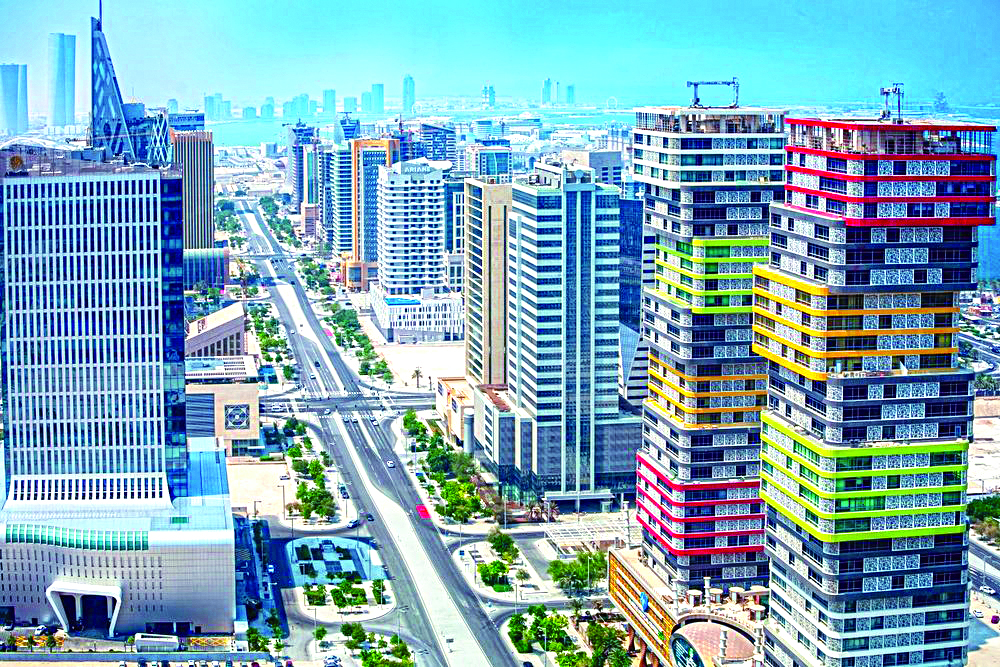
The real estate market in the State of Qatar maintained its stability during the second quarter of 2026, supported by a jump in home sales of about 23.6% compared to the first quarter, and continued gains in the office space sector in distinguished areas. The sector has also demonstrated substantial resilience amid increasing regional uncertainty and geopolitical pressures.
ValuStrat, a real estate consulting group specializing in real estate evaluation and market research, stated in its report on the real estate market in Qatar for the second quarter of 2026 that statistics indicate that the supply of residential apartments and villas exceeded 406,000 units by the end of last June – and an estimated 4,600 residential units are scheduled to be delivered in the second half of this year.
Value Strat confirmed that residential rental prices in Doha witnessed a slight decline during the first six months of 2026, and residential sector transaction activity and buyer confidence witnessed a strong recovery, as rental performance in various sectors recorded a contraction in profit margins, as a result of landlords offering incentives and flexible contractual terms to attract tenants by offering longer grace periods and packages that include utility costs.
Residential real estate prices
The report indicated that the Residential Real Estate Price Index (VPI) remained generally stable at 97.8 points (a decrease of 0.2% compared to the previous quarter), with slight changes recorded in capital values throughout the year. The apartment price index stabilized at 98.9 points (unchanged compared to the previous quarter or year) with an average price of 10,460 riyals per square meter, while the villa price index stabilized at 97.5 points (unchanged compared to the previous year) with an average price of 5,675 riyals per square meter.
Market recovery and mortgage boom
The volume of residential real estate sales transactions increased by 23.6% compared to the previous quarter (and by 15.8% compared to the previous year) to reach 755 transactions, and the average transaction value increased to 3 million riyals (an increase of 4.5% compared to the previous quarter, and 8.2% compared to the previous year). The value of mortgage transactions jumped by 61% year-on-year to reach 16 billion riyals, reflecting continued confidence among buyers.
Residential rentals
The average monthly rent required in the distinguished areas stabilized at 8,100 riyals (an annual decrease of 4.5%). Actual rents have witnessed a slight decline, as landlords and real estate developers have offered benefits to tenants by offering them longer grace periods and packages that include utility costs. Overall returns remained attractive, averaging 5.6% citywide (8% for apartments and 4.4% for villas).
Housing supply
The total supply of residential units reached 406,097 units following the completion of 355 apartments during the second quarter. An estimated 4,600 residential units are scheduled to be delivered in the second half of 2026, although the delivery of more than 600 units in Lusail City has been postponed to 2027, indicating a deliberate pace in deliveries.
Office and space rental
The office rental value index reached 96.2 points (-0.6% QoQ). Market performance remained mixed as Class A office rents remained stable (+1.6% y/y) led by Lusail City (+4.5% y/y) at SAR 115 (sqm) per month, while Class B and C office rents decreased by 2.1% q/q (-3.4% y/y) to SAR 66.6/sqm per month, as tenants focused on utilizing space efficiently.
Retail and hospitality sector
Average shopping mall rents decreased by 1% QoQ/YoY to SAR 177/sqm. While the hospitality sector faced major challenges with a decrease in the number of visitors (-45% on an annual basis), which led to a decrease in the hotel occupancy rate to 51.9% (-26.3% on an annual basis) and a decrease in available room revenue to 197 riyals (-38.3% on an annual basis), despite the seasonal increase in visitors to the GCC countries (+11% on a quarterly basis).
Industry and logistics sector
Rents for non-refrigerated warehouses remained stable on a quarterly basis at 37.4 riyals/sqm (+1.4% y-o-y), while rents for cold stores stabilized at 40 riyals/sqm. Demand for chartering remained mostly local, supported by government initiatives despite maritime logistics disruptions.