

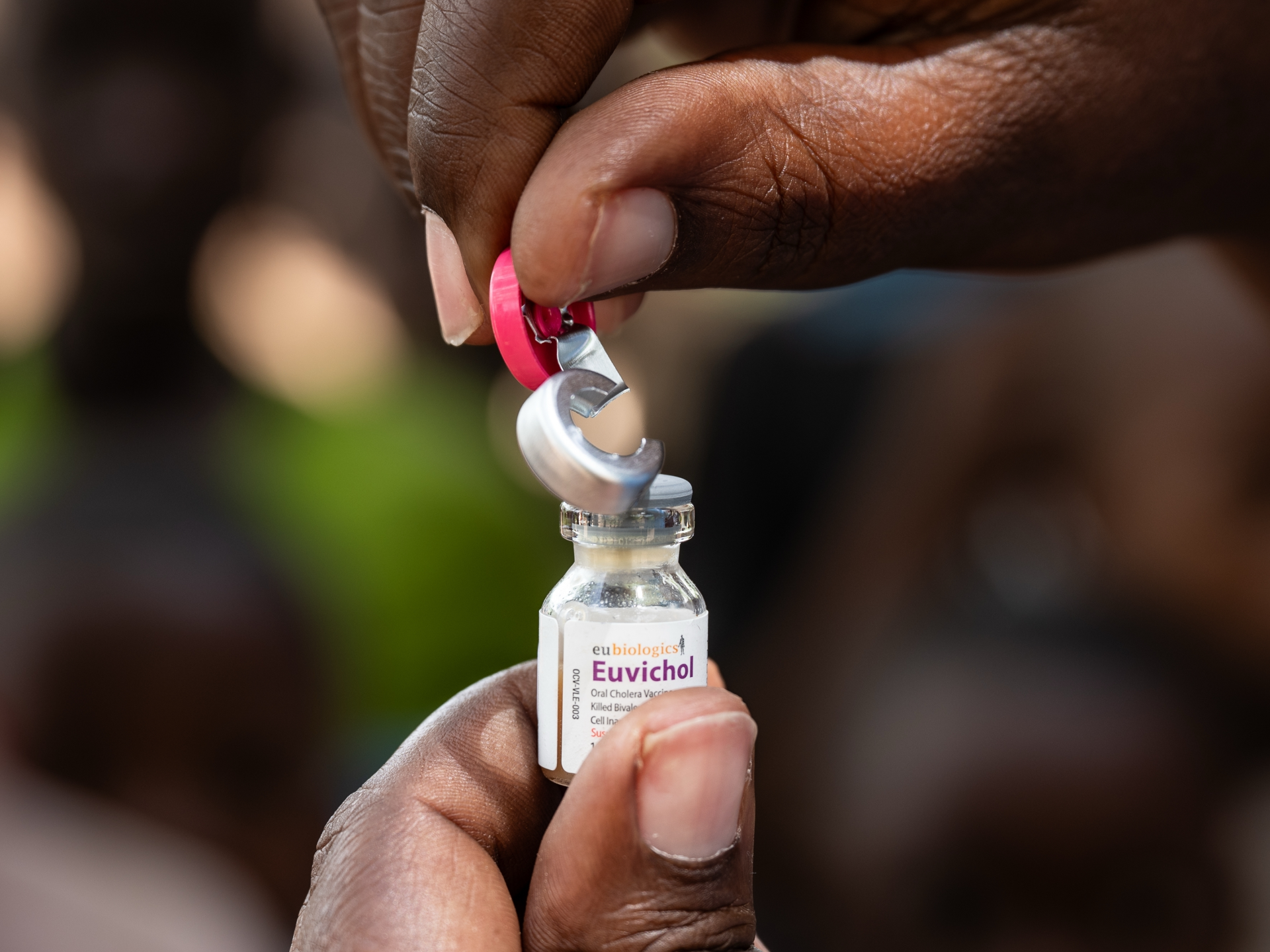
The United Nations Children’s Fund (UNICEF) has warned of the rapid spread of cholera in West and Central Africa, saying it is affecting six countries and putting millions of children at increased risk. It has called for urgent additional funding of $15 million to expand the response over the next six months.
The organization stated, in a statement issued yesterday, Wednesday, that seasonal rains, floods, population displacement, and cross-border movement accelerate the spread of this preventable disease, threatening the lives of children and the communities in which they live.
According to the statement, the disease is spreading rapidly in the Democratic Republic of the Congo, Congo-Brazzaville, Nigeria, Chad, Cameroon and Central Africa.
UNICEF explained that heavy floods raise the risk of transmission by contaminating water sources, damaging sanitation infrastructure, and restricting access to the most vulnerable communities.
Children are at the forefront of injuries
The organization said that children constitute a high percentage of those infected in these countries. In Central Africa, children under the age of 10 represent 44% of reported cases, and in Chad, about two-thirds of infections are among children under the age of 15, while the average age of patients in Cameroon is only 10 years.
UNICEF reported that Nigeria is currently recording the largest reported cholera outbreak in the region, with more than 50,000 cases and 338 deaths since the beginning of this year across the country, with a major outbreak in Borno State.
As for the Democratic Republic of the Congo, it recorded more than 30,400 cases and about 700 deaths, which is the highest death toll among the affected countries, according to the same statement.
The statement quoted UNICEF Regional Director for West and Central Africa, Gilles Vagnino, as saying, “This outbreak is no longer confined to borders. It is moving along shared rivers, trade routes and population movements, putting millions of children at risk. Every new infection is a reminder that millions of children are still deprived of one of their most basic rights: safe water.”
“We know how to stop cholera. What we need now is urgency, investment and regional solidarity to act before more children lose their lives to a completely preventable disease,” he added.
Response and financing
UNICEF said that it and its partners are supporting, in cooperation with the authorities and civil society, efforts to expand access to safe water and sanitation, enhance disease surveillance, provide basic health supplies, support cholera vaccination campaigns, and mobilize communities to reduce transmission.
She indicated that she is working with countries, regional entities, and partners, including the World Health Organization and the African Centers for Disease Control and Prevention, to strengthen cross-border coordination along the main transmission routes, stressing that coordinated action helps save lives, but sustainable investment in water, sanitation, hygiene, and vaccination is crucial to stopping recurring outbreaks.
The World Health Organization stated in its epidemiological update on the cholera outbreak in several countries, issued on June 30, that Africa recorded 61,888 cholera cases and 1,230 deaths in 16 countries during the period from January 1 to May 31, with a mortality rate of about 2%.