

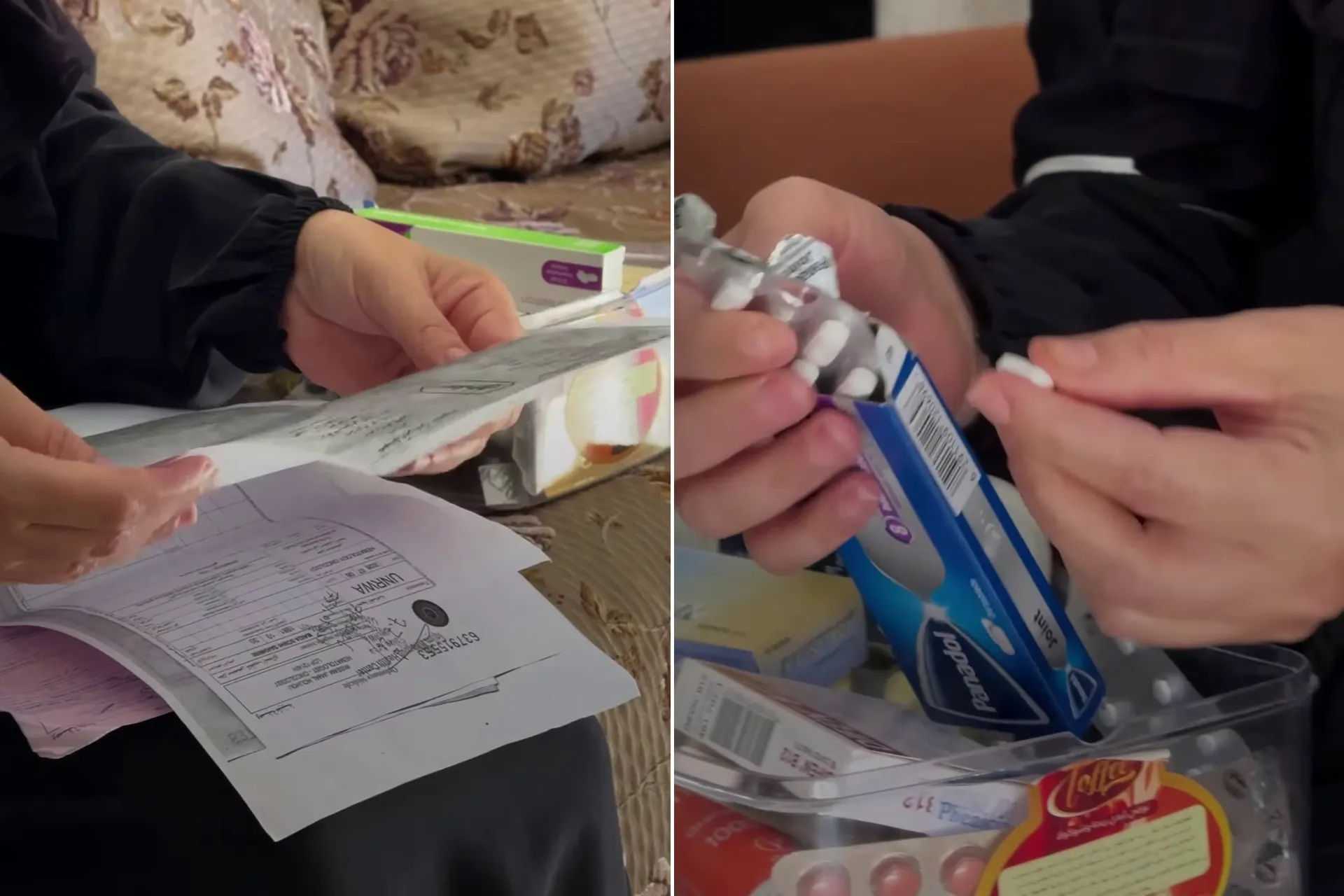
Maeda Sakhnini, a forty-year-old Lebanese patient suffering from cancer, suffered severe complications following the second dose of chemotherapy. She suffered swelling of the face and body, severe redness, and blurred vision, which required her to be admitted to the emergency department more than once, in an experience that raised her questions about whether the symptoms were caused by the treatment itself or by a problem with the quality of the medication.
Sakhnini explained that the symptoms continued between 10 and 12 days after the treatment sessions, and that her doctor attributed what she was exposed to to chemotherapy, but the circulation of information about cancer medications that may not meet the required standards increased her fears, according to a report received on Al Jazeera’s digital platforms.
A debate arose in Lebanon about the fate of 6 types of cancer drugs in circulation, amid questions about their quality, effectiveness, and manufacturing sources, before the Ministry of Health referred the file to the Cassation Public Prosecution for investigation.
The patient called on the authorities to tighten control over cancer medications, and to ensure that the patient receives the treatment prescribed by the doctor, and in the event of replacing it with another drug, to clarify the source of the alternative, its composition, and its effectiveness, considering that simply talking about the possibility of the presence of an incorrect drug adds a psychological burden to the patient.
In a related context, the doctor and member of the Health Committee in the Lebanese Parliament, Abdul Rahman Al-Zari, explained that the state has committed for years to providing some treatments for incurable diseases according to protocols prepared in coordination with oncologists, while the manufacturers and sources of medicines differed according to the results of the purchase tenders.
Al-Zari called for a distinction between medicines imported by the state through official channels, which he described as suitable and of good quality, and medicines that reached the Lebanese market through unofficial means and at lower prices, stressing that the quality or effectiveness of medicines that do not pass the approved regulatory processes cannot be guaranteed.
Warning from bag dealers
He pointed out that the escalation of talk about cancer drugs that may not meet the conditions prompted the Parliamentary Health Committee to schedule a session to listen to the Minister of Health, within the framework of the House of Representatives’ oversight role over files related to citizens’ health.
On the other hand, Carol Deeb, Treasurer of the Retirement Fund at the Pharmacists’ Prosecution, described the situation in the Lebanese drug market as “chaos,” attributing this to the crises that Lebanon went through, especially the crisis of support and the interruption of a number of medications, which opened the door to the entry of smuggled drugs from outside the official channels.
However, she confirmed that no problem has been proven so far with the medicines that entered Lebanon legally and were registered and approved by the Ministry of Health, considering that the discussion regarding the medicines in question should not turn into a general ruling on medicines imported or manufactured in specific countries.
Deeb explained that the country of origin, whether India, Iran, or others, does not alone constitute a criterion for judging the quality of the drug, as the matter is linked to the standards of manufacturing and registration, the effectiveness of the drug, the conditions of its transportation and storage, and the extent to which it is subject to regulatory procedures before it reaches the patient.
Deeb warned against purchasing medicines from what she described as “bag dealers” or other unlicensed sources, explaining that in these cases the patient cannot be sure of the source of the drug or the conditions of its transportation and storage, while it may be difficult to quickly discover the weak effectiveness of some cancer treatments due to prolonged treatment.
With regard to tightening control, the Ministry of Health provided an electronic means that enables the patient to scan the code on the medicine package and verify its entry into Lebanon through legitimate channels, while resolving the controversy over the six medicines remains linked to the results of the investigation, on the basis of which the Ministry referred the file to the judiciary.