

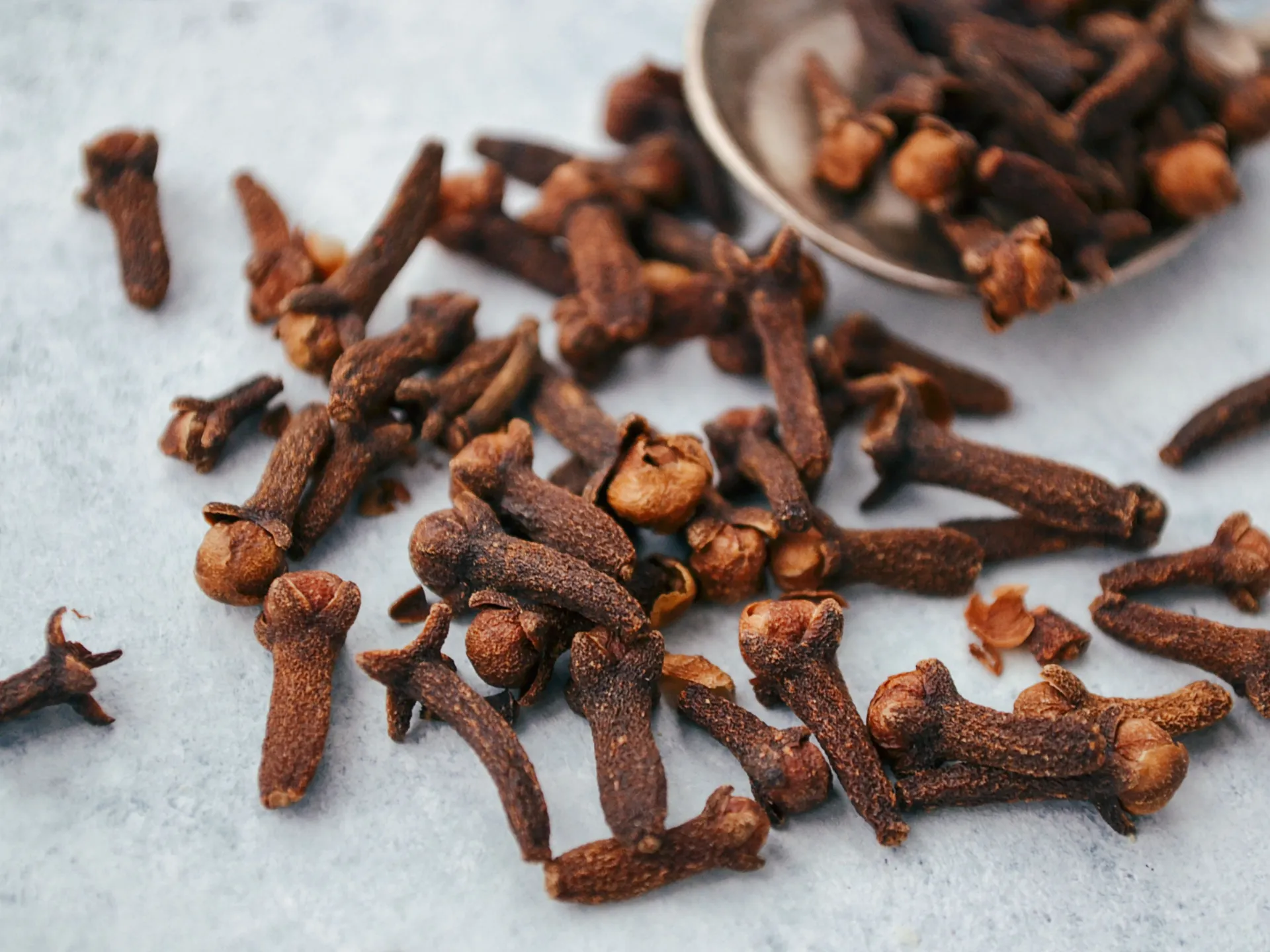
Cloves (Syzygium aromaticum) have been widely known for centuries as a spice used in food preservation, thanks to their antioxidant and antimicrobial properties. Numerous studies have indicated its potential ability to resist viruses, bacteria, and fungi, as well as its anesthetic and sterilizing properties, making it a valuable plant with various health benefits.
The original homeland of cloves is the Maluku Islands in eastern Indonesia, but it is currently grown in many countries, including India, Madagascar, Sri Lanka, and Malaysia.
It is characterized by its richness in vitamins, minerals, and phenolic compounds, in addition to the compound Eugenol and Gallic acid, which represents 89% of the clove essential oil found in the buds of the clove flower. These are bioactive compounds that give it medicinal value and various health benefits. Cloves have been used for more than 2,000 years in Chinese and Indian folk medicine (Ayurveda).
Proven medicinal uses of cloves
Cloves in its various forms, such as its essential oil, dried buds, and powder, have been used in many health fields. Clove oil has been used to treat gum infections, burns, some digestive system disorders, joint pain, and spasms. Some studies have also shown that it has anti-tumor and anti-inflammatory properties, and inhibits the formation of new blood vessels, in addition to its analgesic effect, which has made it commonly used to relieve toothache and headaches.
Cloves are known as a natural antifungal, as a study conducted by researchers from Morocco showed the effectiveness of the eugenol contained in it in combating vaginal candidiasis in laboratory rats. Clove oil also has anti-oxidative stress properties, which may affect brain cells and cognitive functions.
Dr. Sumita Halder and colleagues from the University College of Medical Sciences in India observed an improvement in short- and long-term memory in mice after using clove oil, suggesting that this is related to its potential ability to reduce oxidative stress.
Cloves also have anticoagulant and anti-inflammatory properties, in addition to their potential ability to enhance immunity, which made them of interest in the face of some viral infections that affect the respiratory system, and their popularity increased during the “Covid-19” pandemic caused by the “SARS-CoV-2” virus (SARS-CoV-2) in early 2020.
As the fall and winter seasons approach, and the spread of viral respiratory diseases increases among different age groups, many people are turning to searching for natural means of prevention and treatment. Here the question arises about the effectiveness of cloves in resisting respiratory viruses, and whether scientific studies have proven its ability to reduce these infections.
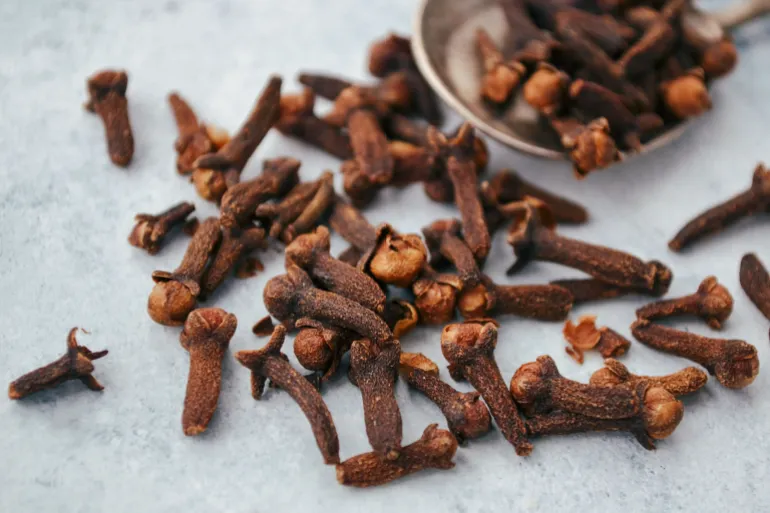
Cloves against Covid.. Was it effective?
Cloves have antiviral properties due to the compound eugenol that they contain in high concentration, as they bind directly with viral antigens (proteins or glycoproteins) present on the surface of the viral cell, inhibiting their spread and growth within the host. Eugenol has previously been able to inhibit the growth of the herpes simplex virus.
A study published by researchers Tragualboa and Jatisatiner from Chiang Mai University in Thailand in 2007 showed the effectiveness of eugenol against some viruses. In 2013, Dr. Jianping Dai and colleagues from Shantou University School of Medicine in China reported that eugenol found in cloves inhibited the growth and replication of influenza A virus at a concentration of 5 µg/ml, an effectiveness that was comparable to the effect of ribavirin at a concentration of 25 µg/ml.
In the face of respiratory diseases, especially with the spread of the new Coronavirus (SARS-CoV-2) that causes “Covid-19”, the need to search for used medicinal herbs has increased, as the weak immunity of some infected people has prompted them to resort to drug treatments in conjunction with herbs, with the aim of taking advantage of their potential anti-viral and anti-inflammatory properties, and enhancing the body’s response to infection during this global health crisis.
According to reports that appeared after the “Covid-19” pandemic, a number of hospitals in Wuhan Province, China (the starting point of the virus) rushed to treat patients infected with the virus as the infection began to spread, according to traditional Chinese medicine prescriptions, recording an effectiveness of 90% in confronting the virus.
These findings are supported by what Professor Jean-Noel Mbutu of the University of Kinshasa in the Democratic Republic of the Congo published in June 2020 on the effectiveness of 5 medicinal plants, including dried clove buds, in an attempt to treat and prevent Covid to control cases; Waiting and waiting for vaccines that have not yet been available.
The Mbutu experiment included a small sample of 10 patients infected with “Covid-19” who were asked to inhale the vapors rising from a boiled infusion (cloves, ginger, mint, lemongrass leaves, and eucalyptus) prepared according to certain steps and standards, in addition to taking an infusion of cloves and other herbs in the morning and evening. This mixture showed good effectiveness in confronting the infection by stimulating the body’s immunity and then immediately reducing some symptoms, such as headaches.
However, what limits the generalizability of the results is that a control group was not allocated for a more precise comparison of the results, and 4 of the participants took the drug azithromycin (an antibiotic) along with herbs, which affects the evaluation of the effectiveness of herbs against infection in isolation from the drug.
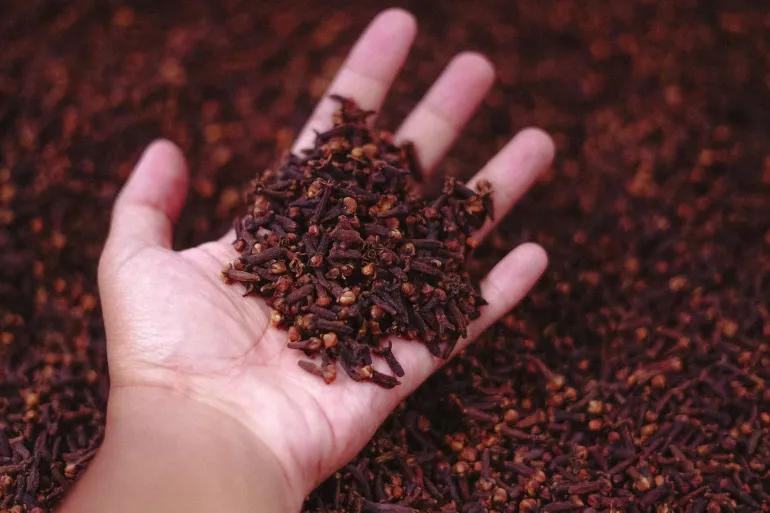
Bacteria resistance
Researchers from Tunisia also revealed, in a review they published in 2007 in the journal Phytotherapy Research, the superior capabilities of clove essential oil in resisting bacteria and inhibiting their growth, which prompted Dr. Masultani and Dr. Rahimi in 2020 to recommend the use of clove oil to prevent secondary bacterial infections that affect “Covid-19” patients due to weak immunity.
In 2021, the first laboratory experiment to detect the effectiveness of eugenol against “Covid-19” infection was published in the Journal of Neuroimmunopharmacology, revealing that taking the eugenol contained in cloves orally contributed to alleviating lung irritation and inflammation, improving heart function, increasing the level of physical activity, and reducing fever in mice infected with “Covid-19.”
But these studies and results still need clinical confirmation to enhance their strength and accuracy in humans, and to enable their generalization according to proven evidence and controlled methodologies.
Cloves for colds and coughs…and sterilizing the air?
The peoples who settled in the tropical regions of Asia have long relied on cloves to alleviate some respiratory problems. I used its boiled infusion and inhaled its volatile aromatic vapors to help with coughs, colds, respiratory crises, and bronchitis. She also used to chew it to relieve sore throat and irritation of the pharynx.
Clove oil has also been used as an expectorant that helps expel phlegm in cases of upper respiratory infections, due to its antiviral and antibacterial properties. Some studies have indicated that mixing clove oil with honey may contribute to alleviating chronic cough, difficulty breathing, and heart palpitations.
Some researchers have also tested the ability of eugenol to sterilize the air or reduce the viral load in it, which may reduce its ability to transmit from one person to another. Its volatile property contributes to its rapid spread, and thus its effect on viruses carried between air molecules. Researchers from Canada and France previously indicated in 2016 that products containing eugenol contribute to reducing the risk of viruses being transmitted through airborne droplets when sprayed.
Based on these properties of eugenol, in 2024, two researchers from Asahi University in Japan came up with a hypothesis that eugenol may have the ability to limit the spread of viruses, especially the emerging coronavirus (SARS-CoV-2), within dental clinics.
This is due to the possibility of eugenol leaking into the air during molar drilling operations, or its emission from fillings and adhesives used to treat various dental problems, which may explain part of the distinctive smell that distinguishes dental clinics. However, these results remain within the framework of preliminary hypotheses, and still require further studies and research to verify their validity and prove them scientifically.
Is clove safe?
Cloves are generally safe when used in moderate amounts, and the US Food and Drug Administration has listed them as an ingredient allowed for use as a safe dietary supplement.
However, excessive consumption, especially in large quantities, may be associated with some health risks, including the occurrence of seizures, liver damage, and blood clotting disorders. Therefore, it is recommended to adhere to moderate quantities and not to consume it excessively, as recommended by specialists and experts.