

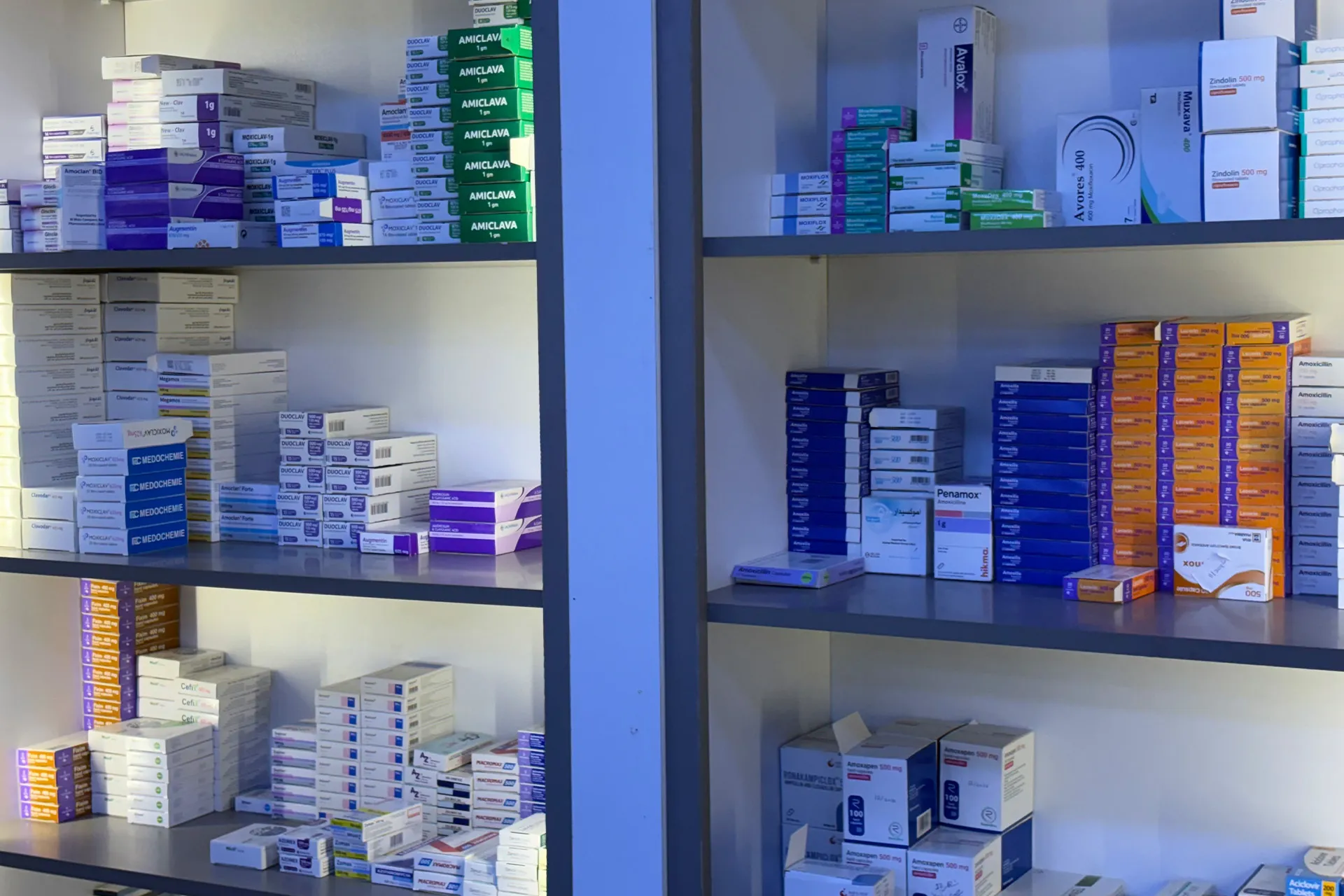
Tripoli- A patient may arrive at the hospital fasting in preparation for a surgery, then receive news that it has been postponed due to a lack of anesthesia medication or one of the necessary supplies. Conversely, a regulatory review reveals medicines that the state purchased and remained in warehouses until they expired.
Between shortages and waste, Libya spent about 11.82 billion dinars (about 2.46 billion dollars) on supplying medicines to the public sector between 2022 and 2025, without this bill ensuring that the appropriate treatment reaches every patient at the right time.
The problem is not limited to the volume of spending, but rather extends to how needs are determined and medicines are purchased, stored and distributed, according to the review of pharmaceutical sector support published by the Audit Bureau on June 8, 2026, based on the results of the Supreme Committee for Implementing Strategic Anti-Corruption Cooperation, joint between the Bureau and the National Anti-Corruption Authority.
Ahmed Muhammad Al-Naqiq, a member of the committee, told Al Jazeera Net that the purchase of medicines moved from one central entity in 2022 to more than 25 entities in 2025, which, according to his estimate, led to the dispersion of spending, the multiplicity of prices, and the weakening of the state’s negotiating ability.
Billions flow…and medicines do not arrive
Spending fluctuates in turn; After reaching about 1.775 billion dinars (about 370 million dollars) in 2022, it jumped to 4.15 billion dinars (about 865 million dollars) in 2023, an increase of 134%, then it declined to 3.87 billion dinars (about 806 million dollars) in 2024 and about 2.03 billion dinars (about 423 million dollars) in the year 2025, a decrease of approximately 48% from the previous year.
Al-Naqiq explained that estimating needs depends on the data of the previous year and estimated increases between 10% and 15%, without adequate linking to actual consumption and inventory. The review monitored items that exceeded the need and others whose quantities were less than what was required, in addition to appropriations that were canceled after the award and others that remained open.
Of the 89 documentary credits for the public tender with a value of approximately 420 million euros (about 454 million dollars), five credits were canceled after the award, and 18 credits remained fully unpaid, amounting to approximately 25 million euros (about 27 million dollars), while 65 credits remained carrying residual values approximately 135 million euros (about 146 million dollars).
In the warehouses, the report monitored expired medications, some of which date back to 2001, in the absence of an approved national mechanism for disposing of them. Examples include two million carbidopa tablets worth 680,774 euros (about 735 thousand dollars), equivalent to about 3.44 million dinars (about 717 thousand dollars), whose expiration date is close to expiring.
The report also mentioned an increase in the Tayseer Pharmaceutical Company’s appropriations from $2.2 million in 2022 to $43 million in 2025, and Al-Naqiq stressed that the suspicions of violations mentioned in the audit require investigation, and do not represent judgments or convictions.
When the lack of medicine turns into a health risk
For patients, the crisis does not appear only in spending schedules, but also in treatment that cannot be obtained or an operation that is postponed. Dr. Hassan Al-Misrati, Deputy Director of the Chest Diseases Hospital, told Al Jazeera Net that the shortage of specialized medicines has been going on for some time, and includes treatments for asthma and chronic bronchitis.
He added that some patients are forced to buy their medications from outside the hospital, while there are no biological treatments that some asthma patients need regularly, in addition to high-cost medications for pulmonary fibrosis and high pulmonary artery pressure, calling for the involvement of specialist doctors in determining needs.
In turn, Dr. Abdul Hafeez Al-Jahani, President of the Libyan Society of Nephrology and Transplantation, says that the lack of medicines and supplies is one of the most severe challenges facing the health sector, and may prompt medical teams to postpone non-emergency operations or cancel them at the last minute due to the absence of anesthesia drugs or basic supplies, even after the patient has arrived and fasted in preparation for surgery. He warned that repeated postponement may worsen the health condition and turn semi-emergency cases into emergency ones, which increases the complexity of the surgery and reduces the chances of its success.
Al-Jahani explained that the shortage includes medicines for kidney and transplantation, tumors, diabetes, insulin, and painkillers, in addition to surgical sutures, gauze, sterilizers, gloves, sterile tubes, ventilator tubes, anesthesia device connections, oxygen masks, intravenous catheters, and supplies for blood transfusion and dialysis.
He stressed the danger of cutting off immunosuppressive medications for kidney transplant patients, as it may lead to the loss of the transplanted kidney and a return to chronic dialysis, considering that the inability of health authorities to provide them represents a major health loss for the patient.
He added that the shortage of oncology medications forces some patients to buy them from private pharmacies or travel for treatment, and families may be forced to sell cars, gold, or borrow to cover the costs.
The risks do not stop at the cost; Searching for rare items, such as specific types of surgical sutures, adds burdens on patients, while purchasing from unreliable sources raises concerns regarding the quality and safety of medicines, especially those that require specific temperatures during transportation and storage, such as some anesthetics and blood products. Al-Jahani warned of the arrival of items through unsupervised channels or that do not adhere to refrigeration and distribution conditions, which may expose patients to medications that do not meet specifications or of unknown origin.
Al-Jahani attributed part of the delay to the multiplicity of procedures between identifying needs, the Ministry of Health and Budget, the Central Bank of Libya, and regulatory authorities, which may delay the arrival of treatment until the patient’s condition deteriorates or his chances of benefiting from it decline.
The testimony of Faraj Ali, who suffers from high blood pressure, reflects the impact of health coverage on bearing the cost of treatment. He told Al Jazeera Net that his medicine was available regularly and at a reduced price through health insurance during his work at Al-Bariqa Company, but he began paying for it himself after retirement until the completion of social security procedures. This certificate alone is not sufficient to evaluate the availability of medicines in the country, but it shows how interruption of coverage can increase the burden on the patient.
Announced steps and implementation testing
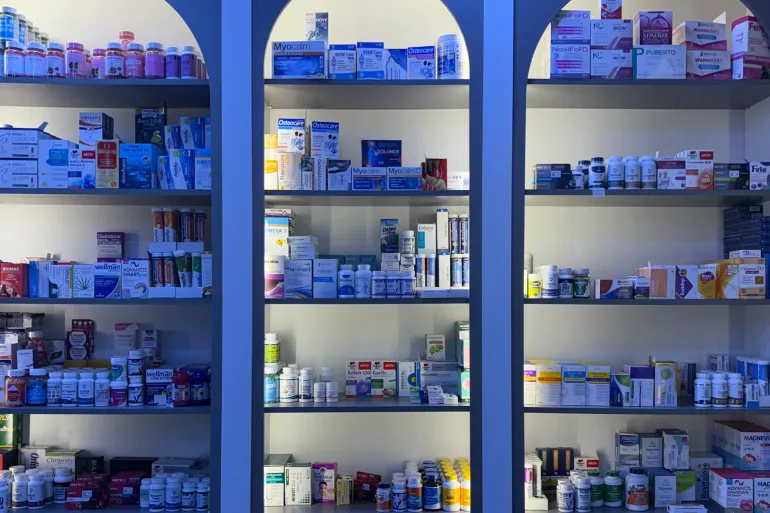
On October 2, 2026, the Medical Supply Authority issued a guide to qualify and classify suppliers, and announced on October 10 a guide for inventory management and tracking, aiming to standardize receipt, storage, and distribution procedures and reduce waste and expiration. The Administrative Oversight Authority also announced on September 6 the follow-up of contracts and supplies and its observations on pharmaceutical bids, but these announced steps do not prove the full implementation of the review recommendations or address the identified imbalances.
Accountability gains additional importance in a country that scored 13 points out of 100 in the Corruption Perceptions Index for 2025, issued by Transparency International in February 2026, and ranked 177 out of 182 countries and territories. The index measures perceptions of corruption in the public sector, and does not constitute evidence of specific violations in the pharmaceutical file.
The review recommends strengthening central purchasing, investigating the unexplained growth in approvals from some companies, developing a digital system to track medicines and publishing spending data periodically. The challenge remains in transforming the recommendations into measurable measures that ensure that the medicine reaches the patient in a timely manner, instead of turning spending into stagnant stock and wasted resources.