

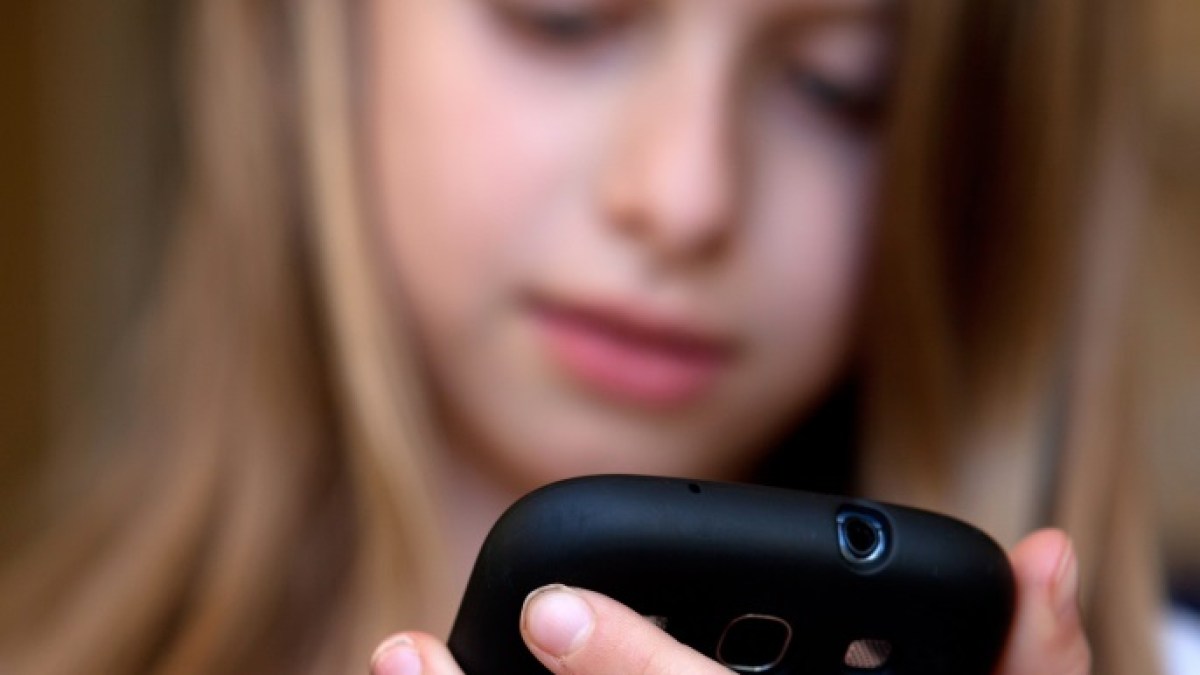
Mothers are repeatedly warned about the danger of constantly staring at screens, and to some extent they are right. Viewing the screen closely for long periods of time can affect eyesight.
Since the advent of large flat screen TVs, traditional small TVs have become obsolete, and the risks related to TV screens are no longer what they used to be.
Large TV screens make it difficult to see everything on the full screen when sitting too close, so viewers tend to sit farther away, reducing potential damage.
But tablets, smartphones, and computers are often closer than arm’s length, which is considered too close to the eyes, according to experts.
“Your mother was right, but the screen has changed, and today every child has a screen,” Marcela Estrada, an assistant professor of ophthalmology at the University of California, Davis, said in an interview published November 26 in the Washington Post.
Children, especially those between the ages of 7 to 15 years, are the group most vulnerable to eye problems such as myopia, but young and elderly adults may also face eye problems.
“Everyone at school and at home now is using their phones and tablets, and spending more time doing this kind of near-sighted work increases the rate of myopia,” says Masih Ahmed, an assistant professor of ophthalmology at Baylor University College of Medicine in the US. “Main in children because the eye develops greatly during this period.”
nearsightedness
Myopia means that you can see close objects clearly, but have difficulty seeing objects that are far away. In some cases, this may lead to serious eye problems later, according to experts.
When viewing a screen up close, the eyes turn inward, causing a muscle behind the iris – the ciliary muscle – to contract, changing the shape of the lens. This results in myopia.
“The eye’s lens becomes thicker,” Estrada says. “When you constantly focus at very close distance, the eye’s lens spends more time adjusting and changing shape to focus the image on the retina. If you do that excessively, you will stimulate the eye to grow faster,” which promotes myopia.
“Eyes stop growing between the ages of 18 and 25, so it is very important to pay attention to this issue in younger children,” says pediatric ophthalmologist Daniel Cyr.
He added, “The earlier myopia is detected in children, the more likely it is that myopia will become severe. It is an extreme form of myopia that causes a person to see things only when they are very close to his face – one foot away – which puts him at greater risk of developing problems.” Degenerative eye diseases such as vision loss, retinal detachment, cataracts, and glaucoma.”
There are also genetic conditions such as Stickler syndrome and Marfan syndrome that cause severe myopia. One of the parents suffering from myopia also increases the risk of infection, especially if the parent suffers from severe myopia. If both parents suffer from myopia, the risk becomes greater, and the degree of myopia tends to be worse.
Myopia cannot be cured, and children cannot “get rid of” it, but it can be corrected with eyeglasses, contact lenses, and, for adults, laser surgery, according to the National Eye Institute.
Young people in their early 20s can also experience late progression of myopia due to excessive near work, according to Estrada. After they reach their 40s, adults may develop presbyopia, where the lens becomes less able to bend to focus on objects. This age group may suffer from significant eye strain or fatigue, and some may develop double vision due to the inability to maintain near focus.
Prevention tips
There are steps parents can take to reduce their children’s risk of developing or worsening myopia, according to experts:
- Reduce screen time: Limit screen time for non-study purposes to one hour or less per day. “This may be difficult for teens, but the important time is the younger years when you still have some control over their use of these devices,” Cyr says.
- Screen distance: Have children keep the screen at least at arm’s length. Protect devices: Place the tablet in a heavy cover that is difficult for a child to hold for long periods, or place it on a stand on a desk.
- Get outdoors: Spending two hours a day outside is a good preventative against myopia, says Estrada. Growing evidence suggests that increasing a child’s time outside helps prevent the onset of myopia, although some research suggests it is unlikely to slow its progression in eyes that are already myopic.
- Regular examinations: Have at least one professional eye examination for every child, including infants, before they enter kindergarten.