

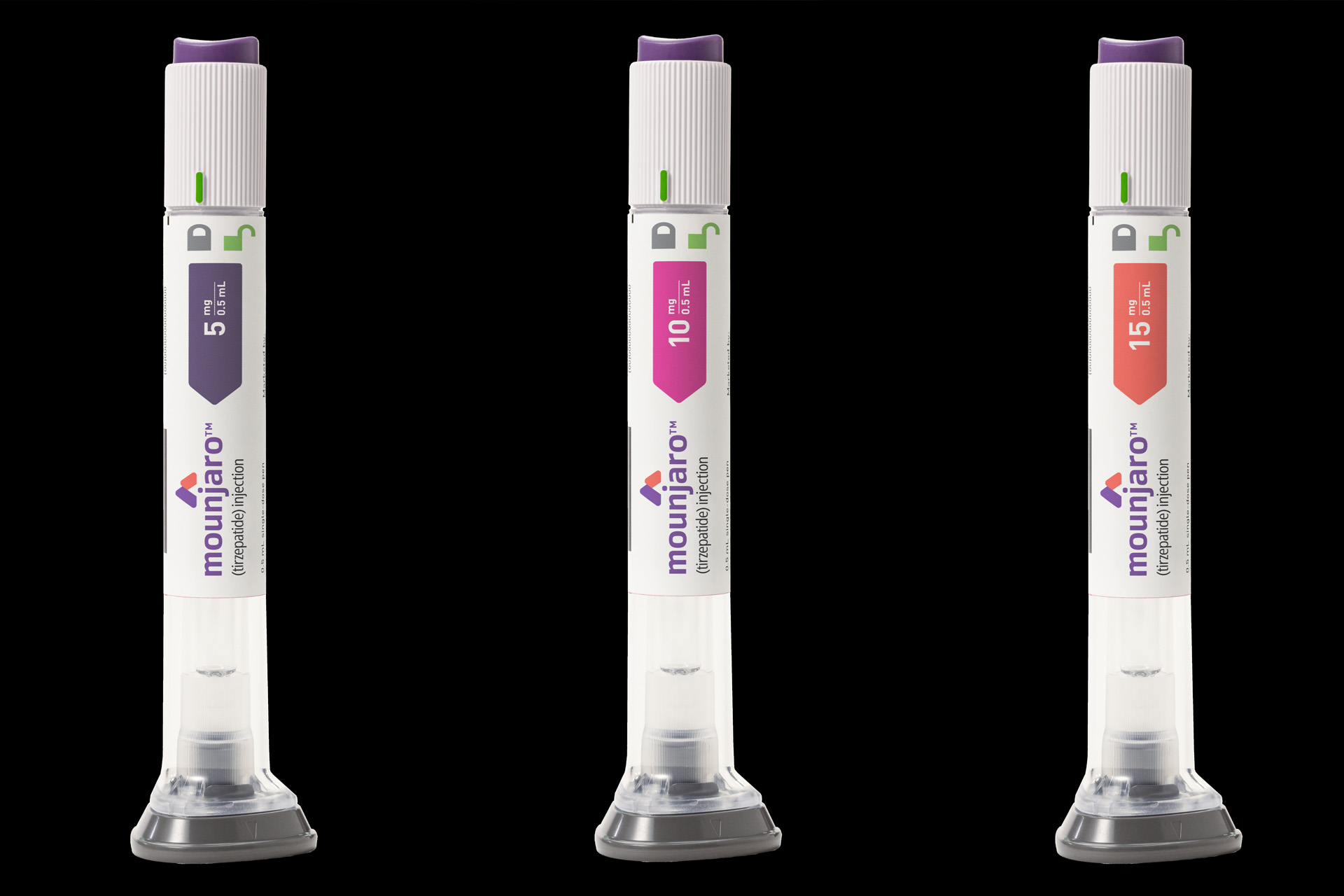
With the emergence of Ozambik, Mongaro and Wijovi, many believed that the age of obesity was behind us, and that these drugs were the magic cure for obesity. How accurate is this? The answer is here, with an answer to the question of what is the correct place to inject the Mongaro needle.
Ozambik is the trade name for semaglutide, while Monjaro is the trade name for Tirzepatide. Wegovy contains the same drug semaglutide as Ozambic, but in a different concentration.
Three experts say that weight-loss medications may help people suffering from obesity, but they will not solve the obesity crisis alone, according to Newsweek.
Last week, the White House announced the expansion of Medicare and Medicaid coverage to make weight-loss medications available to more obese Americans.
These medications are glucagon-like peptide-1 (GLP-1) receptor analogues, which mimic the hormone GLP-1 to help people with type 2 diabetes or obesity better manage their appetite, blood sugar and weight.
As a relatively new class of medications, these medications – such as Ozambic, Wijovi, Mongaro and more – have been the subject of significant interest in helping people with obesity lose up to 15% of their body weight in a relatively short period of time.
The medications are also expensive, costing up to $1,000 a month without insurance, so their use is currently inconsistently distributed across the United States.
Experts told Newsweek that the move to expand access to these drugs was necessary and important, but that GLP-1 drugs alone would not be enough.
Changes are necessary
“Effectively treating obesity requires more than medical interventions,” said Dr. Eric Smith, a bariatric surgeon.
He added: “Systemic changes are necessary to reduce the prevalence of unhealthy food environments. By addressing these broader factors, we can prevent obesity in the first place and make it easier to treat those who already have it.”
In particular, Smith said access to affordable, healthy foods free of harmful additives, pesticides and dyes is essential, as is reversing the current food system’s prioritization of “unhealthy and addictive ultra-processed foods.”
Smith said other treatments also have a role to play, including bariatric surgery, which he said has been “proven to provide better long-term outcomes” than GLP-1 drugs.
Smith added that wider access to GLP-1 drugs was “very important”, but they were most effective when combined with other treatments, such as diet and lifestyle interventions.
“Prescribing these medications without the necessary support undermines their potential,” he said. “Patients need comprehensive, long-term nutritional, nutritional and mental health support to address the triggers that contribute to obesity.”
No need to change diet!
For his part, Professor Carel Le Roux, head of the department of pathology at University College Dublin, told Newsweek that this view – that these drugs work best with the support of diet and exercise as well – was not supported by science.
Le Roux said people should eat nutritious foods and exercise because these are healthy habits, but current evidence suggested they did not help people with obesity lose more weight.
“I don’t tell everyone they have to take medication, because it’s not going to help everyone,” he said. “I’m not saying everyone should take a diet and exercise approach. It’s not going to help everyone…we call that personalized medicine.”
Le Roux said these weight-loss medications could help prevent people with obesity from developing such complications as diabetes, heart disease, cancers and more.
“People don’t die because of obesity, they die because of obesity complications,” he said. “So, when we treat people with obesity, our goal is to prevent complications. It doesn’t matter how big people are. What really matters is how sick they are… But at the same time, what we need to do is that people who are a normal weight today — we need to Help them and prevent them from becoming obese.” “This is where nutrition and exercise support are important, and where both approaches are necessary to address the obesity epidemic,” he said.
Dr. Paige Killian told Newsweek: “These drugs have the potential to revolutionize health care in this country, given their effectiveness in weight loss and their significant impact on obesity-related morbidity and mortality in a society suffering from epidemic levels of obesity.” However, the key “Long-term success is promoting behavioral changes through diet and exercise.”
“Continued nutritional education” was one of the most important measures to take “to help Americans become healthier versions of themselves,” for people who do and do not take GLP-1 medications, Killian added.
“This includes educating Americans about nutritional principles, the importance of understanding and prioritizing macronutrients wisely, and encouraging the reduction and elimination of ultra-processed foods where possible,” she said.
Mongaro…the weight loss monster
In Britain, the NHS spending watchdog recommended Mongaro – also known as Terzpatide and made by Eli Lilly – for those with a body mass index (BMI) of more than 35 and at least one weight-related condition.
The drug will be rolled out to the NHS gradually over a 12-year period, according to a report in The Independent.
The National Institute for Health and Care Excellence (NICE) confirmed on Thursday that people with the highest needs will be prioritized, so less than 10% of patients in England who are eligible will initially be able to access it on the NHS.
Professor Jonathan Binger, NICE’s chief medical officer, said: “The world will look very different in 3 years’ time, which is why we have taken the unprecedented decision to review the way this medicine is delivered to patients next.”
“Tirizpatide and other drugs like it, such as semaglutide, will help people with obesity lose weight and, as a result, reduce the risk of heart disease or stroke,” he added.
“But tirzepatide is not for everyone, and only those with the highest clinical need will be treated initially. “This means many people will have to wait. “We had to make this difficult decision in order to protect other vital NHS services and also to test ways of delivering this new generation of weight loss medicines.”
What is monjaro?
Mongaro is the brand name for terzepatide, a weekly injectable weight loss medication that was recently approved for use in the UK and is now available to order by prescription online,” says Dr Mitra Dutt.
As with many weight loss drugs that have become available in recent years, Mongaro was originally developed and licensed as a medicine for people with type 2 diabetes.
“However, the Medicines and Healthcare products Regulatory Authority (MHRA) approved the drug for weight loss and management in November 2023 in a bid to tackle obesity.”
The active ingredient in Monjaro is tirzepatide. “It works by mimicking the effect of the hormones GIP and GLP-1 which are released from the intestines after eating, and send satiety signals to the brain, making you feel full,” explains Dr. Catherine Basford.
They also stimulate the release of insulin, a hormone that lowers blood sugar and slows the passage of food through the intestines.
“Over time, this effect will aid weight loss as people eat less due to feeling fuller for longer,” says Catherine.
Where is Mongaro injected?
“The best place to inject Mongaro weight loss pens is in the abdomen or thighs, or the back of the upper arms if someone else is injecting you,” Basford says. “Injections should be at least one finger away from the previous injection site, and if injected into the abdomen, they should be at least 5 centimeters from the navel.”
Although it is an effective weight loss aid, it is not a miracle drug, and it is also important to offer this medication in conjunction with other lifestyle changes, such as a low-calorie diet and exercise.