

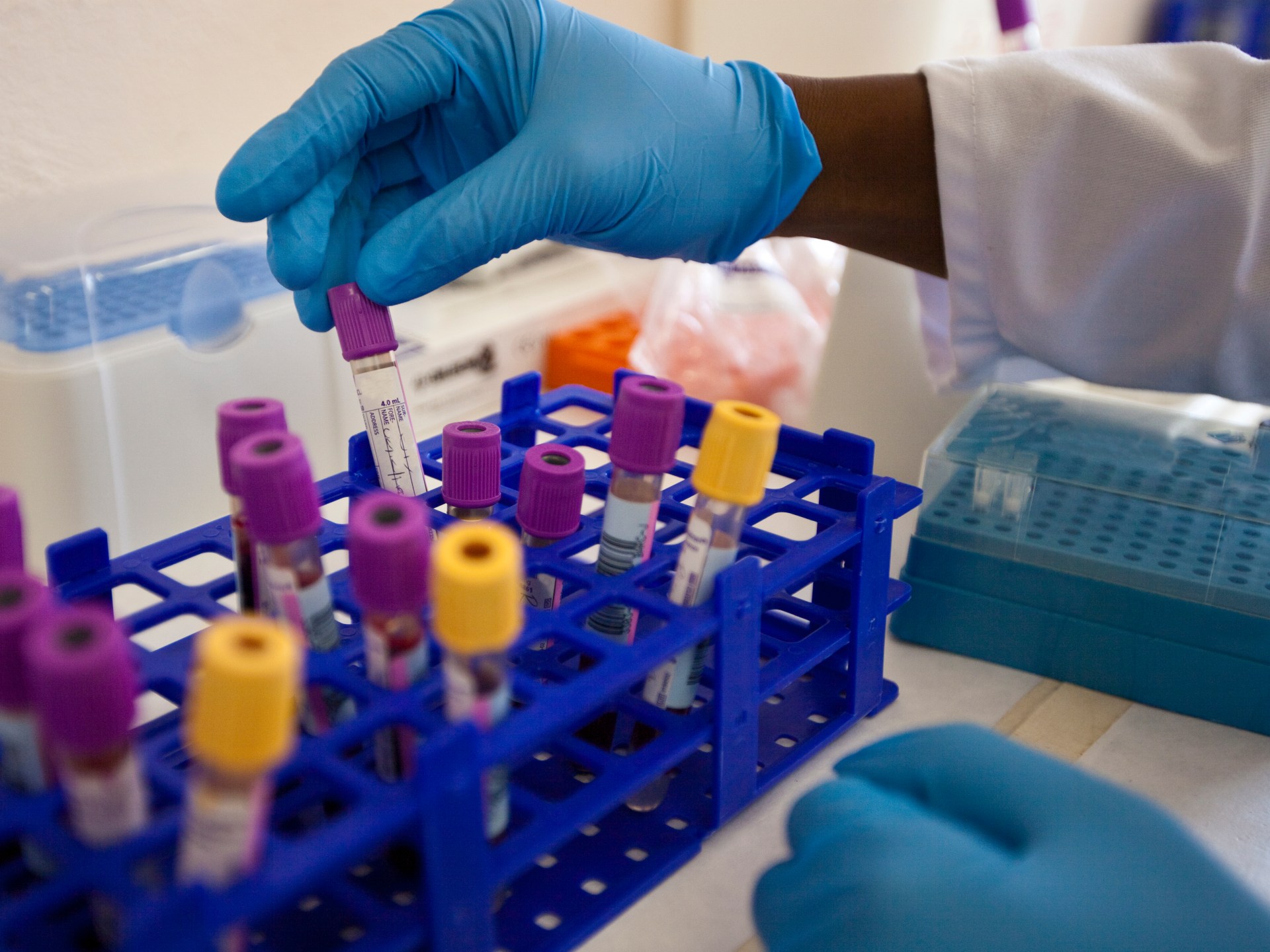
Molly, 39, is vibrant and energy, so that no one can notice that she has HIV (HIV) that causes AIDS, but after the US government’s decision to freeze aid money for 90 days, this unmarried mother has become very concerned.
“When I heard that, I cried and said: May God be our help,” says Molly. “I am still crying, because I thought I would live longer. Now I am no longer sure of that,” she added.
Molly HIV was diagnosed 8 years ago. Since then, it has been receiving treatment with antivirals (AR), which helps in controlling the virus and maintaining the stability of its health condition.
So far, symptoms of the disease have not appeared. Molly supported herself and her two children by selling fried bananas in the streets of her village in Uganda. This work is sufficient to provide a modest life, but it is not enough to buy medicines in particular if aid stops.
The decision of US President Donald Trump to stop this aid is legally criticized in the United States. It is still unclear whether this money will reduce the long term or completely cancel.
In Uganda alone, there are hundreds of thousands of HIV/AIDS. The disease is especially widespread in southern and eastern Africa. While HIV in the 1990s was a death sentence, today patients in many African countries are now able to coexist with the disease thanks to receiving treatment with anti -virus.
the fear
But fear and despair agrees now. “There is a state of fear and panic, whether between officials or among patients. There is concern about the depletion of drug therapy drugs with anti -virus. Any interruption in treatment can lead to serious problems.”
Even Jane Francis Kanianji, 70, is wondering how long she can withstand without medications. HIV was diagnosed in the late 1990s, but she did not get treatment until after her husband’s death due to AIDS in 2002.
Medicines helped her survive, but today she is exhausted and infected with many diseases due to its weak immune system.
“After Trump’s announcement, my doctor called me and asked me if I had enough medications. He told me that the clinic that I always go, will be closed. When I heard that, I lost my consciousness,” Kanengi said.
The threat of success story
For his part, the Director of the Ugandan AIDS Commission, Mossoba, fears that the suspension of American aid will threaten the success story of Uganda, in eastern Africa in the fight against HIV and AIDS. In the 1990s, the incidence in Uganda was 30%, but thanks to an ambitious program, it now decreased to only 5%.
While 53,000 people died in Uganda due to HIV and its complications in 2010, the number of these deaths decreased in 2023 to only 20 thousand cases. In Uganda, nearly 1.5 million people carry the virus, of whom about 1.3 million people are receiving anti -virus treatment.
“There is a risk that these accomplishments will be erased,” according to Mourab
It is noteworthy that until now, 70% of the AIDS control program in Uganda, whose annual budget is $ 500 million, has been funded by US aid money. According to the Ugandan AIDS Commission, the American “Pippar” program did not only provide anti -virus drugs and HIV tests, but also funded the salaries of more than 4,300 employees in Ugandan clinics and 16,000 health aides in local communities.
Many health workers are now confused and completely deficit, just like their patients. Matthew Nassima Makama, who works for a HIV clinic near Anteby Airport, says that he receives daily questions from his patients about whether they will get their medications in the future, and said that “people are in a state of panic, they come before their date and ask a lot of questions about the situation.”
“Bippar” program
“He found himself unemployed after Trump’s announcement. He added, “The announcement was a very shocking decision. I am now on an unpaid vacation for 90 days. Without a salary, I do not know how I will be able to support my family and my children.”
Uganda is not an individual condition, as MSF said that many health facilities in South Africa have been closed, as they were providing programs to treat HIV with funding from the “Pepfar” program. In Mozambique, one of the most important partner organizations for “MSF”, which was providing comprehensive programs for HIV treatment, was forced to stop its activities completely.
In Zimbabwe, most organizations that provide programs to treat HIV have stopped their work as well, because these organizations no longer guarantee the availability of financing and the purchase of medicines adequately. Other donors cannot bridge these gaps at the required speed.
For its part, Affril Benoa, Executive Director of “MSF” in the United States, says that although there is a limited exception to the decision to freeze aid funds, it covers some activities, “Our teams believe in many countries that people have already lost access to life -saving medical care, and they do not know whether their treatments will continue or when they can resume. These interruptions will cause the loss of lives and will destroy years of progress In fighting the virus. “