

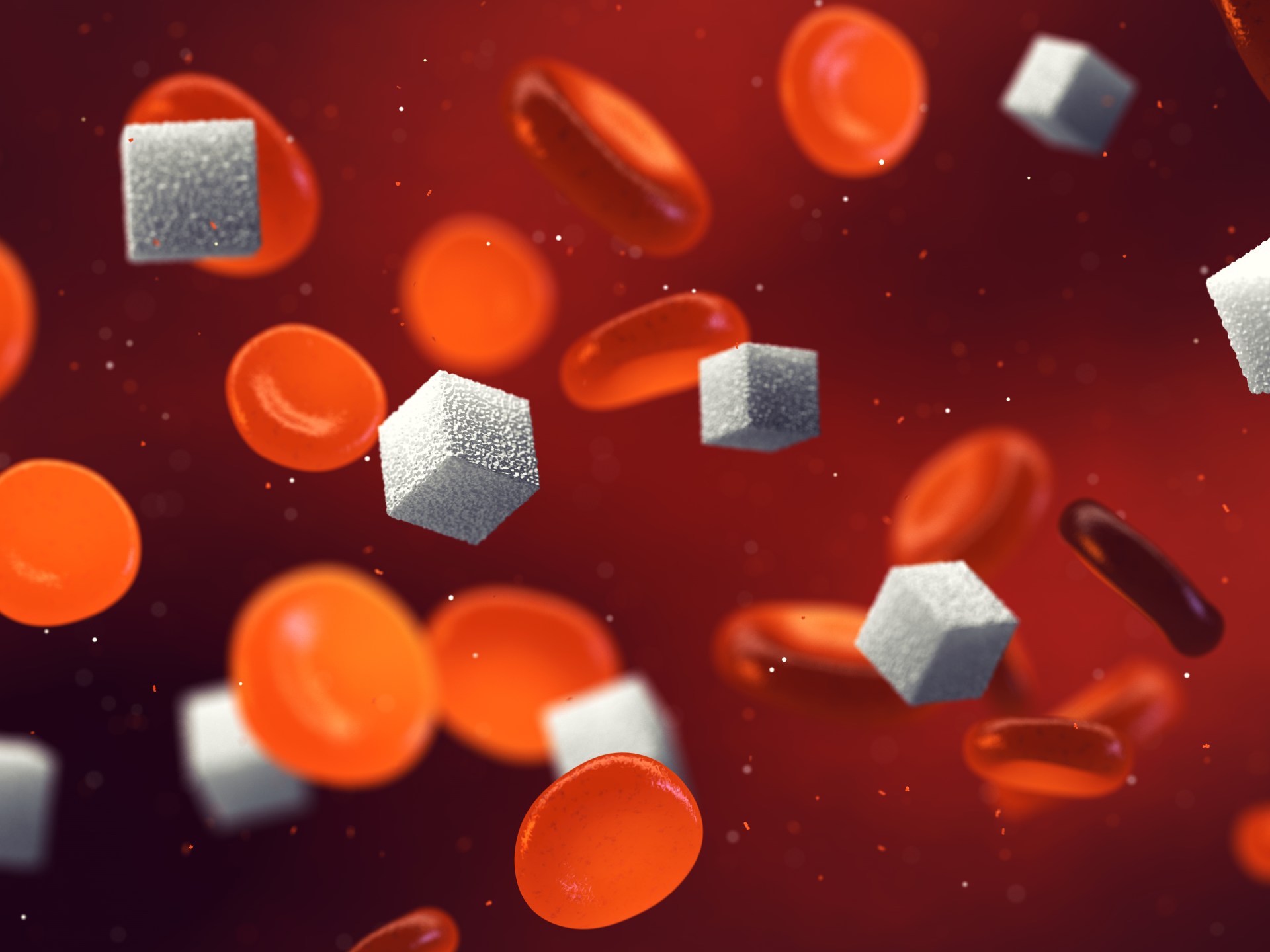
A recent study revealed that glucose sugar (blood sugar) plays an important roundabout as a major regulator for tissue distinction, a process in which stem cells produce specialized cells in all body tissues.
The study was conducted by researchers at the University of Stanford University in the United States, and its results were published in the “Cell STEM Cell” magazine on March 21, and the Yurrick Alert website was written about.
Discover an event by chance
Glucose was not a major target for researchers when they started searching for molecules that stimulate cellular distinction, as they conducted extensive experiments on stem cells of human skin that are differentiated into mature keratini cells, which are the cells prevailing in the outer layer of the skin. Using advanced techniques, they measured fluctuations in the concentrations of biological molecules during the differentiation process.
They concluded that the molecules that are increasingly provided during the differentiation process may play a role in this transformation.
The researchers identified 193 suspicious molecules, and the surprising thing was that instead of noticing a decrease in glucose levels, the researchers noted a noticeable increase in its levels with the progress of the differentiation process.
This increase in the concentration of glucose prompted the reassessment of its importance. Using flu or radioactive glucose analogues, the team was able to imagine the dynamics of glucose in cells during differentiation.
It is reported that with the cells progressing on the differentiation journey, the increase in the intensity of cell glow indicated an increase in glucose activity, indicating that glucose levels act as basic signals that enhance differentiation.
Glucose appears to play a comprehensive role in tissue differentiation throughout the body, as other studies have shown other types of human cells, including fats, bones and developing white blood cells, similar patterns.
More than just a source of energy
These results aroused the attention of researchers, and for this reason they started studying the effect of changing glucose levels on the differentiation of the keratin cells directly under various circumstances. They found that human skin orgasins – which are engineering skin tissue sowed in a liquid that mimics cellular structure and regulating natural skin – was unable to differentiate properly when glucose levels were lower than normal. This problem was simply solved by re -inserting an irreplaceable and solved glucose, which enhances the idea that the function of glucose in differentiation exceeds its vital properties as an energy source.
“This was the major shock, because we were adhering to the idea that glucose is a source of energy only. But these glucose analogues support differentiation just like what provides ordinary glucose.”
The researchers hope to learn more about how glucose works in sick and sound cells. This new understanding can help treat complications caused by the dysfunction of glucose in diabetes and its association with the development of cancer, a disease caused by non -distinct cells and uncontrolled cellular growth.
This study paves the way for future research, highlighting the multi -sided roles that simple biomusic molecules, such as glucose, may play in cellular processes. With the re -view of the scientific community in the position of glucose in cellular biology, it is increasingly clear that in -depth studies in other small particles may reveal similar unexpected functions.