

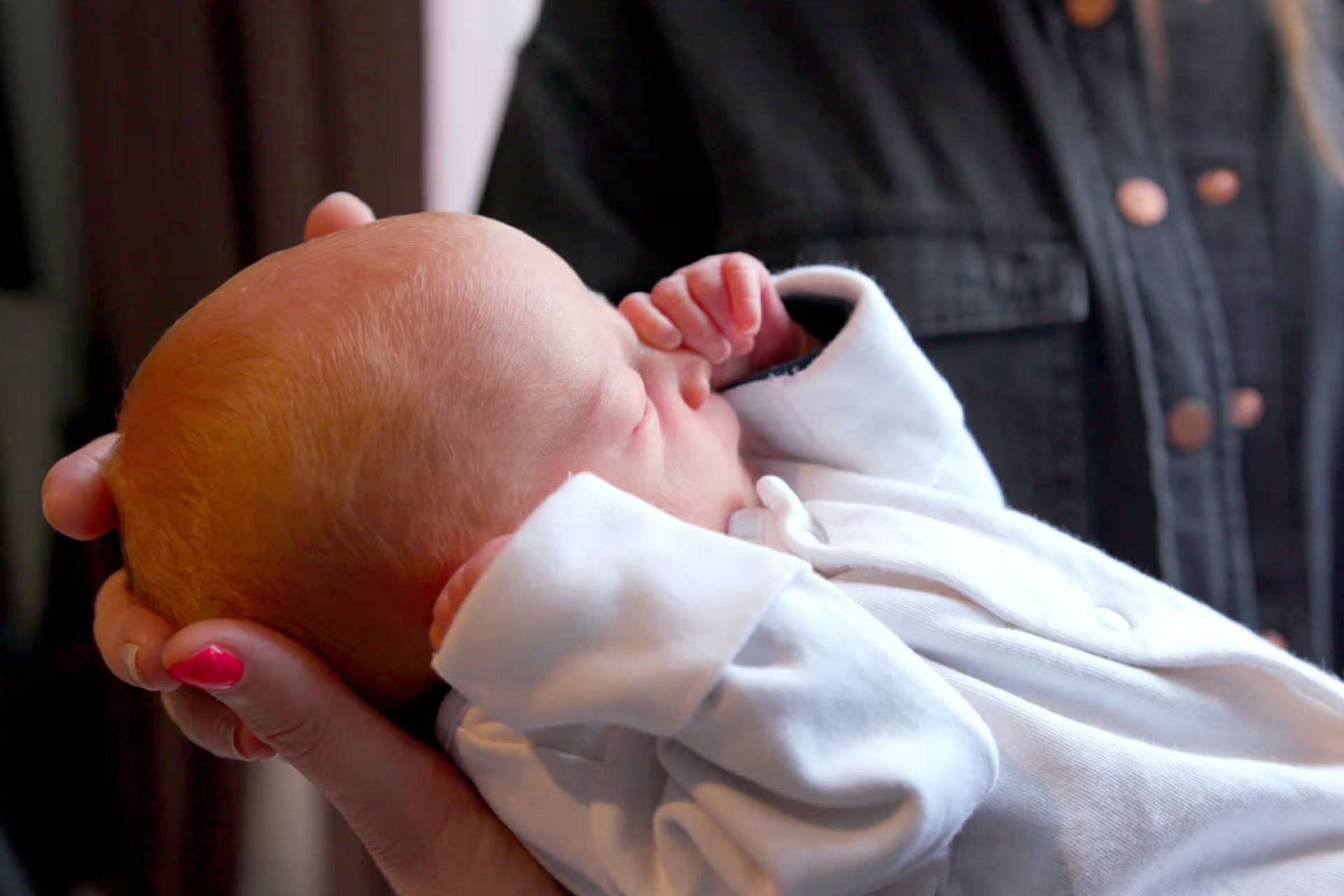
In an important achievement that gives hope to thousands of women, Grace Davidson, a nutritionist in the National Health Services Authority “NHS” from North London, gave birth to her daughter Amy Isabelle after a uterine transplant.
Mrs. Davidson got a womb from her older sister, Amy Berdy, 42, through surgery in 2023.
And 3 other wombs were performed in the UK using deceased donors. It is hoped that women will give birth to the receptors of these wombs.
Experts believe that it is possible to perform between 20 to 30 uterine transplants as a maximum annually in the United Kingdom in the future.
Uterine transplants can help women who were born without a healthy uterus, who lost their organs due to cancer or other medical conditions.
Estimates indicate that there are 15,000 women in the United Kingdom of childbearing age that do not have a healthy womb.
How is the uterus donation?
The UK Awthm Agriculture Organization runs two programs, one of which includes neighborhood donors and the other with members of deceased women, according to a report in the Independent.
The UK neighborhood donor program has so far focused on women who have relatives ready to donate their wombs.
However, the team believes that in the future, the living donor program will expand to include friends or donors out of altruism. This is somewhat common in the United States.
He resorted to using the deceased donors when the families of the deceased specifically ask whether they want to donate the uterus.
Have you performed other uterine transplants around the world?
More than 100 international uterine transplants were performed, most of them from live donor.
The first successful uterine transplant was performed in Sweden in 2014, when the child – Fennant – was born to a 36 -year -old woman.
It is believed that at least 50 children were born all over the world after uterine transplants.
How successful is the process?
Data from the United States show that more than half of women who got a womb through a transplant in the United States have achieved a successful pregnancy.
Between 2016 and 2021, 33 women underwent uterine transplants in the United States, and by 2022, 19 of them (58%) gave birth to 21 children.
In 74% of the women who underwent a uterine transplant, the uterus was still working a year after the transplant, and 83% of them had alive children.
What is the legal ruling on childbirth from a cultivated uterus?
According to a published answer on the Islam web site, “Contemporary scholars differed regarding the ruling on uterine cultivation, which has the decision of the Islamic Fiqh Academy, and the recommendation of the fifth medical jurisprudence symposium, is the passport, given that the uterus is not one of the genital glands that transmits genetic characteristics such as testicle and ovary.”
And “came in the documents of the Fifth Fiqh Medical Symposium regarding the planting of the genitals:
First: The gonads: The symposium concluded that the testicle and the ovary by virtue of the fact that they continue to carry and secrete the genetic code of the transferred from it even after planting it in a new recipient, if their transplantation is absolutely forbidden, given that it leads to the mixing of genealogy, and the fruit of childbearing is not generated by the legal spouses associated with the marriage contract.
Second: The non -transmitted genital organs: The symposium in the majority saw that some members of the reproductive system planted – except for the thickened nakedness that does not transmit the genetic characteristics.
According to a research by Dr. Muhammad Ali Al -Bar, the Islamic Medicine Adviser at the King Fahd Center for Medical Research, the researcher said: I do not think that the uterine transplantation will be a problem from the jurisprudence, because it is not related to the lineage of the fetus, in contrast to the issue of ovarian or testicular transplantation.