

Deep in the human gut, where creatures live away from the light of the sun, a silent and eternal dialogue takes place that is not governed by spoken words, but rather its rhythm is controlled by a very precise and complex biochemical language.
There resides an enormous microscopic civilization, a nation of trillions of microorganisms that together weigh roughly as much as a human brain and outnumber our own somatic cells by astronomical proportions.
It is the intestinal flora, or what is known as the intestinal microbiome, that hidden vital organ that, in the eyes of modern medicine, is no longer just a passing guest that feeds on our food waste. Rather, it has become recognized as the true maestro who directs the orchestra of health and disease, and controls the destinies of the rest of the organs.
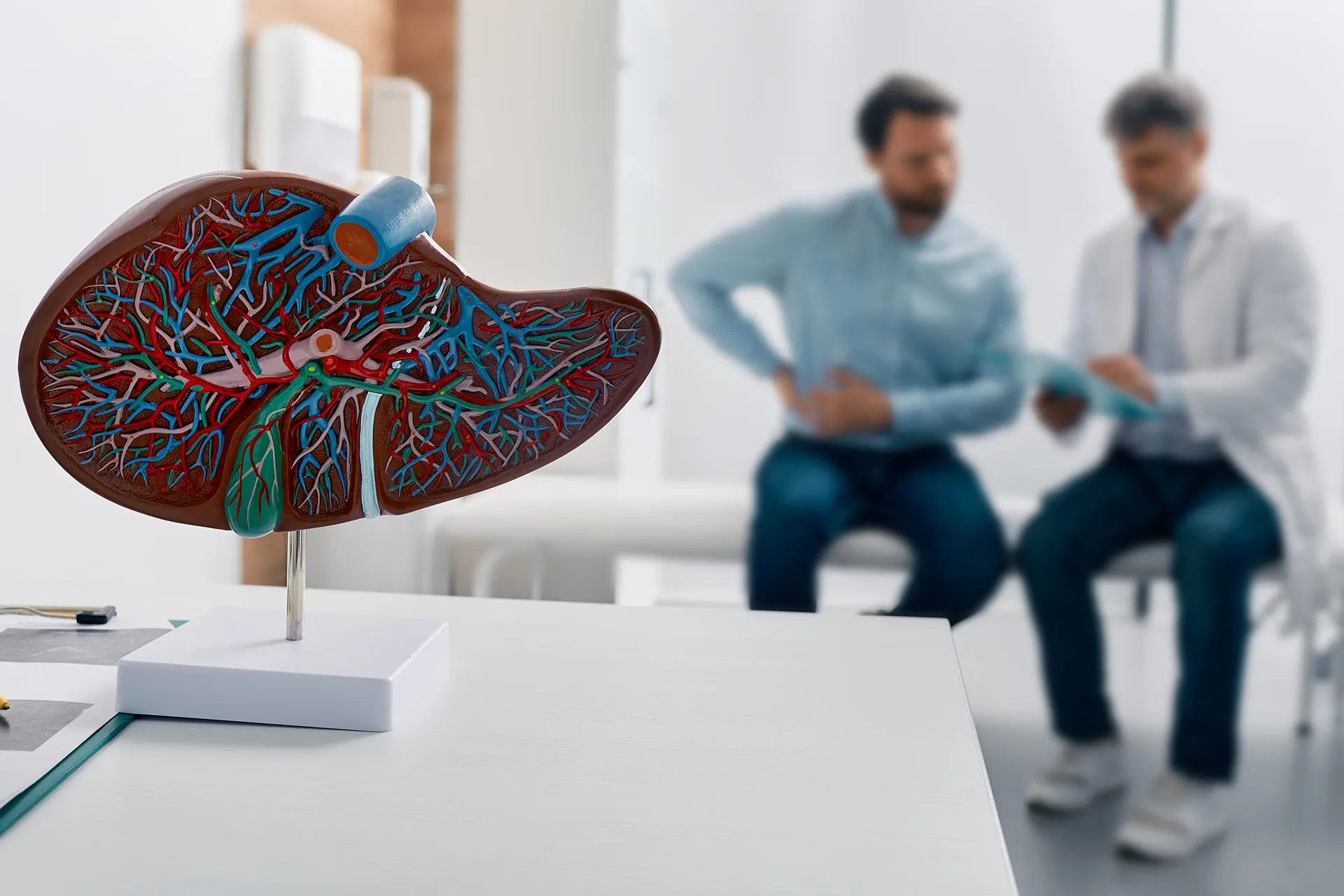
On the other side of this body, the liver sits as the patient emperor, the greatest chemical laboratory that manages hundreds of vital processes every second, standing at the gate of the blood to filter, digest, and reformulate it. This close and existential connection between the two organs is the gut-liver axis. (Gut-Liver Axis).
The name “Hepatic Sanation” was launched here as an integrated scientific term. It is a pioneering concept that I am honored to be the first to launch and establish in the medical and clinical literature. Let us lay the foundation for an upcoming therapeutic and preventive revolution that reformulates the relationship between the liver and the intestinal circulation through an original scientific perspective and an integrated medical system.
To clarify the importance of this eternal relationship, I hereby launch the name “Hepatic Sanation” as an integrated scientific term. It is a pioneering concept that I am honored to be the first to launch and establish in the medical and clinical literature. Let us lay the foundation for an upcoming therapeutic and preventive revolution that reformulates the relationship between the liver and the intestinal circulation through an original scientific perspective and an integrated medical system.
“Liver health” is not just a temporary procedure or a traditional medical prescription, but rather a comprehensive medical and biological system that aims to maintain the liver by sustaining the integrity of the intestinal microbiome, which is considered one of the most important ways to health the liver through early diagnosis of any defect or disorder that occurs in its environmental balance, with immediate treatment with the latest vital and biological technologies to ensure the restoration of the tissue and metabolic functions of the liver and curb tissue deterioration towards fibrosis or vital insufficiency.
The old deconstructive approach has prevailed over the past decades, reducing medicine to a partial view that separates the intestines from the liver, but biological reality tells us otherwise.
The intestinal microbiome has a genetic reservoir more than 100 times larger than the human genome, and these microbial genes secrete thousands of active metabolic compounds that circulate into the portal bloodstream to directly address liver cells.
In a state of environmental peace and balance, beneficial bacteria ferment complex fibers and stubborn starches to produce short-chain fatty acids, such as butyrate, propionate, and acetate.
Butyrate acts as a nourishing conditioner for the cells of the intestinal wall, strengthening close cellular bonds and preventing their permeability, while the rest of the acids send soothing chemical signals to the liver through specialized cell receptors, suppress fat accumulation, increase insulin sensitivity, and expel harmful oxidation agents.
But when the intestinal environment is exposed to pollution, unhealthy nutrition, and random antibiotics, these bonds break down, and leaky gut syndrome occurs.
Here begins the journey of cellular hell; Parts of the cell walls of dead bacteria, represented by endotoxins, fall into the portal bloodstream, heading toward the liver.
Toll-like receptor 4 on the surfaces of immune Kupffer cells and hepatic stellate cells sense that the body is being exposed to an acute microbial invasion, so they set off a chemical fire alarm via inflammatory cytokines, which generates silent hepatitis that accelerates the pace of tissue damage and lays the foundation for the beginnings of cirrhosis and fibrosis.
This idea is clearly demonstrated in our daily clinical practice through life examples that we see in clinics and hospitals: We see this in the case of a forty-year-old man who suffers from chronic stress and high liver enzymes with fat accumulating on the liver without drinking a single drop of alcohol.
When we delve deeper into his medical history, we find his excessive dependence on fast food, sugars, and artificial fructose, in addition to his frequent use of antibiotics for every minor cold.
“Liver health” is not just a temporary procedure or a traditional medical prescription, but rather a comprehensive medical and biological system that aims to maintain the liver by sustaining the integrity of the intestinal microbiome, which is considered one of the most important ways to health the liver through early diagnosis of any defect or disorder that occurs in its environmental balance, with immediate treatment with the latest vital and biological technologies to ensure the restoration of the tissue and metabolic functions of the liver and curb tissue deterioration towards fibrosis or vital deficiency.
This pattern led to the destruction of beneficial bacteria and the dominance of fermentative bacteria that converted starches in his intestines into alcohols and toxic substances in continuous, microscopic quantities. By applying the “liver health” methodology, rebuilding the intestinal flora with fiber, probiotics, and rifaximin, and changing the dietary pattern, liver enzymes returned to their normal levels and grease decreased without the need for harsh medications.
We see another clinical example in a patient with advanced cirrhosis who enters the clinic or emergency room with recurring bouts of mental wandering and forgetfulness, or hepatic coma and facial paleness.
The direct cause is not always a sudden deterioration in the liver cells themselves, but rather it may be the result of severe constipation for two days, which allowed harmful intestinal bacteria to break down proteins and produce huge amounts of toxic ammonia gas that leaked through the leaky intestinal wall and bypassed the affected liver to cross to the brain.
Here, the starting point in treatment and prevention is through “cleaning the liver” by treating the intestines, and using lactulose and rifaximin to clean the intestinal lumen and modify its bacterial community, so that the patient is healed and his mind is revitalized again.
Clinical examples do not stop there, but extend to cases of irritable bowel syndrome associated with liver disorders, where patients complain of constant bloating, general fatigue, and constant changes in excretion. The cause, in essence, is disruption of the beneficial flora and the influx of bad metabolites that disturb the liver and strain its ability to purify.
Correcting the microbial imbalance in the intestine eliminates digestive symptoms and hidden liver infections at the same time, which confirms the facts that taking care of the microbiome is the only right way to protect this silent organ and provide it with a vital, renewed environment.
In order for this system to be embodied in comprehensive clinical application, the therapeutic arsenal of the liver health system stands out by preserving and improving the microbiome, relying on an integrated strategy that begins with taking nutritional supplements that support beneficial bacteria, known as probiotics, which contain beneficial bacteria, combined with foods that stimulate their growth, called prebiotics, such as complex fibers such as inulin and beta-glucan, which act as biofuels that stimulate the multiplication of strains of bacteria that manufacture short-chain fatty acids.
This vital arsenal also includes the use of the drug rifaximin, a non-systemic antibiotic of which the body only absorbs a small amount, and it remains concentrated within the digestive cavity to modify the bacterial environment and suppress strains that secrete toxins and ammonia without eliminating beneficial flora.
The therapeutic lines of defense are expanding to accommodate future technologies, such as phage therapy based on friendly viral alternatives that eradicate harmful intestinal strains with extreme specificity and surgical precision, along with live therapeutic biological products that repopulate the intestine and restore its deteriorating wall.
There is a great need to launch specialized Arab research centers and independent clinical initiatives to collect microbiome samples from various Arab regions, draw an accurate Arab intestinal microbial fingerprint, and apply field liver sanitation experiments to patients with fatty liver and cirrhosis in our region, to reach a regional molecular map upon which customized protocols can be formulated that achieve the highest levels of effective healing and sustainable prevention, based on our unique environmental and genetic reality.
This arsenal culminates in effective methods, such as the process of transplanting the intestinal microbiome from healthy donors, which aims to revive the intestinal biome from scratch, and completely cleanse the portal tract of any toxic leakage that threatens liver cells.
Foreseeing tomorrow in hepatology and employing artificial intelligence solutions holds great promise, as we move steadily towards an era in which examining the genetic map of the microbiome becomes a daily routine in medical centers, to design custom bacterial capsules to fix the unique defect of each individual patient.
Applying the concept of “liver health” opens up an integrated strategic horizon that goes beyond traditional diagnosis and treatment, and this is confirmed by our strong and urgent demand for the importance of expanding the scope of clinical trials and field scientific research in the Arab region in particular. The genetic, environmental, climatic map, lifestyle, and nutritional habits of Arab and Middle Eastern societies differ radically and fundamentally from Western societies, from which the majority of current recommendations and protocols are derived.
Complete and rigid reliance on Western research results regarding the intestinal microbiome remains incomplete and incomplete. Because the intestinal flora is not a fixed template, but rather a vital fingerprint that is shaped and changed by the nature of regional foods, such as the use of local herbs and spices, the types of fats and inherited foods, and by the levels of local environmental exposure, and the unique genetic patterns of the Arab citizen, as well as the epidemiological history of our societies with regard to hepatitis viral infections and bilharzia in the past.
From this important standpoint, there is a great need to launch specialized Arab research centers and independent clinical initiatives to collect microbiome samples from various Arab regions, draw an accurate Arab intestinal microbial fingerprint, and apply field liver sanitation experiments to patients with fatty liver and cirrhosis in our region, to reach a regional molecular map upon which customized protocols can be formulated that achieve the highest levels of effective recovery and sustainable prevention, based on our unique environmental and genetic reality.
However, this hope is in dire need of real attention from civil society organizations and Arab investors to support national research academies and fund clinical research in this regard, as creating the medical future does not happen by waiting, but by initiative.
The liver, that silent, patient organ that bears the burden of our life’s mistakes without complaint, deserves us to secure the gates of our intestines and rationalize the use of our medications to keep it vibrant.
This scientific endeavor is complemented by intense focus and expansion on health and preventive awareness among citizens, as the individual and society remain the first line and the most important fortress in protecting the liver and intestines. The comprehensive health awareness system based on the principles of “liver sanitation” aims to build a clear community awareness that warns of the ills and wrong health practices that are widespread in the culture of daily life.
The liver is not and will not be an isolated tissue that silently receives shocks. Rather, it is a partner in an integrated cellular epic at the forefront of the intestinal corridors and their microbial communities, which forces modern medical philosophy to view “liver sanitation” as a humanitarian and academic commitment and a preventive safety net that protects humanity’s healthy future.
At the forefront of these wrong practices is the scourge of indiscriminate and excessive use of antibiotics without specialized medical supervision. These drugs act as unguided biological bombs that destroy entire strains of beneficial flora, leaving the intestinal cavity a barren desert that becomes a fertile environment for the invasion of harmful microbes that secrete toxins that constantly exhaust the liver.
Awareness also includes warning against excessive craving for refined sugars, artificial fructose, and ready-made meals saturated with trans fats, which cause the cellular bonds of the intestinal lining to collapse and generate permanent toxic leakage, in addition to the phenomenon of self-alcoholic fermentation within the intestines.
Health awareness is strongly confronting the phenomenon of treatment with herbal mixtures of unknown origin and origin that claim the magical ability to clean the liver or remove toxins, while clinical facts indicate that it often leads to severe liver poisoning and horrific liver failure, leaving the patient with the means of death.
Community health awareness aware of the foundations of “liver health” must be transformed into daily behavior and an established culture that begins in schools, homes, and media platforms, by encouraging individuals to adopt diets rich in prebiotics, which is simply the food suitable for beneficial bacteria, and contains complex natural fibers such as vegetables, whole fruits, and whole grains, and natural probiotics that contain live beneficial bacteria such as curd, natural yogurt, cottage cheese, homemade pickles, and kefir (Indian mushrooms).
This is in addition to making sure to drink fresh water in sufficient quantities, avoiding staying up late, the importance of adequate, restful sleep at night, avoiding chronic nervous stress, which studies have proven to have a direct negative impact on intestinal movement and the permeability of its wall, and practicing physical activity and regular sports that stimulate the biodiversity of beneficial bacteria and stimulate portal blood circulation.
Empowering the individual with this knowledge and providing him with sound biological awareness makes him the doctor’s primary partner in maintaining his digestive system and achieving “liver health” from its true roots, ensuring a healthy society with preventive awareness that protects it from the burdens of chronic diseases.
As we establish these principles, we declare that the era of liver care has left its old stations limited to treating the affected organ after its illness has become severe, and has crossed into a broader space in which healing is based on restoring the original biological balance of the entire human body.
The liver has not and will not be an isolated tissue that receives shocks in silence. Rather, it is a partner in an integrated cellular epic at the forefront of the intestinal corridors and their microbial communities, which forces modern medical philosophy to view “liver sanitation” as a humanitarian and academic commitment and a preventive safety net that protects humanity’s healthy future.
Thus, “liver sanitation” is not just a term we coined, but rather the pioneering scientific concept and comprehensive vision that makes the intestines and liver one harmonious fortress, so that investment in intestinal flora becomes an investment in life itself, and liver health and sanitation remain the true gateway to blood purity, body wellness and immunity, and the continuation of vital balance.
The opinions expressed in the article do not necessarily reflect the editorial position of Al Jazeera Network.