

Many patients begin their journey with symptoms with the same confusion: Is the problem in the heart? Or in psychological stress? Why do I sometimes feel like my body is running for no reason, while other times I feel like everything inside me is slowing down?
Symptoms appear sporadic and confusing; Palpitations, fatigue, anxiety, sleep disturbance, weight gain or loss, decreased concentration or mood changes.
But the surprise is that sometimes the cause is not in the heart, nerves, or stomach, but rather in a very small gland located in the front of the neck: the thyroid gland.
Although its weight does not exceed 15 to 25 grams, its effect extends to almost every organ in the body, and it is even known as the body’s “internal speed regulator.”
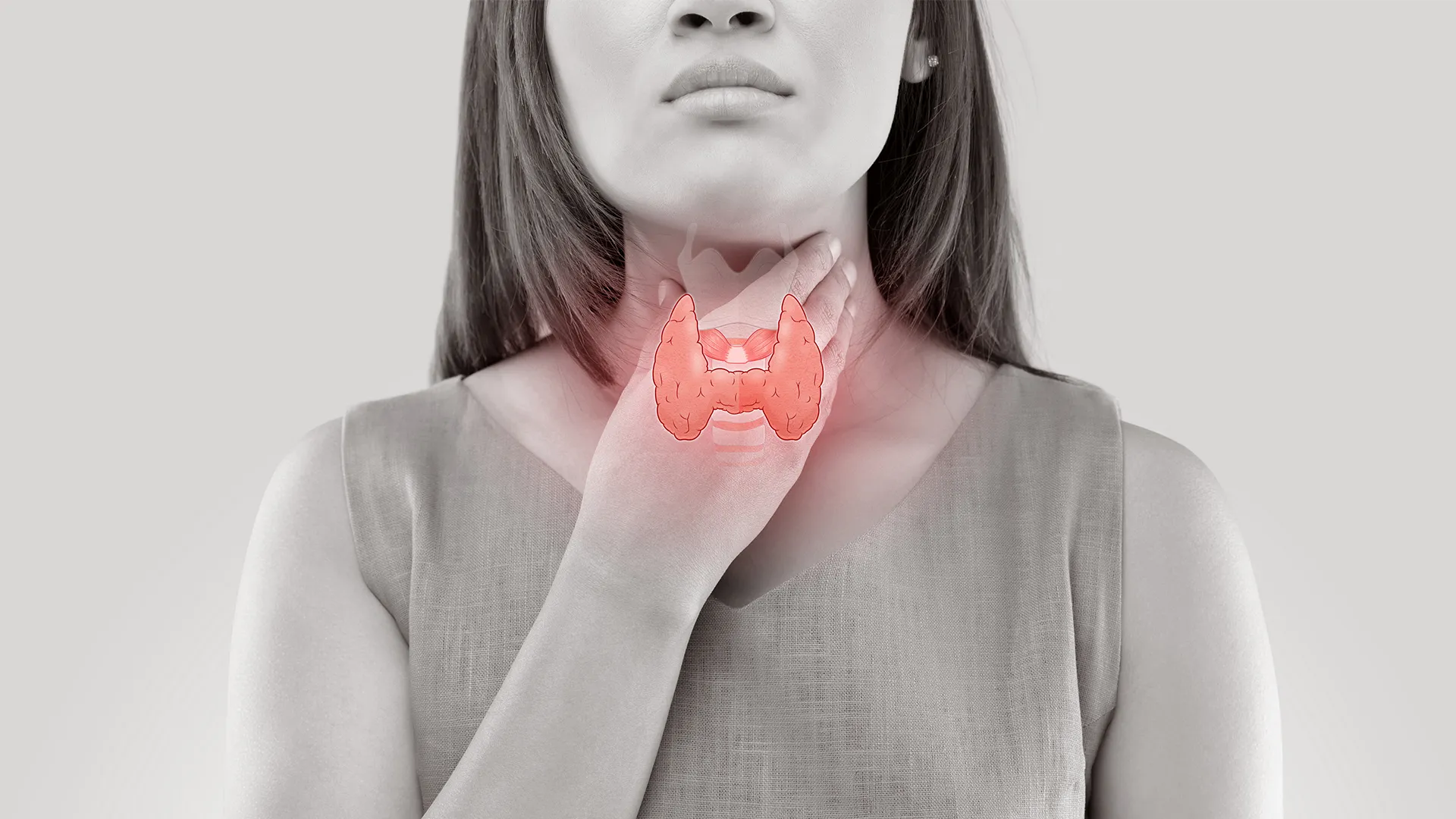
The thyroid gland is located in the front of the neck in a butterfly-like shape, and is about 4 to 6 centimeters long. Despite their small size, they control heart rate, body temperature, energy, concentration, mood, and even the efficiency of the digestive system.
Inside this gland, tiny units called follicles work, which capture iodine from the blood and use it to produce the two essential gland hormones, T3 and T4, which are the two hormones responsible for regulating the vital rhythm of the entire body.
The effect reaches every cell
Thyroid hormones are not just numbers that appear on test results, but rather chemical messages that reach almost every cell within the body. The T4 hormone is the most widespread form in the blood, as it acts as a reserve reserve that is later transformed into T3, which is the most active and influential form inside the cells.
The real leader of this delicate system is the hormone TSH, which is secreted by the pituitary gland in the brain to monitor and regulate thyroid activity.
When the gland’s hormones decrease, TSH secretion increases to stimulate it to work more, while it decreases when hormones rise as part of a very precise regulatory system that maintains the body’s balance.
Iodine here is not a simple detail, but rather an essential element in the manufacture of these hormones, so its deficiency or unbalanced increase may lead to disruption of the gland’s function, which explains the link between the health of the gland and diet and environmental factors.
The body speaks a different language
When the thyroid gland works too quickly, the body enters a state of constant acceleration. The patient feels heart palpitations, internal tension, and difficulty sleeping, with obvious weight loss despite eating normally. A slight tremor may appear in the hands, or increased sweating, and in some cases bulging eyes may appear, especially in Pazdu’s disease, which is an immune disorder that causes the body to cause the gland to work excessively.
When the gland slows down, the picture completely reverses. The body becomes heavier, movement is slower, and fatigue appears even after rest. The patient feels colder than usual, and notices weight gain, dry skin, and hair loss, in addition to a slow heartbeat and a decline in mood and concentration, as if the entire body is working at low energy.
Often, the patient does not link these symptoms to the thyroid gland, because they may seem scattered and unrelated.
Anxiety and depression… sometimes the problem is not just psychological
One of the most confusing aspects for patients is that thyroid disorders can sometimes disguise themselves as psychological symptoms. Constant anxiety, depression, poor concentration, or a feeling of losing self-control may not only be caused by psychological pressure, but also by a real hormonal disorder.
This is why doctors often request a TSH and T4 test when there are persistent psychological symptoms, especially if they are accompanied by a change in weight, energy, or heart rate.
Treatment…an attempt to restore the natural rhythm
Treatment depends on the nature and cause of the defect. In cases of hypothyroidism, the drug “levothyroxine” is used, which is a synthetic substitute for the T4 hormone that helps the body restore its normal level of hormones. It is usually taken in the morning on an empty stomach, with periodic follow-up tests to accurately adjust the dose.
In some cases, treatment is temporary, while some patients need to continue it for life, especially in chronic immune diseases or after gland removal.
In cases of hyperactivity, doctors resort to medications that reduce hormone production, with continuous monitoring of the condition. If drug treatment is not sufficient, other techniques such as radioactive iodine or surgery may be used, depending on the doctor’s assessment.
Small signs may prevent a bigger problem
Thyroid disorders sometimes start with minor signs that don’t attract attention; Frequent fatigue, disturbed sleep, change in weight or mood. But ignoring these signs may allow the problem to gradually get worse.
Therefore, doctors confirm that early diagnosis and regular follow-up greatly help in controlling the disease and preventing its impact on quality of life.
The thyroid gland is a small organ, but it controls the rhythm of the entire body. When it is out of balance, heart rate, energy, mood, and even way of thinking may change.
Therefore, understanding the body’s signals and paying attention to early symptoms is not only a healthy luxury, but an essential step in maintaining the balance that silently works within us every day.