


Several studies have shown a link between middle -aged mental disorders and the development of dementia, and researchers from the University of Nottingham from the United Kingdom – in a study published in late May – found that continuous depression attacks over the course of life can increase the risk of dementia.
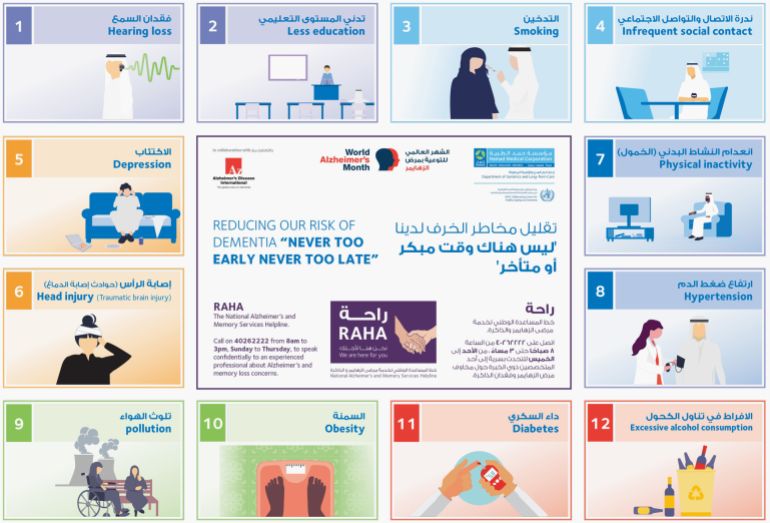
On the other hand, the Lancet Committee included – in a new report issued last year – depression as one of 14 adjustable risk factories, which are controlled and changed factors, unlike non -adjustable risk factors such as age or genetics, which represent half of the dementia.
On the other hand, Peter Gerrard, a neurosurgeon and professor at St. George University from the United Kingdom, said that during his work years he dealt with many cases of people suffering from the age of eighty -eighty dementia, who previously suffered from the middle of their mid -life from a serious deterioration in their mental health.
“Many of these people hide from the presence of a previous satisfactory history. Perhaps because of their feelings of shame, so they did not go to the doctor at all. But in the presence of the husband or wife, it is sometimes possible to discover a sick history, usually dates back to the ages of the thirties or forties, it extends from 5-10 years of severe depression, which they call mental or nervous collapse. I have seen this tens of times, and I think that there is a biological link between Monday”.
The British Telegraph newspaper shares the results of the research, studies and opinions of some experts about: What do you know about the relationship between depression and dementia, and how can the two illnesses be prevented?
How does depression increase the risk of dementia?
Amber John, a researcher at the University of Liverpool, and at the UK Research Center in the UK has a number of projects in this field. One of its most prominent results was that people who suffered from chronic psychological disorders were the most vulnerable to dementia in advanced stages of life. On the other hand, those who suffered from separate depression seizures were less at risk.
“It appears that chronic depression problems are causing damage to the brain, especially if they are not treated,” the researcher says.
It indicates that there are several reasons behind this. It has been shown that those who suffer from severe depression are more likely to face difficulty in following a healthy lifestyle in terms of physical activity, getting good sleep and preserving social relationships, which are known in their role in maintaining the integrity of the brain in general.
And in various ways – by understanding the biology of chronic depression itself – can prove their harm to the brain, where research studies show that those who suffer from chronic depression have high levels of nervous inflammation, which can negatively affect the brain cells. In another study, it was found that the level of the hormone cortisol associated with tension is overly tension in people with depression, which Amber and others believe leads to atrophy or contraction of fortresses, which is part of the brain that is usually associated with dementia.
“The high level of cortisol hormone has always been associated with the brain contraction and the occurrence of cognitive deterioration,” says Julia Dadley, head of the research department at Alzheimer’s Center in the United Kingdom.
Researchers are still completely not sure of the impact of this height, and there are more ongoing studies to understand what is happening accurately, and to know the age stage where the effect is greater.
Why can depression or anxiety sometimes be considered an early warning sign?
Researchers found, earlier this year, that the possibility of a person with depression increased continuously during the decade preceding the diagnosis of dementia.
Jonathan Shot, a professor of neuroscience at the University of London at the United Kingdom, says, “The neurologists at clinics indicate at the present time that sudden anxiety and depression, which appears over the age of 65 years, is a possible warning sign of the risk of developing dementia,” says Jonathan Shot, Professor of Neuroscience at the University of London at the United Kingdom.
Therefore, the sudden appearance of depression and anxiety can be considered – when they are over 65 years old and have not ever had any mental disorders – an early sign of dementia.
Dr. Gerrard talks about the presence of various cases of patients over the age of 80 years who initially suffered from symptoms of depression, and later diagnosed with dementia.
“It is not completely confirmed. There are many causes that lead to depression or anxiety in advanced stages of life. But in some cases, this can be linked to changes in the brain that occur in the period before dementia.”
There are two main causes of dementia: the first of which is vascular diseases, followed by the accumulation of abnormal proteins that cause changes in the mechanism of brain cell communication. Essentially, brain damage, mood changes and psychological state begins.
Amber shows that this reason requires the need to do better tests that enable doctors to distinguish between depression or anxiety at the end of life, which are just mood disorders, and cases that represent a more serious reflection of brain cell damage.
Those with early symptoms of dementia can be considered a potential target of future clinical trials of the amending drugs, such as well -known Alzheimer’s treatments or other experimental drugs.
How to deal with middle -age depression and anxiety?
Experts now believe that early treatment of middle -aged mental disorders can avoid cognitive deterioration with advanced age stages, thus reducing the risk of dementia.
So, what can be done about the occurrence of mental disorders and their potential effect on the long -term perception and brain integrity?
The intake of antidepressants is one of the options, although the evidence of its effectiveness in terms of dementia is currently different, as it depends on the type of antidepressants used.
Some research on laboratory animals indicated that the selective serotonin reuptake inhibitors – a type of antidepressant – can reduce the accumulation of toxic amyloid protein in the brain, a major factor in the development of Alzheimer’s disease.
However, another study funded by the Alzheimer’s Association found that some anti -choline drugs, another category of antidepressants that operate by inhibiting the action of a specific chemical in the brain called acetylcholine, can increase the risk of dementia. Researchers still need to know more.
“It is not currently clear whether this is due to the changes that occurred in the brain before treatment or to the treatment itself,” says Dadley.
Amber shows a special interest in the role of psychological treatments in mid -age in reducing the risk of dementia in the long run. It indicates a study by the National Health Service data from all over the United Kingdom, which found that the use of psychological treatments to improve the symptoms of depression and anxiety in middle -aged people appear related to the low rates of dementia in the future.
“Early evidence is very encouraging, as it indicates that seeking help in treating symptoms of mental disorders can be an effective step in maintaining the integrity of the cognitive condition and in the future cognitive behavior,” she added.
Dadli explains that suffering for a long time of depression does not mean too late for action.
She also says dementia is not an inevitable result of aging, as some believe. Evidence and results appear more and more how true this, and it is possible to intervene and reduce risks.