

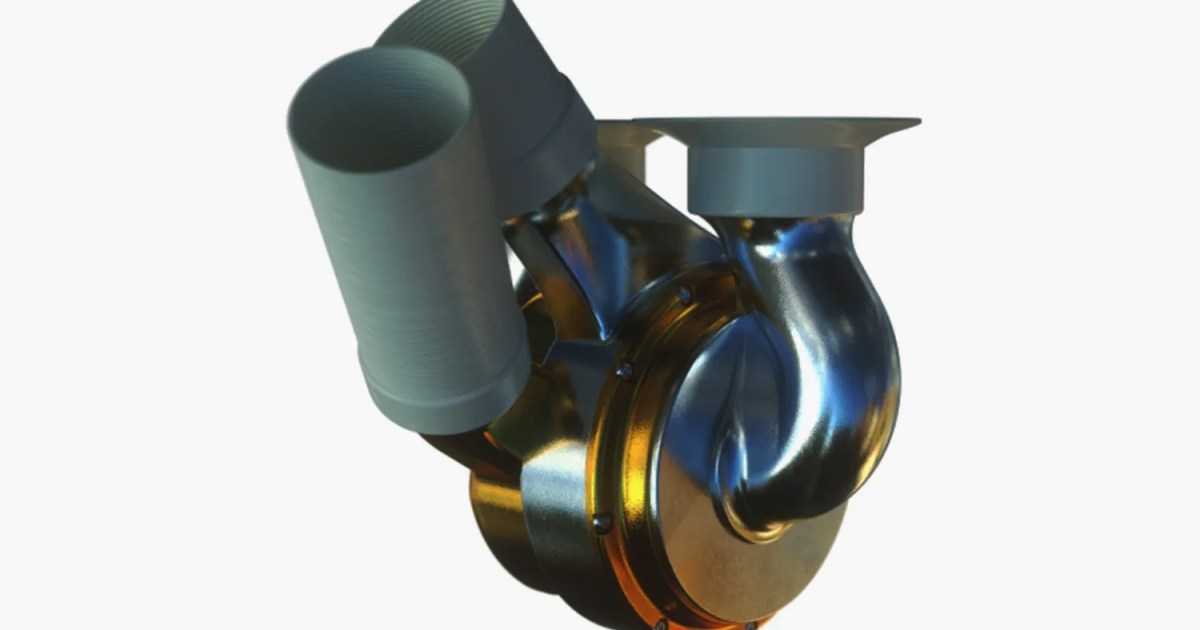
An Australian man with heart failure has become the first person in the world to survive more than 100 days with a titanium artificial heart, while he was waiting for a transplant from a donor.
This achievement revives the hopes that the mechanical hearts completely sing one day from the need for transplants from donors.
Here is what to know about how titanium heart works, and whether he can solve the problem of donor deficiency.
What happened to a man who has an artificial heart?
The forty -year -old, who refused to reveal his identity, became the first person to be discharged from the hospital after fully cultivated an artificial heart.
During a 6 -hour surgery in November 2024 at St. Vincent Hospital in Sydney, the BIABACOR (TAH) (TAH) is made of titanium in the patient who was suffering from severe heart failure.
After spending a few weeks in intensive care, followed by hospital monitoring, the patient was discharged from the hospital in early February.
The patient lived with the artificial heart 105 days before undergoing a heart transplant from a donor on March 6, and he is currently recovering well, according to his doctors.
Did anyone else underwent a titneum heart transplant?
In July 2024, a 57 -year -old man suffering from heart failure in his final phase of Bivacor Tah at the Baylaor St. Luke Medical Center in Houston Texas in the United States.
This was the first tool of titanium to a person, and it was like a bridge for a real heart transplant, and the patient was supported for 8 days in the hospital until it provided a donor heart.
Between July and November 2024, 4 other men, whose age ranged between the mid -1940s and the mid -sixties in the United States, also received the Bivacor Tah. Each patient successfully moved to a heart transplant from the donor and was discharged from the hospital within a month. None of the American patients left the hospital in the device.
Can the device solve the problem of heart donation deficiency?
Titanium -made heart can help treat the problem of deficiency of donors by keeping patients alive while waiting for a real heart transplant. In addition, not everyone who suffers from heart failure is eligible for a human heart transplant in the first place due to factors such as aging, underlying medical conditions, or drug use. The hearts of donors are usually devoted to those who suffer from the most dangerous cases.
Although it is still unclear if the heart of titanium can always become an alternative, experts in the team say this is their final goal.
“While we start with a group of patients whose clinical condition is deteriorating while waiting for the heart transplant, the most important group of patients is the group of patients who are not available as a choice,” said Joseph Rogers, head of the Texas Institute of Heart and the National Commander of American Experiences.
American procedures started as an early study of 5 people approved by the US Food and Drug Administration (FDA), with plans to expand to include 15 additional patients in the coming months. These experiments aim to determine whether the heart of titanium is able to keep patients alive while waiting for the transplant.
After this stage, Rogers says the team is planning to launch a broader study that also includes patients who may accept Bivacor’s heart as a permanent alternative to a weak heart.
“If things go well in clinical trials, I imagine that the device will be available globally within 4-5 years,” Rogers told Al-Jazeera.com via email.
However, he adds that people must take care of their hearts so that they never need any of these treatments.
The need for alternatives such as artificial hearts is due to the difficulty of finding a donor heart. There are not enough numbers available, and the patient’s heart may take a long time. In the UK, for example, patients are usually waiting for a regular waiting list to get a donor heart from 18 to 24 months. As for those who suffer from urgent or emergency situations, they get priority and may get a heart sooner to be more critical.
Heart failure affects at least 26 million people in the world, including 6.2 million adults in the United States. However, heart transplants are still rare, as less than 6 thousand operations are performed annually globally, and it is only devoted to the most severe cases.
How does titanium heart work?
Titanium artificial heart works completely different from the real heart, as the normal heart beats by pressure and relaxation to pump blood, but this artificial heart is not beating at all.
Instead, it contains a rotating disk inside it that moves blood throughout the body. This disk floats in place with a magnet, so it does not touch anything, which means that there is no friction and reduce the possibility of damage it over time.
In order for the artificial heart to continue to work, it needs a small external console, which works with batteries during the day and arrives at the source of energy at night. A thin cable passes under the skin to connect the heart to this unit.
Most artificial hearts are replaced only by one side of the heart, and the left side is usually. But the heart of Bivacor replaces the entire organ, which makes it an option for people who suffer from complete heart failure and who may not escape while waiting for a donor’s heart.
Why chosen titanium to the artificial heart?
Titanium is chosen because it is strong, lightweight and corrosion, which makes it perfect for long -term use in the body; Unlike other artificial hearts that contain multiple animated parts it can wear out, and this heart contains only one rotor tablet, which reduces the risk of failure.
Before developing the artificial Bivacor heart, the total artificial heart “Syncardia” was the most used device for patients with severe heart failure.
The heart of Syncardia was approved by the US Food and Drug Administration in the early first decade of the 21st century, which is mainly made of polyurethane, a type of durable plastic. Over the past two decades, it has been temporarily planted in more than two thousand patients in 20 countries while awaiting heart transplants from the donor. However, the Syncardia device is large and relatively complicated, and it contains multiple animated parts that can erode over time.
Scientists also explored the use of animal organs to treat heart failure. In January 2022, surgeons at the University of Maryland University in the United States performed the first genetically modified pork transplant of a human patient suffering from severe heart disease.
Despite the initial success, the patient suffered complications and died about two months later.
How long can the heart of titanium last?
Currently, no one knows the exact age of the heart of titanium in humans. In laboratory tests, the device has worked continuously more than 4 years without any failure signs.
While the 100 -day Australian man’s experience was the longest registered use of titanium heart in humans, the Bivacor team said that more experiments needed to determine whether it could become a long -term alternative instead of just a temporary bridge for a transplant.
What challenges facing the artificial heart?
Immune rejection is one of the biggest challenges facing organ transplants, as the body attacks the new organ as a strange body.
Because titanium BIVACOR heart does not contain any biological tissue, the risk of rejection is less compared to the hearts of donors or pigs in the pigs. However, experimental protocols indicate that patients are still taking blood blood to prevent blood clots around the device.
In addition, BIVACOR heart patients should stay with an external energy source always.
Although portable batteries allow some movement, the process still requires lifestyle adjustments such as recharge the battery, avoiding activities that may damage the external parts, and plan to travel carefully to ensure energy access.