

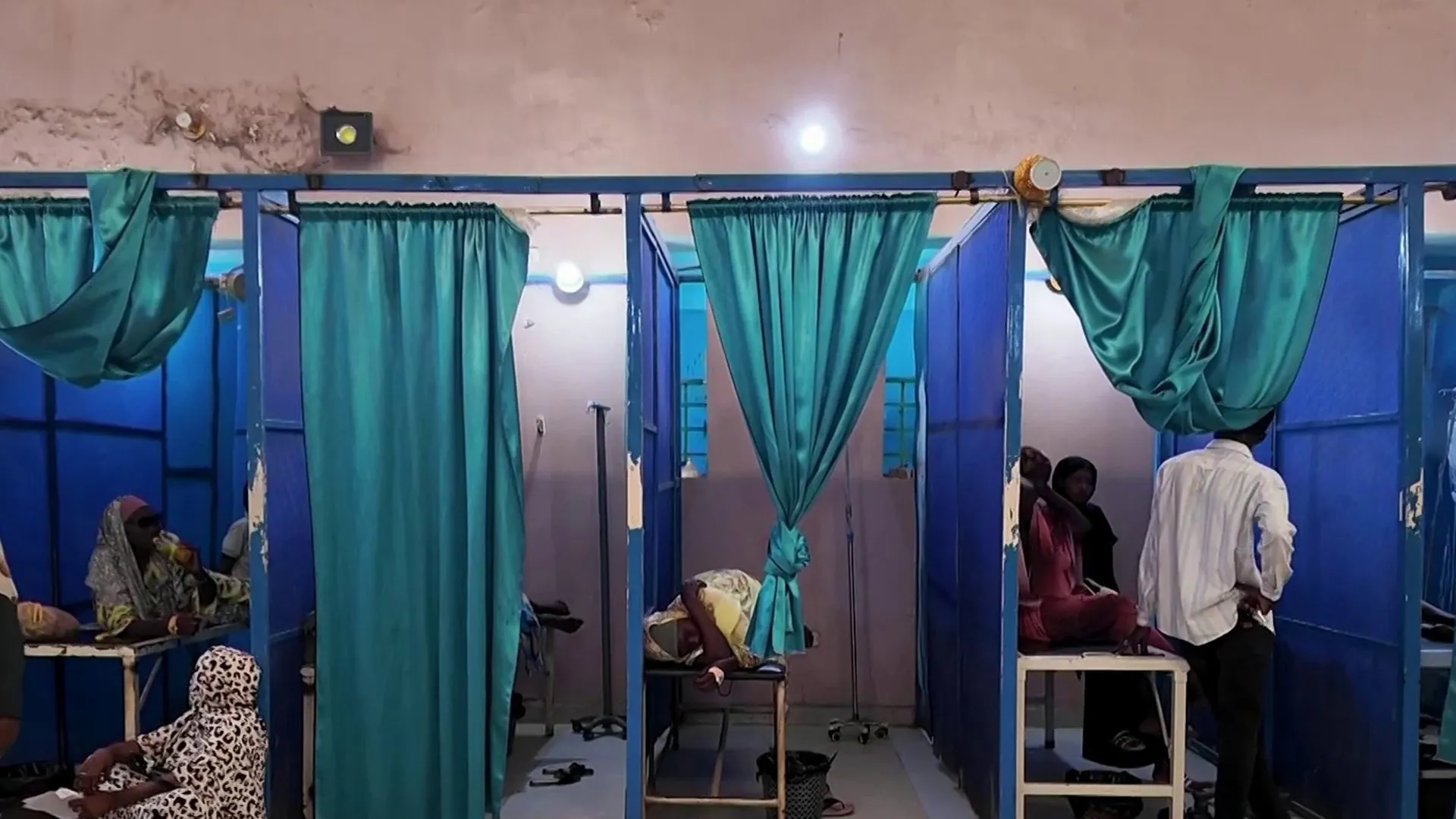
Dengue fever opens a new front of suffering in the city of Damazin, the capital of the Blue Nile region, where infections are accelerating amid a deteriorating health environment, while the effects of war overlap with weak health services to exacerbate the crisis.
A report by Al Jazeera’s correspondent from Damazin, Wadah Al-Taher, conveys a picture of Awatif – a sixty-year-old woman – who found herself facing the disease for the second time in one month. She says that the new infection was more severe than the previous one, while her daughter is in the hospital infected with the disease, and her brother and son also suffer from the same symptoms, in a scene that reflects the spread of infection within the same family.
The report indicates that stagnant water, polluted sewage, and accumulation of waste provided a suitable environment for the breeding of mosquitoes that transmit the disease, which prompted health authorities and volunteers to launch a field campaign to combat dengue fever and raise awareness of its dangers, which began in the most affected neighborhoods.
Volunteers participating in the campaign confirm that their teams are roaming houses, house by house, as part of efforts coordinated by the Ministry of Health, with the aim of reducing the spread of the disease and eliminating mosquito breeding hotspots.
According to the Ministry of Health in the Blue Nile Region, the city of Damazin recorded an unspecified number of deaths and more than 3,000 cases of dengue fever, concentrated in a number of neighborhoods, especially the northern ones.
An official in the ministry acknowledges that the actual numbers may be higher than the cases that the investigation teams were able to record, attributing this to the presence of infections that did not reach the health system, expressing his hope that the ongoing campaign will contribute to reducing infection rates.
The report adds that the emergency department at Al-Damazin Hospital receives about 20 cases of dengue fever every day, at a time when doctors warn that the continuation of this rate requires urgent intervention to control the outbreak of the disease.
Cholera outbreak
Commenting on the developments of the crisis, the official spokesman for the preliminary committee of the Sudanese Doctors Syndicate, Dr. Sayed Muhammad Abdullah, believes that the announced numbers do not reflect the true scale of the disaster, pointing out that the deterioration of the health system and the weakness of epidemiological investigation mechanisms make many infections outside the official statistics.
He confirms that the crisis is not limited to Damazin, as it coincides with the outbreak of cholera in the states of West Kordofan, North Kordofan, and White Nile, in light of the continuing war, rainfall, and deterioration of sewage networks, which increases the chances of epidemics spreading.
Abdullah holds the continued fighting responsible for the worsening of the humanitarian and health situation, explaining that the mass displacement and population accumulation in limited areas double the pressure on the remaining health facilities, and make the efforts of medical staff and volunteers – despite their importance – insufficient to confront the scale of the crisis.
He stresses that containing the spread of dengue fever, cholera, and other epidemics requires concerted local and international efforts, and opening humanitarian corridors that guarantee the arrival of medical aid, in addition to stopping the war, which he sees as the main factor in the collapse of the health sector.
The spokesman for the Medical Syndicate indicates that about 30 million people in Sudan need humanitarian aid, while only about 15% of the needs have been covered, while nearly 19.5 million people face the risk of hunger, which makes the simultaneous displacement, malnutrition, and spread of diseases a challenge that exceeds the capabilities of the current health system.
Abdullah warns that the death rate associated with dengue fever in Sudan has reached – according to his estimate – about 13.7%, which is a high rate, pointing out that last year the country witnessed a widespread wave of the disease in most states, while water scarcity and damaged infrastructure lead residents to resort to storing water in unsafe ways, which provides an additional environment for the breeding of mosquitoes that transmit the disease, and threatens to further expand the epidemic.