

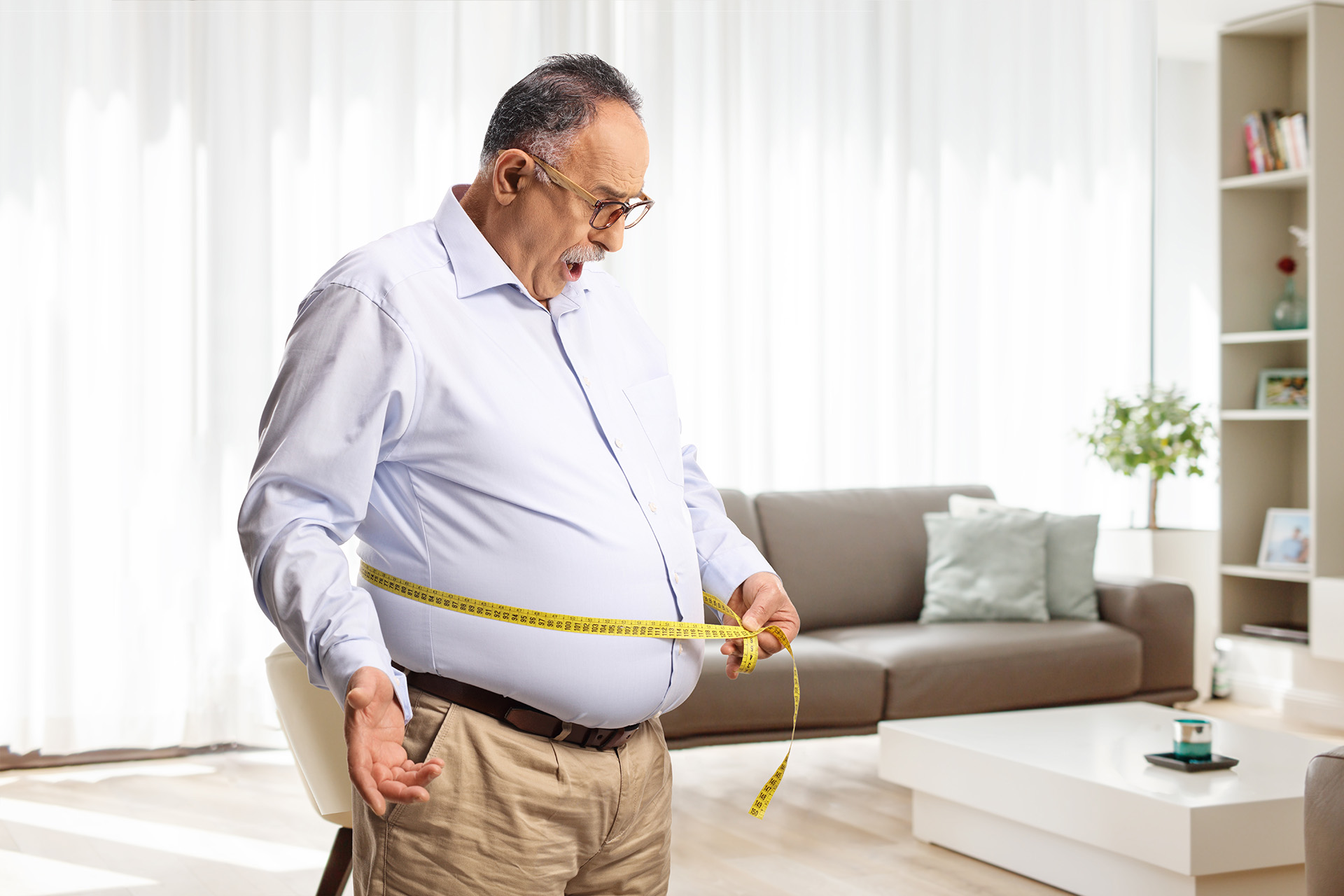
A recent study revealed that the BMI (BMI) – which is widely used to assess a healthy weight – may lose its accuracy and effectiveness with age.
The study was conducted by researchers from the University of Rome “Tor Fergata”, Modena University and Rijio Emilia in Italy and Beirut University in Lebanon, and the research will be presented at the European Obesity Conference 2025, which will be held in Spain on May 11-14 next, and wrote about Yurrick Arart.
The body mass index is one of the main tools used to assess the weight of individuals, and it is calculated by dividing the weight by kilograms on the square of the length of the meters, and it is not a measure of body fat.
The natural body index ranges between 18.5 and 24.9 kg/m², and increases 25 kg/m² in people with weight gain, and in the event of more than 30 kg/m², the patient suffers from obesity.
Filled accumulation and distribution
Obesity is a major health problem characterized by excessive accumulation of fat in the body, and it may also be accompanied by a decrease in the muscle mass, but there is still a lack of knowledge on how to change the distribution of fats and muscles with aging in people who suffer from obesity, so this study aimed to analyze differences in the formation of the body between different age groups.
The study found that with the progress of obese people in age, the process of re -distribution of fats and muscles in their bodies may occur without major changes in the body mass index, and this makes the body mass index less effective in assessing the health condition.
The study included more than 2,500 adults of both sexes, and the BMI had 25 kg/m² or higher, and their bodies were evaluated using a special technique that used X -rays, and the participants were divided into 3 age groups:
- Youth category (20-39 years)
- Middle age group (40-59 years)
- The elderly category (60-79 years)
The owners of a single body mass index were compared to different age groups.
BMI may be misleading
The results showed that males witnessed an increase in the percentage of total fat and a decrease in the total muscle mass with age, while females maintained similar proportions of fats and muscles across the three age groups.
The most interesting result was that the participants in the middle age and the elderly of both sexes showed an increase in the percentage of fat in the trunk area, and a decrease in the peripheral muscle mass in the arms and legs compared to the youth category despite the similarity of the body mass index between all age groups.
Professor Marwan Al -Ghosh, one of the researchers participating in the study from the University of Modena and Rijio Emilia, says that “these results show that we cannot rely only on the body mass index without taking into account the content and distribution of body components in people who suffer from obesity through different age groups,” middle age and the elderly individuals have a higher percentage of central fats and a lower muscle mass compared to young people, and these results open new prospects for research Future.
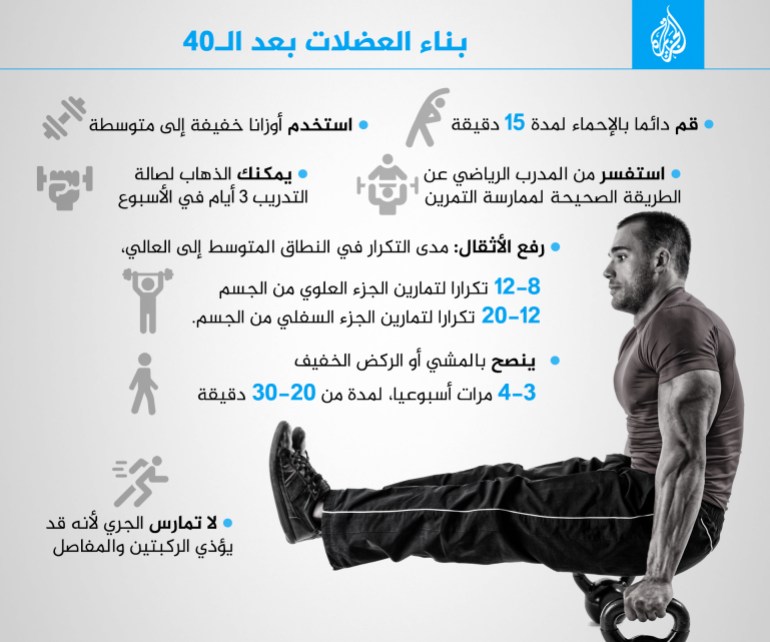
The researchers believe that this process may have significant negative health consequences, such as low -degree chronic inflammation (the continuous presence of high levels of inflammation causes), insulin resistance, and an increase in the risk of many cardiovascular diseases without significant changes in the body mass index.
“Accordingly, the use of the body mass index becomes unhelpful and may be misleading, so there is a need for more research to develop new tools capable of discovering these changes in the mass of fats and muscles in this specific age group,” said Professor Al -Ghosh.
“Instead of relying on the BMI we need to use simple and effective tools that can detect and distribute changes in the mass of fat, such as the waist to length, in addition to measuring muscle mass and strength, including the fist strength test.”