

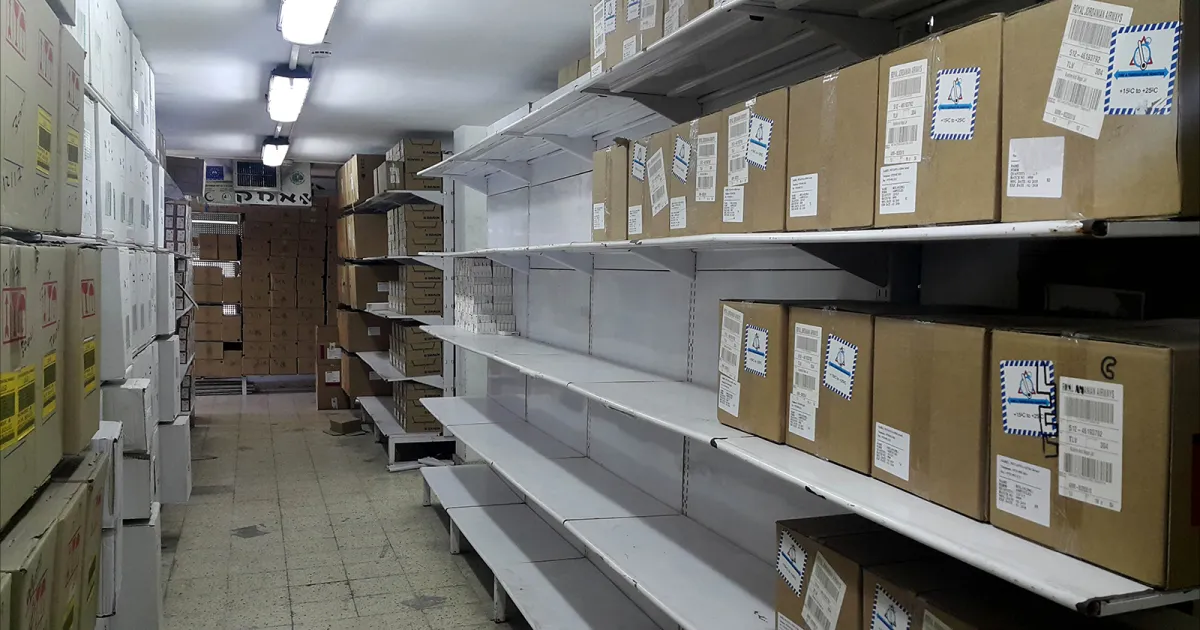
The Palestinian Ministry of Health in the Gaza Strip warned of the worsening crisis of shortage of medicines and medical supplies, in light of the continued Israeli restrictions on the entry of health supplies and the evacuation of patients for treatment outside the Strip.
The Ministry revealed that the shortage in medicine stocks reached 45%, while the shortage in laboratory materials reached 80%, which affected the ability of hospitals to provide treatment services to patients, especially those suffering from chronic diseases and cancer.
In an interview with Al Jazeera, Ministry of Health spokesman and Director of the Health Information Center, Zaher Al-Wahidi, said that the health system in the Gaza Strip faced extensive damage during 3 years of war as a result of the Israeli targeting of hospitals and medical personnel, and the withdrawal of a number of health facilities from service, in addition to the restrictions imposed on the entry of equipment and medicines and the evacuation of patients.
Deficits and shortcomings
Al-Wahidi explained that the shortage rate in medicines reached 45%, rose to 56% in medical consumables, and reached 80% in laboratory materials, indicating that these shortcomings were directly reflected in the medical services provided by hospitals and health centers.
He added that the crisis has extended to primary health care medications, especially treatments for chronic diseases, whose patients need regular doses to maintain the stability of their health condition, warning of complications that may result from interruption of these medications or delay in obtaining them.
He pointed out that Type 1 diabetics were among the most prominently affected by the lack of medicines, as their number exceeds two thousand patients in the Gaza Strip, including about 600 children, in light of a severe shortage of insulin and the lack of insulin pens, and the resulting difficulties in providing appropriate treatment for children.
Al-Wahidi pointed out that cancer patients in turn faced a shortage of chemotherapy drugs, forcing some of them to receive incomplete treatment protocols, which may affect the effectiveness of treatment and the chances of improving their health condition.
Patients at risk
He added that the crisis also included a shortage of analgesics needed to relieve the pain of cancer patients, in conjunction with the continued restrictions that hindered their travel outside the Gaza Strip to complete treatment, which increased the difficulty of dealing with cases that needed medical interventions that are not available inside Gaza.
He explained that the shortage was not limited to treatments for chronic diseases and cancer, but also included emergency medicines, intensive care, and heart surgery, in addition to basic medical supplies, which doubled the challenges faced by medical teams in dealing with critical cases.
Al-Wahidi warned that the continued shortage of medicines and medical supplies has exposed patients’ lives to increasing risks, stressing that interruption of some treatments or delay in obtaining them may lead to serious complications that may lead to death, as “a pill means life, especially for patients whose health conditions do not allow them to postpone or dispense with treatment.”
Al-Wahidi called for lifting the restrictions imposed on the entry of medicines, consumables and medical devices into the Gaza Strip, and removing the obstacles that prevented the evacuation of patients for treatment abroad, in addition to allowing the rehabilitation and restoration of damaged hospitals, enabling the health system to regain its ability to provide the necessary medical services to the population.