

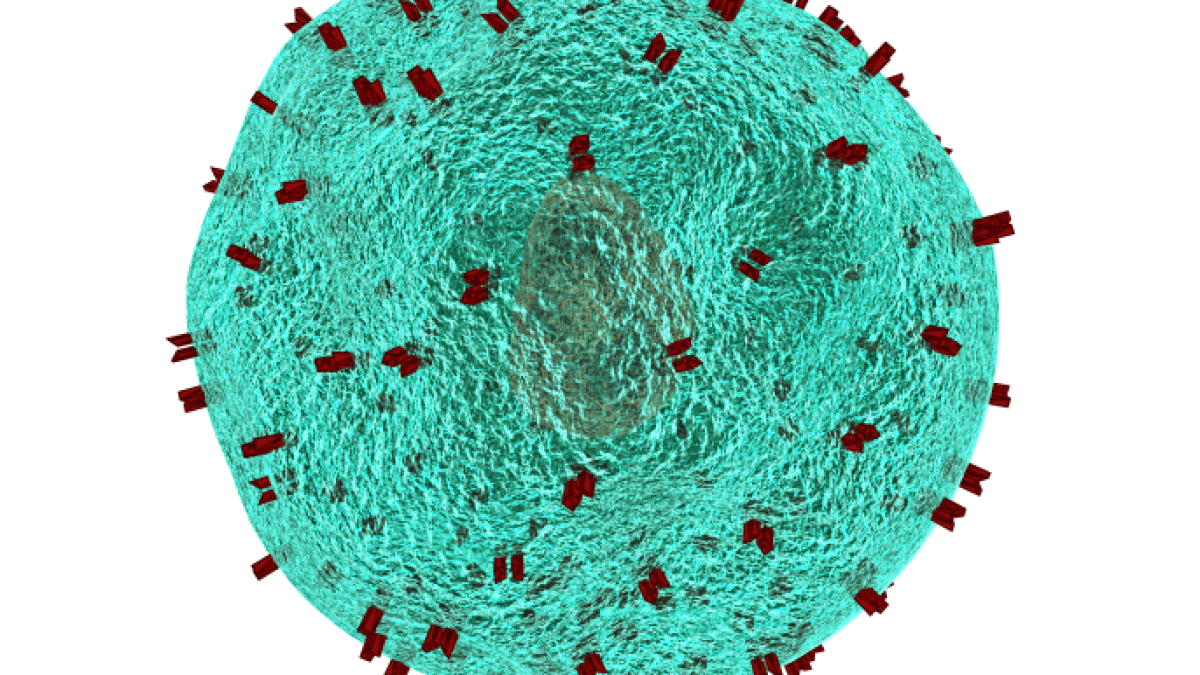
A new study revealed a hidden secret in the HIV life cycle of type 1, and highlighted how the virus is strengthened for its continuation, multiplication and ability to evade the immune system.
There are two types of HIV, first and second. HIV of the first type HIV is similar to the HIV of the second type in many aspects, including their primary genetic arrangement, their transmission methods, their reproduction paths within the cells, and their consequences; Both lead to AIDS. However, the second type is characterized by a decrease in its transmission and a decrease in the possibility of the disease to develop into advanced stages.
The study was conducted by researchers from Charles E College. Schmidt Medicine at the University of Florida Atlantic in the United States, and its results were published in NPJ Viruses, and wrote about Yurrick Alrt.
Gap
The new strategy can be summarized that type 1 HIV has a spongy trap that absorbs the cells produced by the cell to save itself from it and detain it to prevent it from performing its work.
Viruses consist of small molecules that carry their genetic material and a cover that surrounds themselves, but they lack everything else, so they can only multiply using living cells tools, so viruses take advantage of plants, animals and humans to do so.
The genetic substance carried by viruses can be in the form of a thorny or straight tapes, and these tapes may consist of DEA DEADs known as the “DNA” (the original genetic material that carries instructions) or Ribonucleic acid (the genetic material that can be understood by protein making machines in Cell).
HIV
HIV belongs to the Retrovirus family. The Campaign virus works by converting its RNA into “DNA” as soon as it is in the host cell, then it merges this DNA into the DNA of the host cell, allowing the virus to reproduce.
Dr. Massimo Kaboti, a researcher in the study and professor at the Department of Biomedical Sciences at Schmidt College of Medicine at the University of Florida Atlantic in the United States, said: Circular RNA.
“We knew that the circular RNA appears in the DNA viruses, such as the Epstein-Bar, and the HPV, but the vision that it is being generated by the RNA, such as HIV is very exciting,” he added.
The RNA circular shape enables the work as a sponge, as it absorbs the MIRNAS (MIRNAS) and prevents it from performing its usual functions that include controlling genes that are activated or disrupted. Although scientists have previously discovered thousands of circular DNA molecules in human and animal cells, only a few of them were found in viruses, especially in large DNA viruses, such as herpes viruses that are characterized by large genomics, and can remain hidden in the body for years before they are active again.
The team has identified at least 15 different types of RNA circular DNA for HIV-1, and confirmed its presence using advanced molecular techniques and sequence tools.
“When HIV affects the body, certain immune cells called CD4+ T Cells respond by increasing the levels of two types of small RNA that are likely to help in fighting the virus,” said Kaboti. Usually, there are small molecules of RNA at low levels, but they increase when a person has HIV.
HIV appears to be resistant by producing circular DNA molecules that trap these fine molecules, so that the immune response weakens and the virus helps to produce more copies. This indicates that the circular DNA molecules of HIV may help maintain live -infected cells and allow the virus to stay hidden in the body for a long time, which is one of the main causes of the difficulty of treating HIV.