

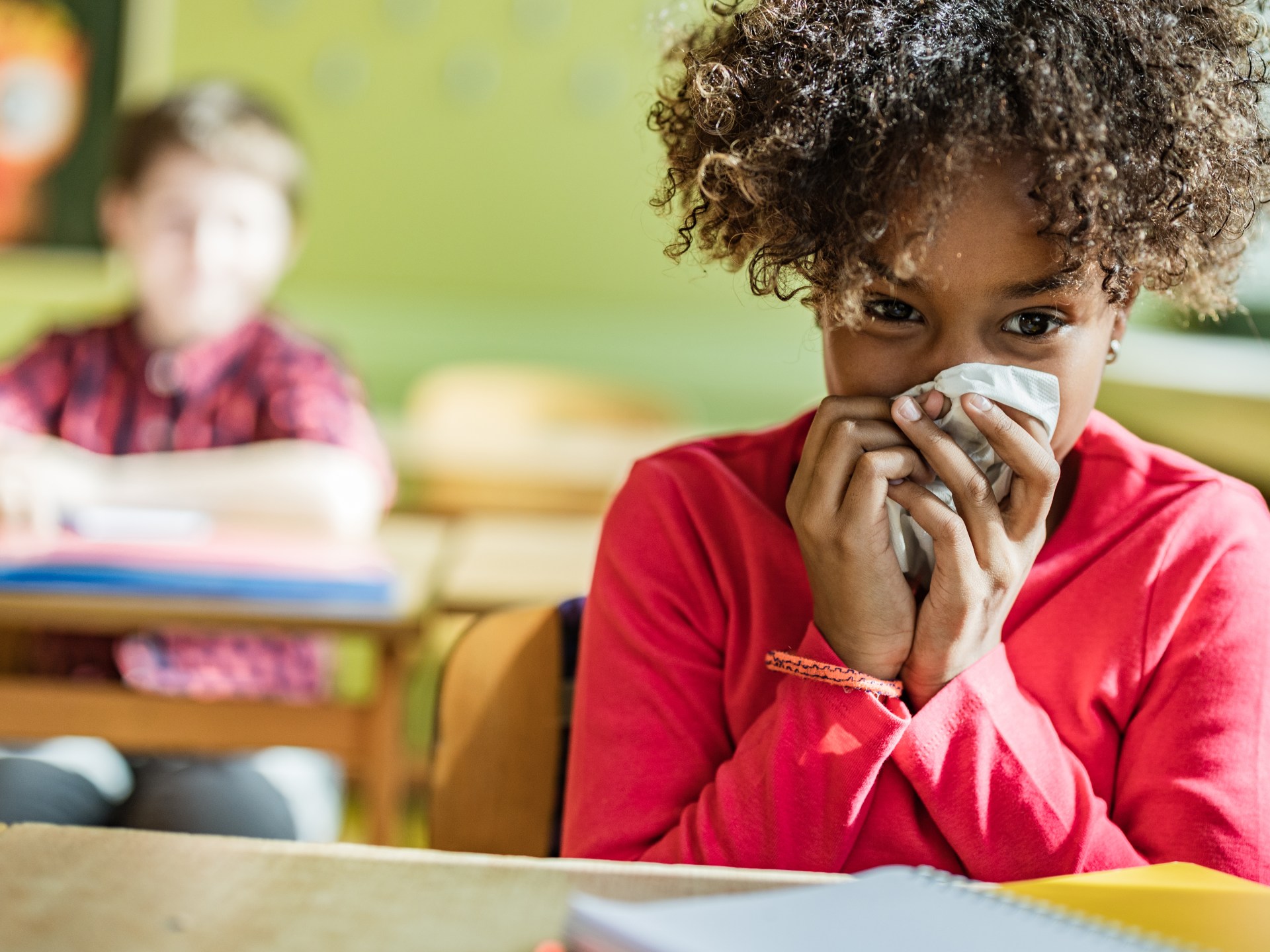
While returning to schools, rates of certain diseases rise, so what are they? What are the reasons? How to prevent?
As children closely communicate with other students in the semester, and the appearance of certain diseases more clearly at this time of the year, children are likely to have a cold or two.
On average, younger school -age children from six to 12 colds or disease every academic year. When children grow up, they tend to develop less diseases because they gain immunity against some viruses that cause many of these common diseases.
What are some common diseases as schools return to the time?
Colds
The colds tend to be the most common diseases throughout the school year. It is often caused by one of the many potential viruses, which means that antibiotics are not necessary.
Symptoms are often mild with cough, congestion and runny nose. Sometimes, children with sore throat and/or fever with colds.
Sophisticated sore throat
It often causes sore throat, along with fever, headache and stomach pain, and this disease is caused by a bacterial infection. It is easily spread from one child to another, especially in the case of sharing drinks and eating tools. Antibiotics are recommended to prevent infection complications.
flu
The influenza usually causes high temperature and body pain, along with coughing, congestion and runny nose. Children generally need to stay at home and not go to school for a few days until fever decreases and restore their energy.
Stomach
What is often referred to as stomach flu is an inflammation of the stomach and intestine that causes vomiting and diarrhea. This often occurs due to a virus that affects the stomach and intestine. It is very common and very prepared. Maintaining body moisture is essential during stomach flu.
Pink
The pink eye (or conjunctivitis) causes redness in the eyes with green or yellow secretions. The eyes may be closed in the morning due to the peeling of the secretions.
In this case, the mother or father should gently soften the secretions of their child and wipe them with a warm and moist cloth. The pink eye is very infected and can be caused by a virus or bacteria. Sometimes, anti -bacterial eye drops are necessary to remove the infection.
How to reduce the risk of these diseases in children?
Washing hands
Children should be directed to wash hands before eating, after using the toilet, and after cleaning the nose, coughing or sneezing. To wash the hands well, the child must be taught to wet his hands with water, then rub them with soap, and rub them together for 20 seconds.
The child should be sure to rinse his hands with water and dry them with a clean towel, or let them dry in the air.
Non -participation
The child should be emphasized not to share his personal purposes such as a cup of water and spoons with other children. Wipes should be used at sneezing and they are in the garbage.