

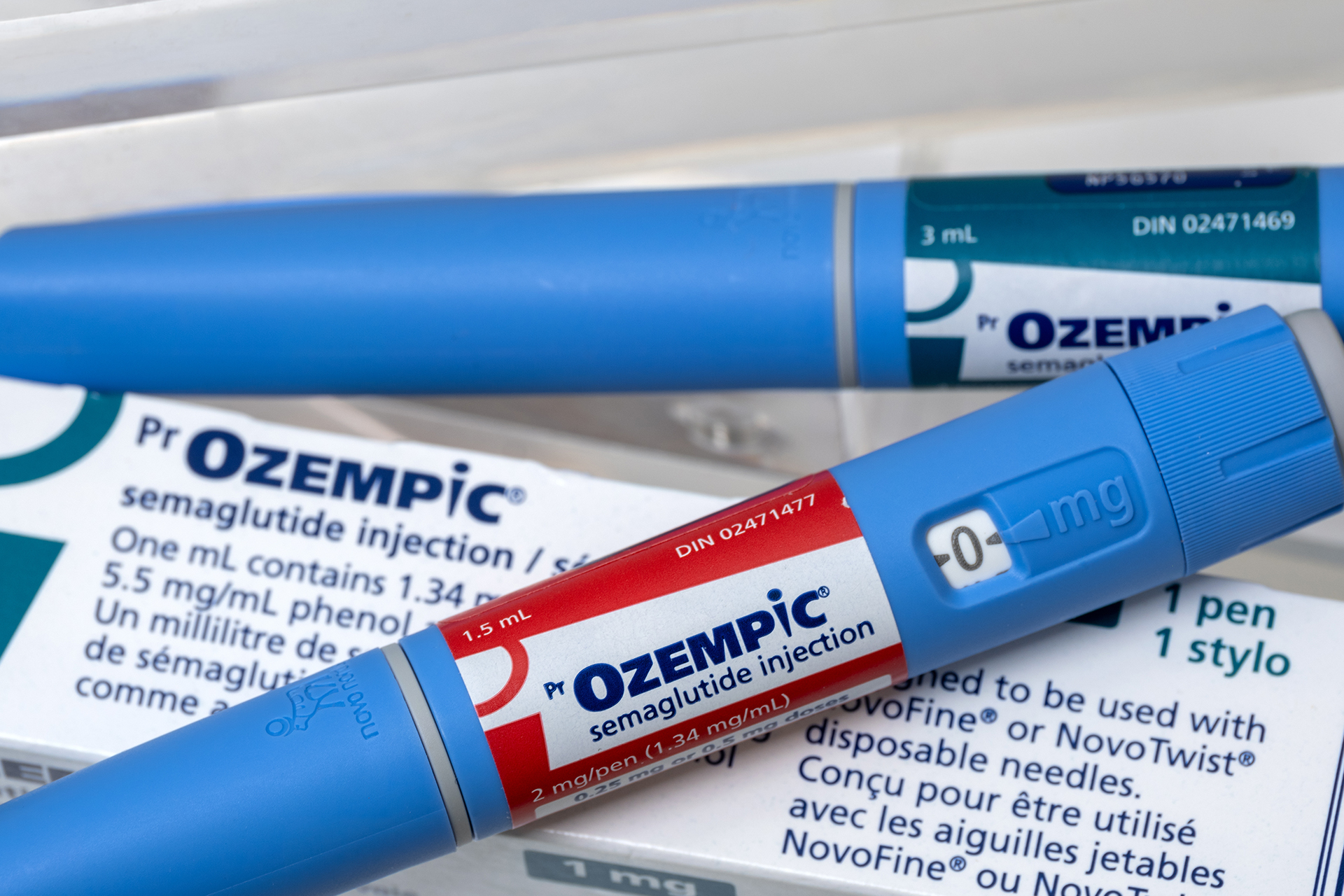
A new study indicated that the “GLB-1” drugs used to treat diabetes and weight loss-such as Ozmbek and Mongaro-may have an effect associated with the risk of tumors in its countries, explaining that it usually limits this risk, but it may increase it sometimes.
The study included a review of American researchers medical records over 10 years for 43 thousand and 317 users of these drugs and 43 thousand and 315 who did not take them.
The “GLP-1” drugs from Novo Nordsk included type 2 diabetes, such as Victoza, Osimbek, or its weight loss, and another from Eli Lily is Monjao to treat diabetes or zibound to lose weight.
All volunteers were at risk of developing obesity.
The researchers told the “Gama Onakology” journal that every year, out of every thousand participants, 13.6 users of the “GLB -1” drugs were diagnosed with a 14-numbered cancer compared to 16.6 non-users.
After taking into account the individual factors, the total risk of cancer decreased 17% in the users of “GLB -1” drugs.
Specifically, the intake of these medications was associated with a decrease in the risk of endometrial cancer by 25%, ovarian cancer 47% and mening tumors 31%.
The GLP-1 drugs were also associated with a slight increase in the risk of kidney cancer. This increase was not statistically significant, which means that it may be a coincidence. But the researchers said that a previous study also monitored an increase in the risk of kidney cancer with the use of “GLB -1” drugs to treat diabetes.
And such a study related to monitoring cannot prove the relationship and result relationship, and it is impossible to know whether any decrease in the risk of cancer is caused by the same GLP-1 or the weight loss caused by the drug.
However, the researchers said, “Given that more than 137 million people in the United States may currently get the” GLB-1 “treatments, minor changes related to the risk of cancer have a major impact on public health.”