

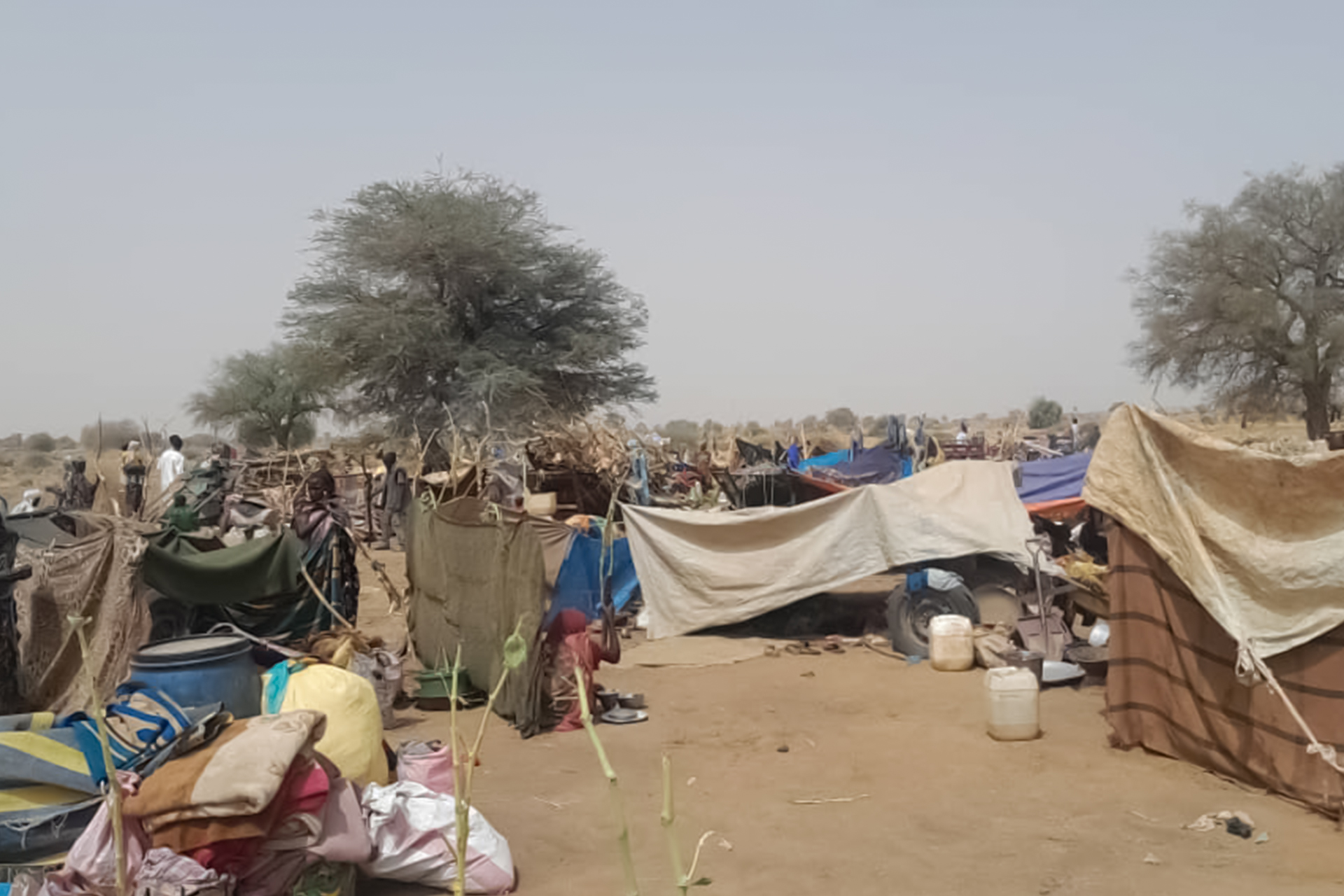
Al-Fasher- Armed confrontations continue in the city of El Fasher, northwest of Sudan and the surrounding areas, where clashes between the Sudanese army and its allies intensify on the one hand, and the rapid support forces on the other hand, which increases the poor humanitarian conditions in the region.
More than a million people from Zamzam camp have been displaced to the city of El Fasher in the past two weeks, according to the Humanitarian Aoun Commission in North Darfur.
According to the latest report issued by the Government Commission, the total number of displaced people in the city of El Fasher amounted to one million and 798 thousand, equivalent to 350 thousand and 217 families due to the repeated attacks launched by the Rapid Support Forces on civilians.
The figures indicate that the number of displaced people from Zamzam camp to the city of El Fasher between April 11, 2025 to April 16, 2025, reached about 103 thousand and 712 families, equivalent to 515 thousand and 415 individuals, according to the information received from the community administration in the camp and international immigration organizations.
Human tragedy
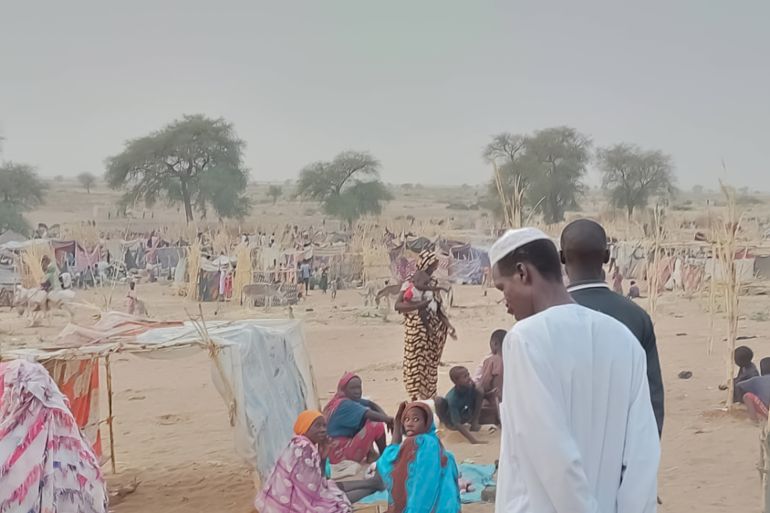
The spokesman for the displaced people in Zamzam camp, Mohamed Khamis Doda, told Al -Jazeera Net that the conditions of the displaced in the city of El Fasher are in a growing deterioration day after day, explaining that everyone suffers from a severe decrease in shelter, food, drinking water and health care.
He pointed out that many of the displaced people are forced to sleep on the ground under the trees, without finding what fits their hunger, and appealed to the international community to intervene urgently to alleviate their suffering and provide the necessary support for the trapped displaced.
The city of El Fasher and the camp suffered from a siege and violent artillery shelling for several months before rapid support for the camp dominated on April 13, as the storming process exacerbated the suffering of the displaced, who fled to El -Fasher as they lost many of the essential ingredients.
Duwa said that the camp’s supreme committee had recorded 1,500 people in the attack that targeted the camp, and indicated that the victims were a large number of children, women and the elderly, in addition to Al -Khalawi students (Quranic Schools) who were present in the area during the attack.
He added that this outcome represents a great human tragedy, as many families lost their loved ones in moments of terror and destruction, and stated that the committee is working to document damage and provide reports to international bodies to ensure the provision of the necessary support to the affected people.
Nevertheless, the Sudanese army and its allies still control vital sites in the historical cities of El Fasher and some of the surrounding areas, achieving daily progress on various fronts.
In a field development, the military media of the Sixth Division said on its Facebook page on Wednesday that he managed to thwart an attempt to escape elements of rapid support in a village of dumps near Al -Fasher.
He pointed out that the city witnessed violent clashes that killed dozens of militia members, in addition to burning three four -wheel drive vehicles, while the rest fled to the west of the city.
He stressed that the operation was carried out in coordination between the armed forces, the joint force, the police, security and popular resistance, with the aim of eliminating the nests in which the fighter fighters are fortified.
Supply points
In a related context, the Sovereignty Council announced on Monday that the Sudanese government agreed to the United Nations request to establish logistical supply bases in the cities of Tawila and Melt, to facilitate humanitarian work in these two regions.
This approval came in a telephone conversation received by the President of the Sovereignty Council, Abdel Fattah Al -Burhan, from the Assistant Secretary -General of the United Nations, Tom Fletcher.
He told Al -Jazeera Net that the proposed areas as the starting points for the distribution of aid are under the control of one of the parties to the armed conflict, such as the Melt area, which is currently under the control of the Rapid Support Forces, and indicated that this region is subject to laws and procedures imposed by rapid support, which makes acceptance of this proposal not possible.
He pointed out that a long area that is subject to the powers of the Sudan Liberation Army, led by Abdel Wahid Nour, accusing these parties of not being neutral in delivering aid to the beneficiaries.
Since the Sudanese army announced its full control of the capital, Khartoum, the conflict has clearly turned towards western Sudan, specifically to the city of El Fasher, which has returned to be the focus of attention amid the escalation of security and humanitarian complications in it. Where civilians are now trapped from difficult situations, and they ask for help from all sides.