

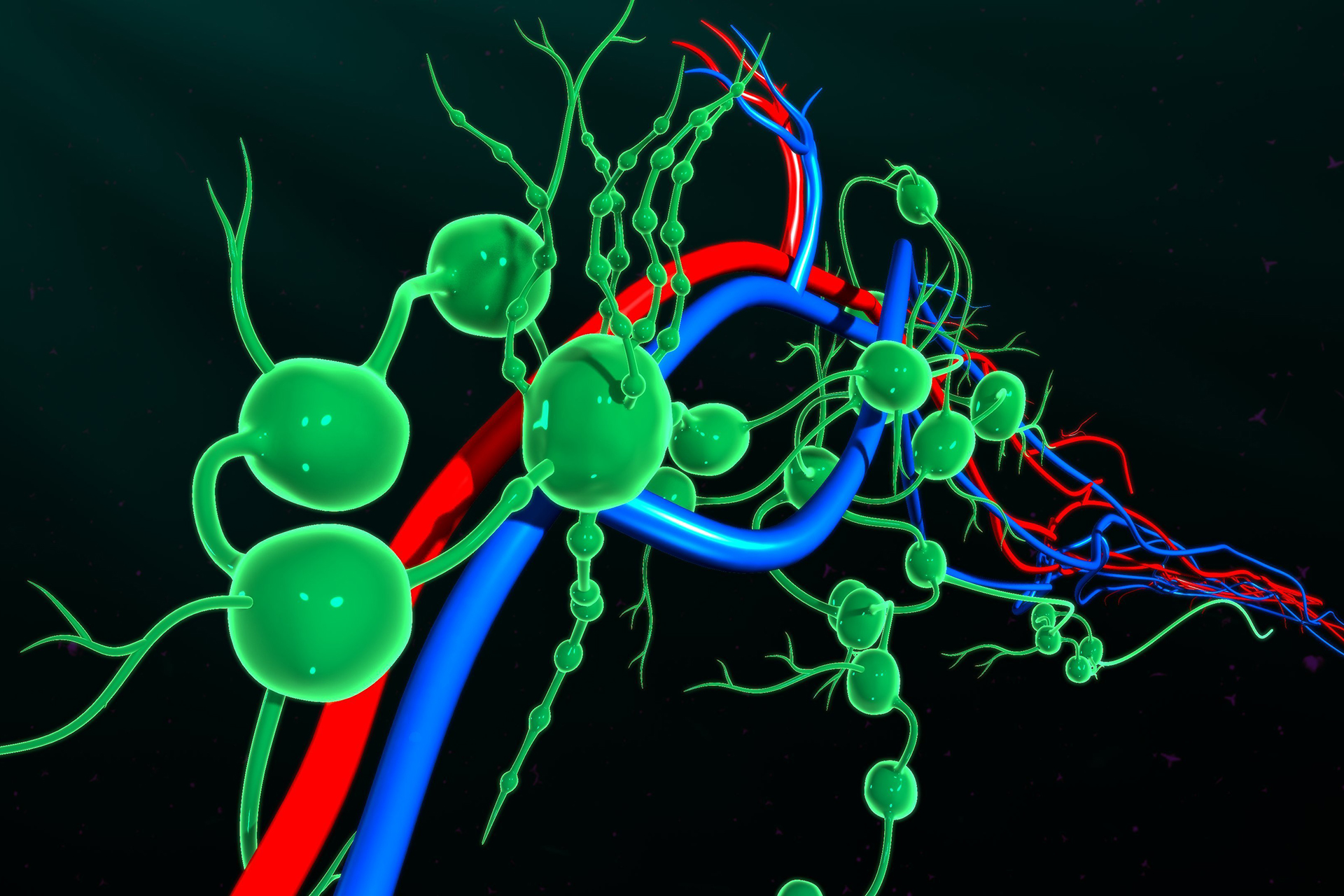
A new study revealed that the lymph nodes provide the appropriate environment for stem -like T cells, which is an important type of immune cells to survive, reproduce and produce deadly cells capable of fighting cancer or viruses.
The lymph nodes are part of the lymphatic system consisting of a group of organs, vessels and tissues that protect the body from infection and maintain a healthy balance of fluids throughout the body.
These cells do not develop or multiply the same effectiveness in other immune organs, such as the spleen, which makes the lymph nodes necessary for a strong immune response and the success of immunotherapy.
The study was conducted by researchers led by the Peter Duhreti Institute of Infection and Immunology at the University of Melbourne in Australia, and published the results in two research papers in the Nature Imouuncy magazine, and the Yurik Alier website wrote about it.
Professor Axel Calis, from the University of Melbourne, the head of the laboratory at the Duhri Institute and the co -author of both research, stated that these results have important effects on cancer treatment.
He added: “The lymph nodes are not just a negative waiting room for immune cells. Rather, they train and learn T cells actively, and send them to do their job.”
He added: “Our research indicates that removing the lymph nodes during cancer surgery, which is a common practice to prevent the spread of the tumor, may unintentionally reduce the effectiveness of treatments. The lymph nodes can maintain immune responses and increase the effectiveness of immunotherapy.”
The state of the lymph nodes
This work also helps to explain the reason why some patients respond to immunotherapy better than others. The state of the lymph nodes and its function affects the extent to which the immune system is able to produce T -cell -fighting cells, which directly affects the success of immunotherapy.
Dr. Carlson Tsui, post -doctoral researcher at the Duhri Institute at the University of Melbourne and the co -author of one of the two research paper, said that the results may contribute to developing new strategies to increase the effectiveness of immunotherapy.
He added: “Our research determines the molecular signals that participate in organizing stem cells and their ability to produce effective killer cells. These results can guide the development and improvement of immune treatments for cancer and chronic infections.”
He added: “Moreover, our research shows that instead of focusing only on the tumor itself, treatments should be designed to maintain and enhance lymph nodes function. We can enhance the body’s natural ability to fight cancer by targeting these vital immune centers, increasing the effectiveness of current immune treatments, and helping more patients respond to treatment.”