

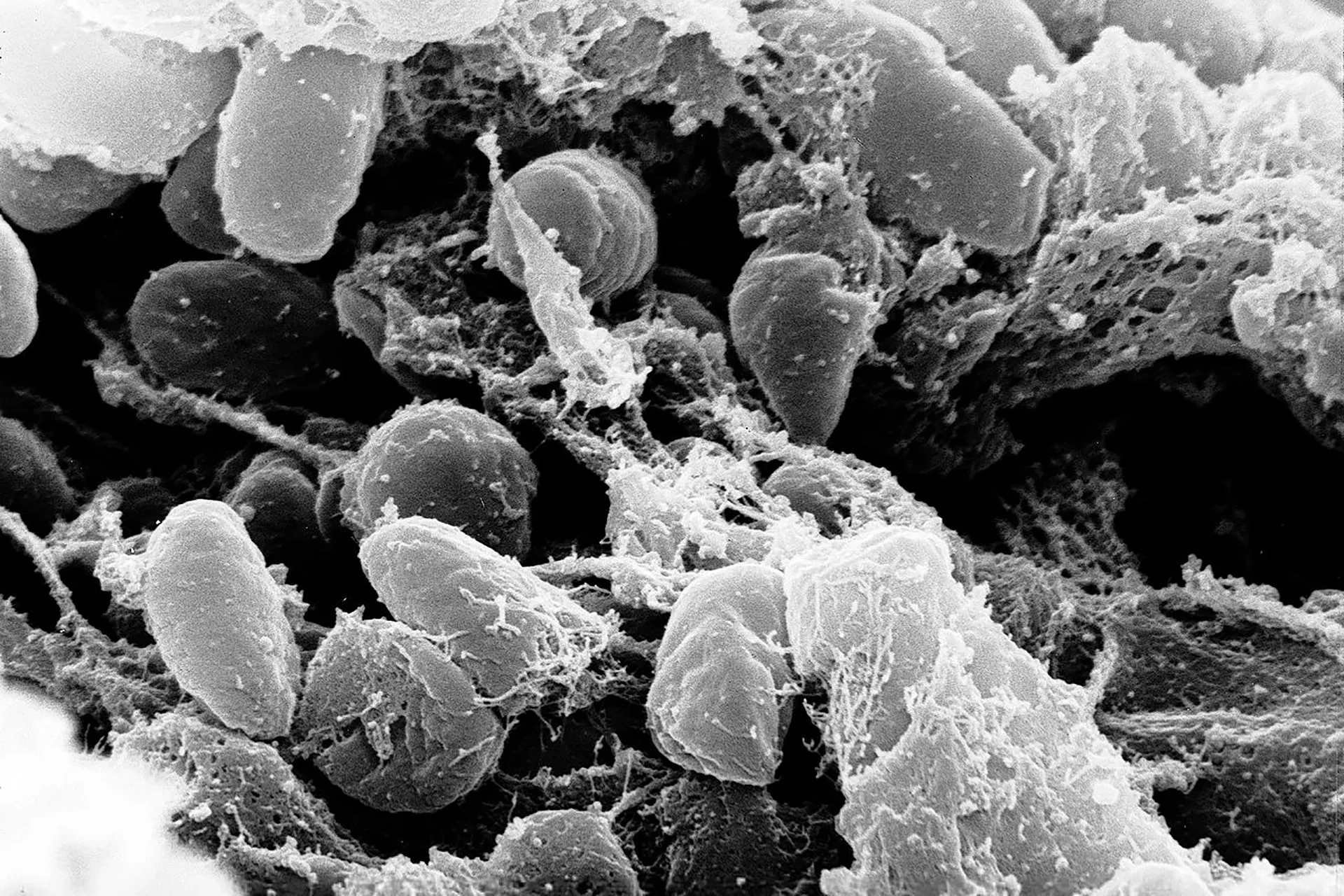
The death of a woman in Siberia, suspected of having the plague, has raised fears the disease could be spreading. A quarantine was imposed on an entire hospital, and about 200 people who had contact with it were placed under medical observation, before some warnings and publications related to the incident quickly disappeared.
These developments prompted American media to track what happened in the Russian region of Irkutsk, amid questions about the nature of the danger, and whether the authorities are trying to contain it out of the limelight.
Newsweek magazine said that the deceased was Daria Shepilova, a 28-year-old laboratory technician who worked at the Irkutsk Institute for Plague Control. After her death, Russian officials announced the implementation of a “full set of anti-epidemic measures,” while the governor of Irkutsk said it was a suspected case of “highly dangerous infection.”
A wide stone…then increasing silence
The death occurred in the city of Shelikhov near Irkutsk, where a quarantine was imposed on the local hospital, laboratory tests were stopped, and the reception of new patients or the exit of existing ones was prohibited.
According to Newsweek, the authorities placed an unspecified number of people under medical observation, while local reports spoke of identifying about 200 close contacts of the deceased.
A Telegram channel with ties to Russian security circles also reported that the death was caused by pneumonic plague, but this diagnosis was not officially announced definitively.
The Daily Beast newspaper discussed the possibility that the source of the infection was an accident inside the laboratory, and described the subsequent deletion of warnings and publications as an attempt to cover up the incident.
The newspaper reported conflicting local reports regarding the source of the infection. One says that Shepilova accidentally broke a vial containing the plague agent, while another suggests she may have been infected during a business trip. Neither story has been independently proven yet.
The Daily Beast said that the first hours witnessed a clear alert; In addition to the quarantine, an emergency meeting was held in which the Russian Federal Security Service participated, and members of it were seen accompanying ambulances transporting people subject to quarantine.
But the flow of information began to slow down the next day. According to the Daily Beast, the city of Baikalsk published a warning calling on residents to avoid traveling to Shelikhov, then deleted it about two hours later. The Russian “Rain TV” channel also removed 5 posts about the incident from its Telegram account.
However, the precautionary measures themselves have not disappeared; Public events were postponed in Irkutsk due to what the authorities described as the “unsuitable epidemiological situation,” while reports spoke of residents’ willingness to buy antibiotics in anticipation of the spread of infection.
This paradox between the continuation of health measures and the decline in the flow of information is what prompted the Daily Beast to talk about a suspected blackout.
What is pneumonic plague?
Plague is a disease caused by the bacteria “Yersinia pestis,” and Newsweek explains that it is transmitted to humans through the bites of infected fleas, or contact with animals and contaminated materials, and it has three main forms: bubonic plague, septicemic plague, and pneumonic plague.
The World Health Organization describes pneumonic plague as the most deadly form of plague. It infects the lungs, and its incubation period may not exceed 24 hours. It can also be transmitted from one person to another through respiratory droplets during close contact.
But Newsweek points out that the plague is treatable today with antibiotics if it is diagnosed early and treatment is initiated quickly.
Newsweek indicates that the plague did not disappear from the world completely; Between 2019 and 2025, 10 countries reported to the World Health Organization about 4,000 suspected or confirmed cases, while the bacteria remain naturally present in some areas, and recent infections are largely concentrated in known hotspots, although recent cases are rare and relatively limited.
So far, what is confirmed in Irkutsk is the death of a woman suspected of having a dangerous infection and a widespread health alert. As for talk about an actual outbreak of plague or a confirmed laboratory accident, it is still in the realm of unresolved narratives.