

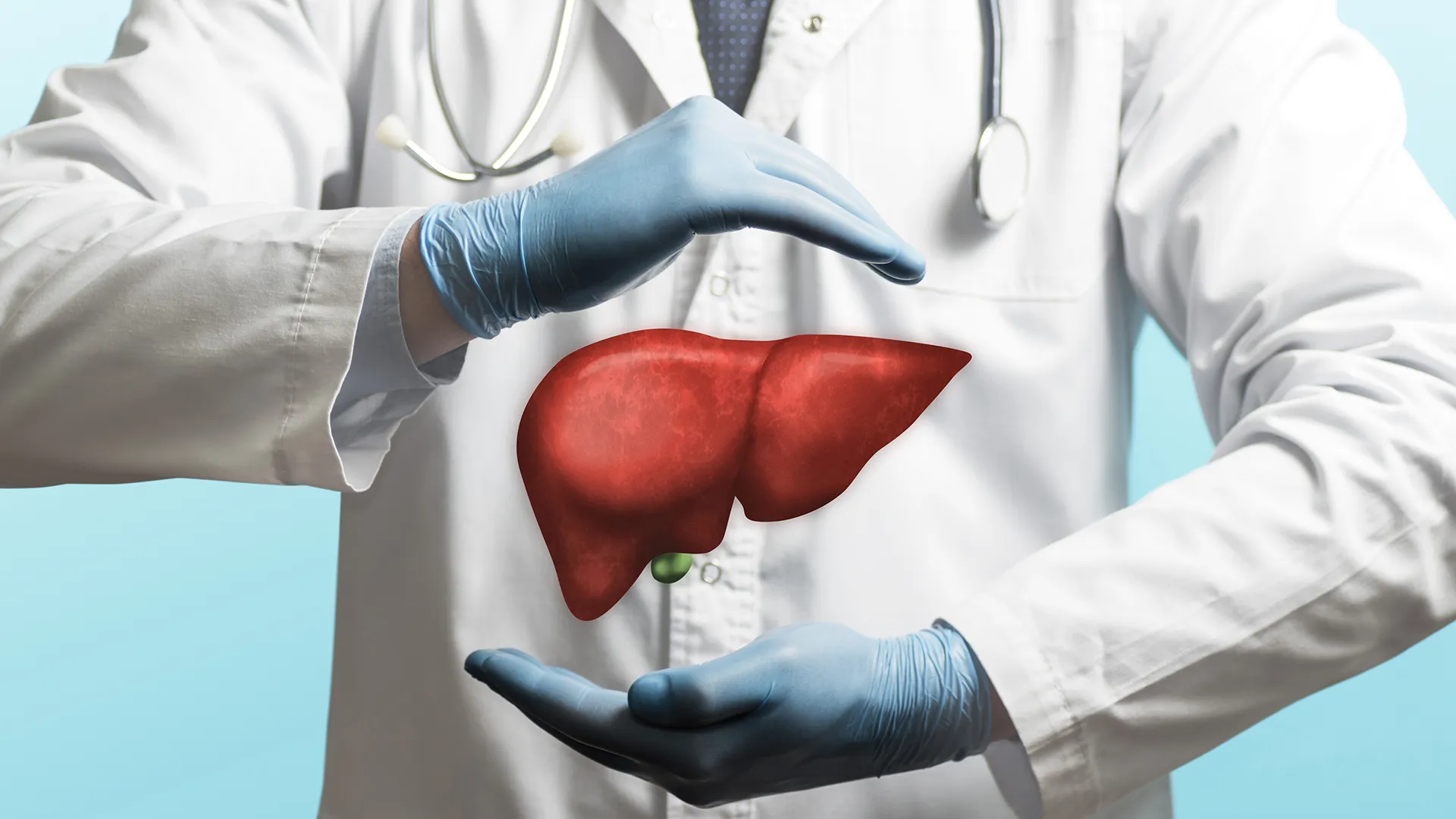
Imagine being diagnosed with a serious liver disease even though you don’t drink alcohol excessively and feel healthy. This scenario is more common than many people think, as millions of people around the world suffer from fatty liver without feeling any symptoms.
While public attention is focused on cancer, diabetes, and heart disease, fatty liver continues to silently spread, becoming one of the most common chronic diseases of our time.
However, fatty liver is a disease that, in many cases, can be prevented or even reversed if detected early, which makes awareness of it more important than ever.
What is fatty liver?
This disease is known today as “Metabolic Dysfunction-Associated Steatotic Liver Disease – MASLD”, a name recently adopted by international scientific bodies to replace the previous designation “Non-Alcoholic Fatty Liver Disease – NAFLD”.
This change came to reflect a more accurate scientific understanding of the nature of the disease, as the main problem is not only the absence of alcohol consumption, but rather the presence of metabolic disorders that play a pivotal role in the emergence and development of the disease.
Metabolic fatty liver disease is defined as the presence of hepatic steatosis, that is, an abnormal accumulation of fat within the liver. When a tissue sample of the liver is examined (biopsy), steatosis is usually diagnosed when more than 5% of liver cells contain fat droplets.
This occurs in people who do not suffer from excessive alcohol consumption, viral hepatitis, or other known liver diseases that could explain this accumulation, nor is it the result of medications known to cause liver fat.
In other words, a diagnosis of the disease requires evidence of fat accumulation in the liver, exclusion of other known causes of liver steatosis, and the presence of at least one metabolic risk factor such as obesity, type 2 diabetes, insulin resistance, high blood pressure, or blood lipid disorders.
Although a small amount of fat in the liver is normal, its excessive accumulation may lead to liver inflammation and cirrhosis, and in advanced cases it may develop into liver failure or liver cancer.
A silent disease that affects millions
The seriousness of this disease is evident in the fact that most of those infected with it do not even know that they suffer from it. The liver is one of the body’s organs most capable of performing complex and multiple functions. It regulates metabolic processes, processes nutrients from food, stores energy, and gets rid of toxins and harmful substances.
But this organ also has a great ability to withstand damage, as it can be exposed to gradual damage for many years before any obvious symptoms appear. For this reason, fatty liver is sometimes called the silent disease. Many patients discover that they have it accidentally during blood tests or ultrasound imaging for reasons unrelated to the liver.
Global estimates indicate that about one in four adults (three in some regions such as the Middle East and Latin America) may have some degree of fatty liver, making it one of the most common chronic liver diseases in the world. The significant increase in rates of obesity, type 2 diabetes, lack of physical activity, and unhealthy dietary patterns have contributed to fueling this rising wave of infections.
The danger of fatty liver is not only limited to complications that affect the liver, but also extends to it being one of the main reasons for liver transplantation in many countries of the world. With the decline of some traditional causes of liver disease, such as hepatitis C, thanks to modern treatments, the number of patients who reach advanced stages of fibrosis and cirrhosis resulting from fatty liver continues to rise.
Recent studies indicate that steatohepatitis associated with metabolic disorder (MASH) has already become among the most common reasons for liver transplantation in the United States and a number of Western countries, and experts expect its contribution to increase in the coming years as obesity and diabetes rates continue to rise globally.
More than just liver disease
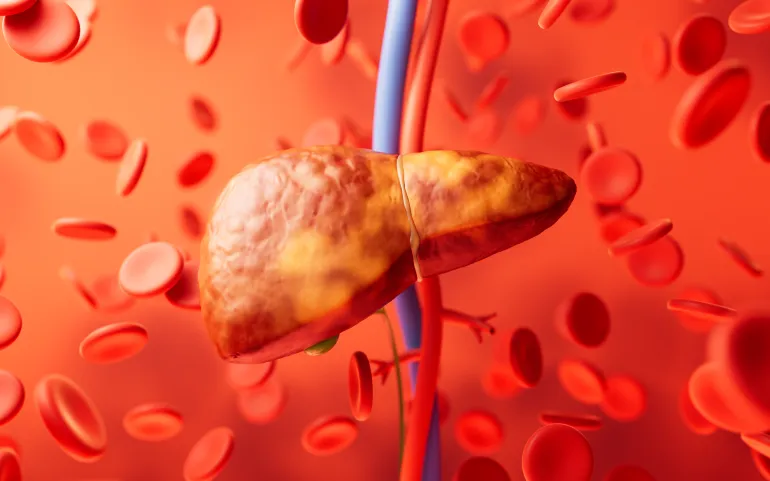
But fatty liver is not just a disease that affects the liver. Today, researchers view it as one of the manifestations of a metabolic disorder that affects the entire body. People with fatty liver are more likely to develop type 2 diabetes, cardiovascular disease, chronic kidney disease, and other metabolic disorders.
Indeed, cardiovascular disease represents the main cause of death for people with fatty liver, which reflects the close interrelation between liver health and overall body health.
Why does fat accumulate inside the liver?
The accumulation of fat in the liver is due to a complex set of factors. Contrary to popular belief, fatty liver is not caused solely by eating dietary fat. When the body becomes resistant to insulin, which is a common condition among people with obesity and diabetes, the liver begins to produce more fats and at the same time reduces its disposal of them, so they gradually accumulate inside its cells. Obesity, especially the accumulation of visceral fat, is one of the most important risk factors.
The disease is not limited to overweight people. Some thin people may suffer from it as a result of genetic factors, metabolic disorders, or the accumulation of fat around internal organs despite their natural external appearance.
Studies indicate that between 10% and 20% of people with fatty liver may be of normal weight, a phenomenon sometimes known as fatty liver among thin people. This is why some people may be surprised by a diagnosis of fatty liver even though they are not obese.
The significant rise in rates of fatty liver is attributed to the global increase in obesity and diabetes rates. During recent decades, the world has witnessed radical changes in lifestyle and food. Consumption of ultra-processed foods, sugary drinks and high-calorie foods has risen, while physical activity has declined significantly as a result of the shift towards more sedentary lifestyles.
As these trends continue, fatty liver has become one of the most prominent repercussions of the global health crisis associated with obesity and metabolic disorders.
From obesity to fibrosis and liver cancer
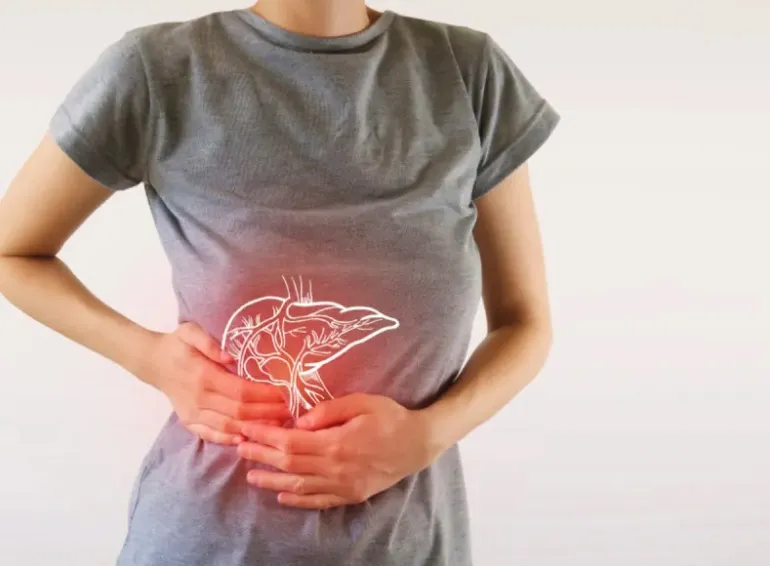
Not all cases of fatty liver are the same in terms of severity. Some patients only suffer from the accumulation of fat within the liver without significant damage, while in others the disease develops into a more serious stage known as “Metabolic Dysfunction-Associated Steatohepatitis – MASH”, which is the new name that replaced the previous name “Non-Alcoholic Steatohepatitis – NASH”.
At this stage, the liver cells begin to undergo inflammation and damage, and over time this chronic inflammation may lead to cirrhosis, a process in which healthy liver tissue is gradually replaced by scar tissue that loses its ability to perform its normal functions.
In advanced stages, fibrosis may develop into cirrhosis, liver failure, or liver cancer. The problem is that these developments may occur very slowly and over the course of years or even decades without the patient feeling anything.
Can fatty liver be treated?
Despite the seriousness of the disease, the good news is that fatty liver is treatable, and may even be curable in its early stages. Studies show that losing between 7% and 10% of body weight, especially at the waist level where dangerous visceral fat accumulates, can lead to a significant reduction in the amount of fat within the liver and improved inflammation.
Losing more weight may help reverse some degrees of fibrosis in some patients. Regular physical activity also contributes to improving the body’s sensitivity to insulin and reducing liver fat, even if weight loss is limited.
Nutritionally, scientific evidence indicates that balanced dietary patterns, such as the Mediterranean diet rich in vegetables, fruits, legumes, whole grains, fish, and olive oil, are associated with improved liver health. On the other hand, excessive consumption of sugary drinks and ultra-processed foods is associated with an increased risk of developing and exacerbating the disease.
It is important to emphasize that there is no magic recipe, nutritional supplement, or detox program that can cleanse the liver or treat fatty liver within days. Sustainable lifestyle changes remain the cornerstone of prevention and treatment.
During recent years, this field has witnessed important therapeutic developments. In March 2024, the US Food and Drug Administration approved the first drug, Resmetirom, intended to treat steatohepatitis accompanied by fibrosis.
Modern drugs that were developed primarily to treat obesity and diabetes, such as GLP-1 agonists for the intestinal hormone receptor Wegovy, have also shown promising results in reducing liver fat and improving inflammation and fibrosis in a significant proportion of patients, and were actually approved by the US Food and Drug Administration in August 2025 to treat the disease. Dozens of clinical studies are currently continuing to test new drugs targeting the biological mechanisms responsible for the development of the disease.

Preventing fatty liver
Despite these developments, experts confirm that prevention remains the most effective weapon in confronting this silent epidemic. Perhaps the biggest challenge facing doctors and healthcare systems today is that fatty liver remains less well-known and underdiagnosed than other chronic diseases. Many people monitor their blood pressure or sugar and cholesterol levels, but they rarely think about liver health. However, the liver may be the mirror that reflects the long years of metabolic stresses to which the body is exposed.
The absence of symptoms does not necessarily mean the absence of the disease. As obesity and diabetes rates continue to rise around the world, fatty liver appears likely to become one of the biggest health challenges in the coming decades. Some expectations indicate that it may become the first reason for liver transplantation in many countries of the world in the coming years if current trends continue as they are.
Despite the widespread prevalence of fatty liver, it is largely possible to prevent it. The most important means of prevention are to maintain a healthy weight, engage in regular physical activity, avoid excessive consumption of sugary drinks and ultra-processed foods, and ensure a balanced diet rich in vegetables, fruits, legumes, whole grains, and fish.
Controlling metabolic risk factors, such as diabetes, high blood pressure, and high blood fats, plays an essential role in reducing the risk of developing the disease or slowing its progression in those affected.
But the biggest challenge is that most infected people do not feel any symptoms, especially in the early stages. Therefore, experts recommend that people who suffer from obesity, type 2 diabetes, hyperlipidemia, or high blood pressure discuss the risk of developing fatty liver with a doctor and undergo appropriate tests when needed.
Studies indicate that genetic predisposition plays an important role in the susceptibility to developing fatty liver, as the risk of the disease increases in people who have first-degree relatives with fatty liver or its complications, even after taking lifestyle factors into account.
Evaluation usually begins with blood tests and liver function tests, but the results of these tests may be normal in some patients despite the presence of the disease. For this reason, doctors may resort to ultrasound imaging or to newer techniques to measure liver fibrosis, such as the FibroScan device, which allows the degree of fibrosis and fat accumulation to be assessed without the need for a liver biopsy in most cases.
Specialists confirm that early detection of the disease provides a valuable opportunity to intervene before fibrosis or irreversible complications occur, which makes awareness of risk factors and early examination among vulnerable groups an essential part of combating this silent epidemic.
In conclusion, modern medicine has succeeded in prolonging human life, but the challenge today is no longer just to live longer years, but to live them in better health. Fatty liver represents a striking example of modern-day diseases. A disease that develops silently, fueled by obesity, inactivity and malnutrition, and only reveals itself after years of accumulated damage.
In light of the continuing rise in obesity and diabetes rates globally, the question may not be how many people have fatty liver today, but rather how many are carrying the disease without knowing it. This is where the real battle begins: with awareness, prevention, and early detection, before this silent epidemic turns into one of the largest individual and public health burdens.