

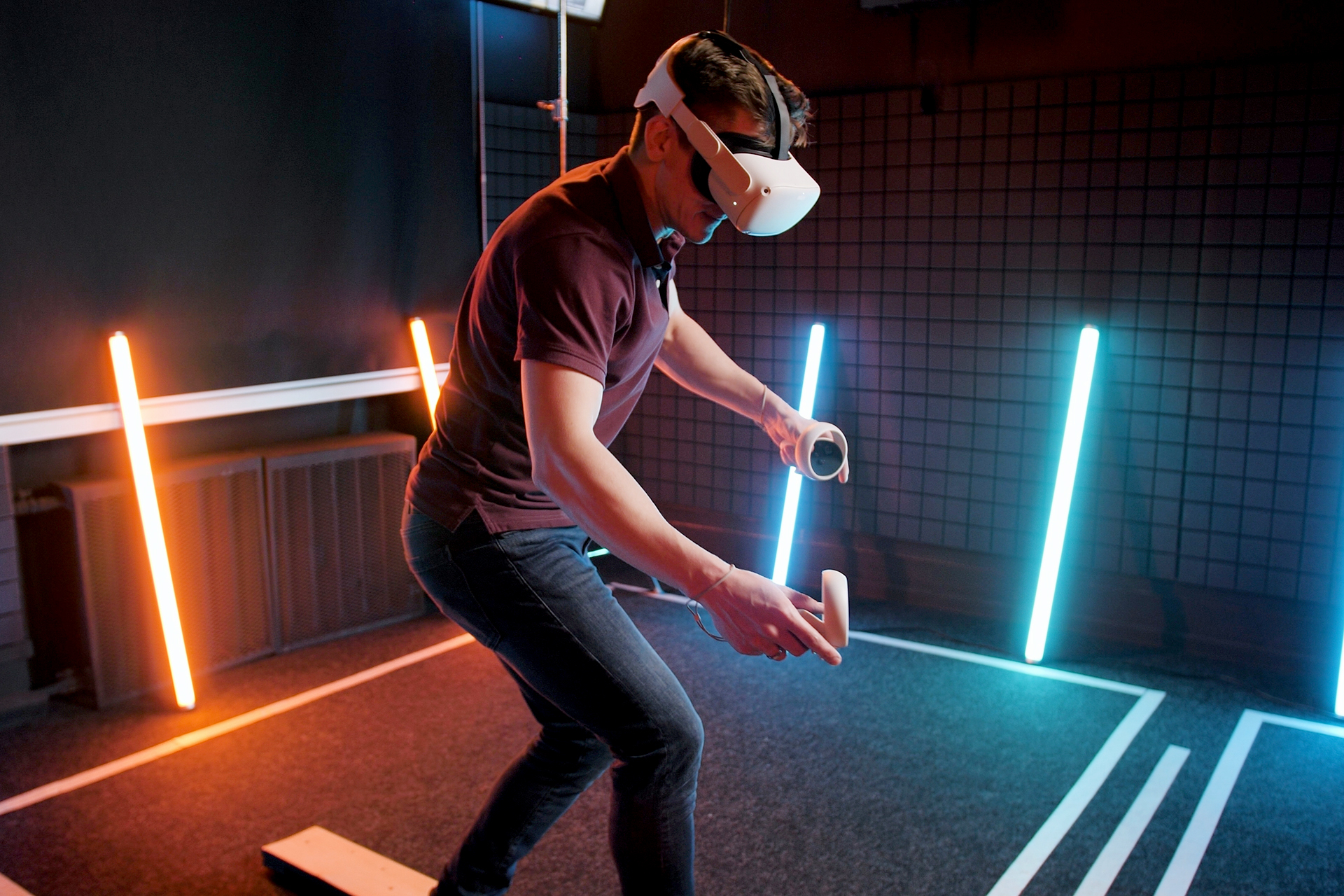
A new study revealed that virtual reality therapy is very effective in psychologist, and its results are no less effective and speed than cognitive behavioral therapy.
In psychosis is a mental problem that makes a person realize things differently from those around him, and may involve hallucinations or delusions, which loses the ability to identify reality or link to others.
Cognitive behavioral therapy is the most important psychotherapist of paranoia ideas (suspicion) in patients with psychotic disorders.
The Parranian patient suffers from excessive lack of confidence or suspicion of people, and incorrectly thinking that someone is trying to harm him, or that people do things to disturb him intentionally or that there is a conspiracy against him.
This condition causes psychological distress, undermines social interactions, leads to withdrawal, and appears in many psychological diagnoses.
The study was conducted by researchers from the University of the University Medical Center in the Dutch of the Dutch, and its results were published in the Journal of Psychiatry on July 7, and the Yorik Alrt website was written about.
“I hope this application will be available for virtual reality soon in all mental health care facilities,” said the psychiatrist, Willing, of the University Medical Center in Kherningin and the author’s co -author.
Feling compared the effect of virtual reality therapy with the current traditional treatment. “Using virtual reality, we can better focus on reducing avoidance behavior, and this is very important to the effectiveness of treatment. By using virtual reality, we can expose patients to their paranoia fears better and in a controlled way,” he says.
End your doubts
With the help of virtual reality, patients have practiced social positions that sparked Paragraph ideas and anxiety in virtual social environments. For example, they can shop in a virtual supermarket or bus riding.
“It is difficult to stand in the pushing queue in the supermarket when you are suspicious,” says Feling.
The therapists have been involved to abandon safety behaviors, test their suspicious beliefs, and learn new behaviors. Exercises can be designed accurately to suit the participant’s needs and goals, and can be repeated.
Feling describes the results of the study as promising by saying, “It seems that the virtual reality therapy is very effective for those with psychology, and reduces their doubts and extreme anxiety. When we look at factors such as suspicion, depression, avoidance, self -confidence and anxiety, it may be better than the current standard treatment. People with virtual reality need 15% less on average, which indicates that the treatment works faster.”
This psychiatrist is now working to apply virtual reality therapy in the field of mental health care, and explains, “We actively search for more effective treatments in the field of mental health care. This appears to be an effective treatment that will enable us to help more people. People recover faster and need less sessions.”
He already looks further, he is currently looking at the possibility of using artificial intelligence to partially automating treatment using virtual reality, and explains, “We are looking for whether a psychiatrist is no longer a need for some sessions. If this succeeds, the patients indicate that there is no problem with them with the automatic session, this will of course help reduce waiting lists. I expect the first results of treatment from this study within 3 years.”