

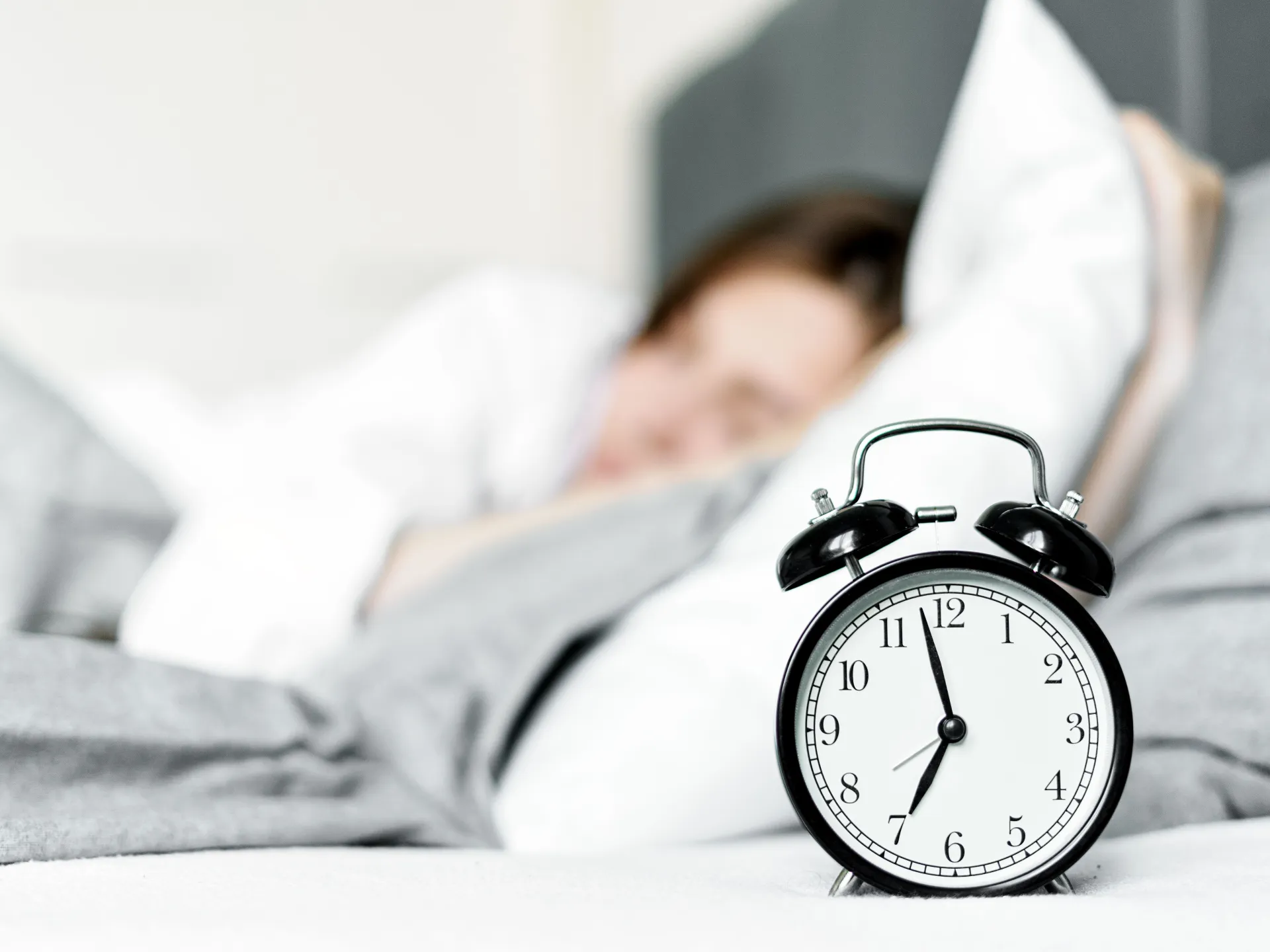
The day may start minutes before we get out of bed. One person spontaneously opens his eyes earlier than usual and feels ready to move, while another needs a loud alarm clock and several presses of the snooze button before he can get up. Between the two cases, the first minutes of the morning may pass in a state of drowsiness and poor concentration known scientifically as “sleep lethargy.”
But does waking up without an alarm mean that sleep was better? Do short naps after the alarm rings make us lazier, as many believe? Can choosing a specific sound or exposure to morning light change the way the brain starts its day?
Sleep researcher Dr. Tina Sundlin, associate professor in the Department of Psychology at Stockholm University, says that sleep inertia is the mental sleepiness that some people experience upon waking up, noting that scientists do not fully know why it is more severe in some people compared to others.
She added in a statement to Al Jazeera Net that the matter may depend on the stage of sleep from which the person wakes up, the amount of sleep he got, and the time he wakes up within his daily rhythm.
A brain that has not yet fully awakened
Waking up is not an immediate transition similar to turning on an electrical switch. The brain needs a period to fully transition from sleep to wakefulness. A scientific review published in the journal Nature and Science of Sleep indicates that sleep inactivity is associated with a temporary decline in cognitive performance after waking up, and that its severity may increase with lack of sleep and with waking up at times that are inappropriate for the biological clock.
Studies of electrical brain activity and neuroimaging indicate that some characteristics of sleep may persist for a short period after opening the eyes, and that the transition to full wakefulness occurs gradually, which helps explain the person’s feeling that he has woken up physically but has not yet regained mental clarity.
Sundlin confirms that the stage of sleep during which awakening occurs can make a difference, explaining that deeper stages of sleep are often associated with a lower level of alertness after awakening.
Research reviews indicate that the depth of sleep before waking can influence sleep inertia, and that awakening from deep, slow-wave sleep may be associated with more inertia in some studies. However, the relationship is not consistent in all research, and lack of sleep and timing within the biological clock also affect the severity of inactivity.
Is waking up naturally better?
Waking up spontaneously, before your phone or alarm clock rings, may seem like a sign of a perfect night’s sleep. Sundlin thinks this is true to some extent, but she links it to natural awakening rather than simply the absence of an alarm clock.
She explains that natural awakening may be better if it means the person can sleep until he gets as much sleep as he needs. The need to set an alarm to wake up may mean, in some cases, that the person does not get the optimal amount of sleep or that he sleeps at a time that is not completely consistent with his natural rhythm.
But the presence of an alarm clock in itself does not necessarily mean that sleep is unhealthy; Work, school, and daily commitments impose fixed wake-up times on many people. The problem lies more in the fact that the alarm clock is constantly earlier than the body’s actual need for sleep.
The American Academy of Sleep Medicine confirms that healthy sleep is not related to the number of hours alone, but also includes the quality of sleep, its timing, its regularity, and the absence of sleep disorders.
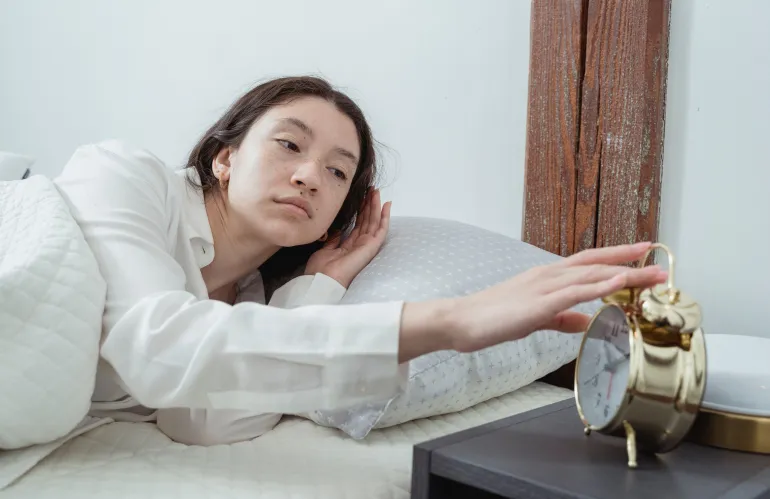
Snooze button.. Is he really the accused?
There is a common belief surrounding the “snooze” button that it fragments sleep and makes a person more lethargic upon final awakening, but scientific evidence is not that conclusive.
There’s not a lot of research on this, Sundlin says, but the few studies that do exist suggest that napping is unlikely to increase morning lethargy.
Sundlin led one of the most prominent studies in this field, which was published in the Journal of Sleep Research. Its first phase included 1,732 participants to study waking habits. Then 31 people who used the snooze button regularly underwent a laboratory experiment that included measuring sleep.
When participants were allowed 30 minutes of intermittent naps before getting up, they lost an average of only about 6 minutes of total sleep, and there were no clear effects of napping on morning sleepiness, mood, or cortisol response. Performance on some cognitive tests also improved immediately after waking up or was not affected compared to waking up immediately without a nap.
The study also showed that napping reduced the likelihood that eventual awakening would occur during deep sleep, which is one possible explanation for the lack of increased inactivity in participants.
However, this does not mean that repeatedly hitting the snooze button is beneficial for everyone. A Japanese study published in the Journal of Physiological Anthropology tested the effect of napping in the laboratory in only 10 university students, and found indications that repeating an alarm clock may prolong some aspects of sleep inertia compared to using a single alarm clock.
The difference in results reflects the limited research available so far, and the effect of napping may vary depending on the person, the duration of the nap, his sleeping pattern, and how accustomed he is to it.
Do we choose the alarm sound carefully?
If we must use an alarm clock, the sound we wake up to may also play a role, although research on this aspect is limited.
Sundlin says there’s very little research on alarm clock sounds, but it’s possible that musical sounds are better at reducing sleep inertia.
This possibility is supported by a study that included 50 participants, which found an association between the sounds that the participants rated as more tonal and the decrease in sleep inertia they reported. But the study relied on questionnaires and self-evaluations, so it alone is not sufficient to determine the best sound for waking up.
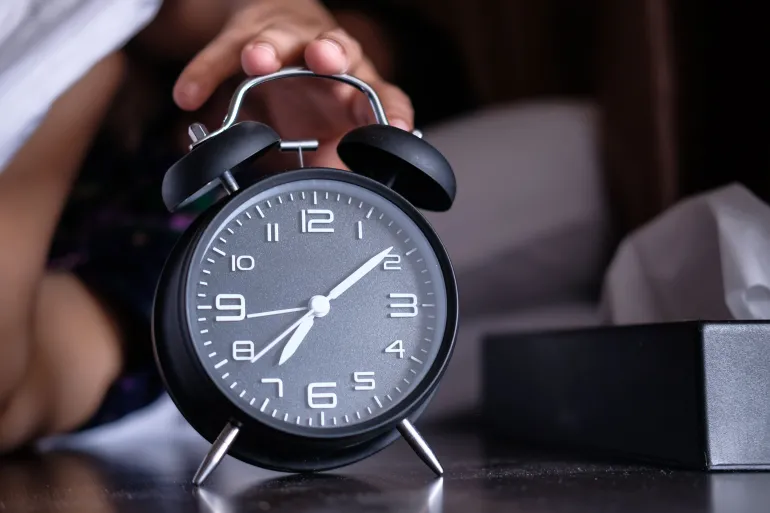
In another small trial, waking up to a musical alarm clock improved some indicators of attention compared to a reference sound used for comparison, particularly a reduction in some lapses of attention and false starts on a vigilance test, without a clear improvement in response speed itself.
A systematic review of research on sounds and sleep inertia also concluded that music and some characteristics of sounds may have a potential benefit after awakening, but the available evidence is still limited and does not allow a specific type of alarm to be recommended as best for everyone.
Morning light before searching for the perfect alarm clock
Perhaps the most effective way to make mornings easier, less complicated, is through apps and smart alarms.
Sundlin summarizes her advice as maintaining a regular bedtime, getting enough sleep, and waking up to daylight.
Light is one of the most important signals that help adjust the biological clock, and its intensity and timing are linked to changes in the level of alertness. A systematic review published in Sleep Medicine Reviews also found that light can have a direct effect on enhancing alertness, although the magnitude of the effect varies depending on the timing, intensity, and duration of exposure.
The National Heart, Lung, and Blood Institute in the United States recommends maintaining a similar time for sleeping and waking up every day and giving the body enough time to sleep. These are habits that help stabilize the rhythm of sleep and wakefulness.
Thus, the most important question in the morning may not be: Which voice should I choose? Or how many times do I hit the snooze button? Rather: Did my body even get the sleep it needed and at the time that suits its biological clock?
The alarm clock may determine the moment in which we open our eyes, but the amount of sleep, its regularity and timing, along with the stage at which we wake up, may be more influential factors in determining whether the following minutes will begin with alertness and activity, or with another attempt to return to the pillow.