

The Supreme Court of Kenya suspended an agreement concluded by the government with the United States of America to establish a quarantine center inside the Laikipia military air base, about 200 kilometers north of the capital, Nairobi, to receive American citizens exposed to the Ebola virus coming from the Democratic Congo.
Judge Patricia Nyawandi’s decision to suspend the agreement yesterday, Friday, came in response to a legal challenge filed by the Katiba Institute, a legal entity concerned with defending the Kenyan constitution, with the case to be heard next week.
An Associated Press report revealed that Washington planned to operate a facility containing 50 isolation beds, run by American medical teams, inside the military base, and that the facility was scheduled to open last Friday, the same day in which the court issued its decision.
However, the Kenyan government did not publicly acknowledge this agreement, and merely referred to “ongoing discussions with Washington about supporting preparedness efforts to confront Ebola,” while US Secretary of State Marco Rubio announced that his country would commit to providing $13.5 million to support Kenya’s health preparedness, without publicly confirming the details of the quarantine arrangement.
In its petition, the Katiba Institute criticized what it described as “the secret and unilateral establishment of an Ebola quarantine facility,” noting that this “raises serious constitutional concerns affecting the rights to life, health, public participation, and parliamentary oversight.”
Dump
The Kenya Medical Association quickly issued a 48-hour strike warning, expressing its “disgust” at what it described as “the government’s willingness to trade national security and the lives of its citizens in exchange for foreign aid,” and warning that Kenya will turn into a “garbage dump” for diseases.
The Kenya Bar Association also warned that the country lacks the “high containment infrastructure needed to safely manage such facilities,” which could expose public health to serious risks.
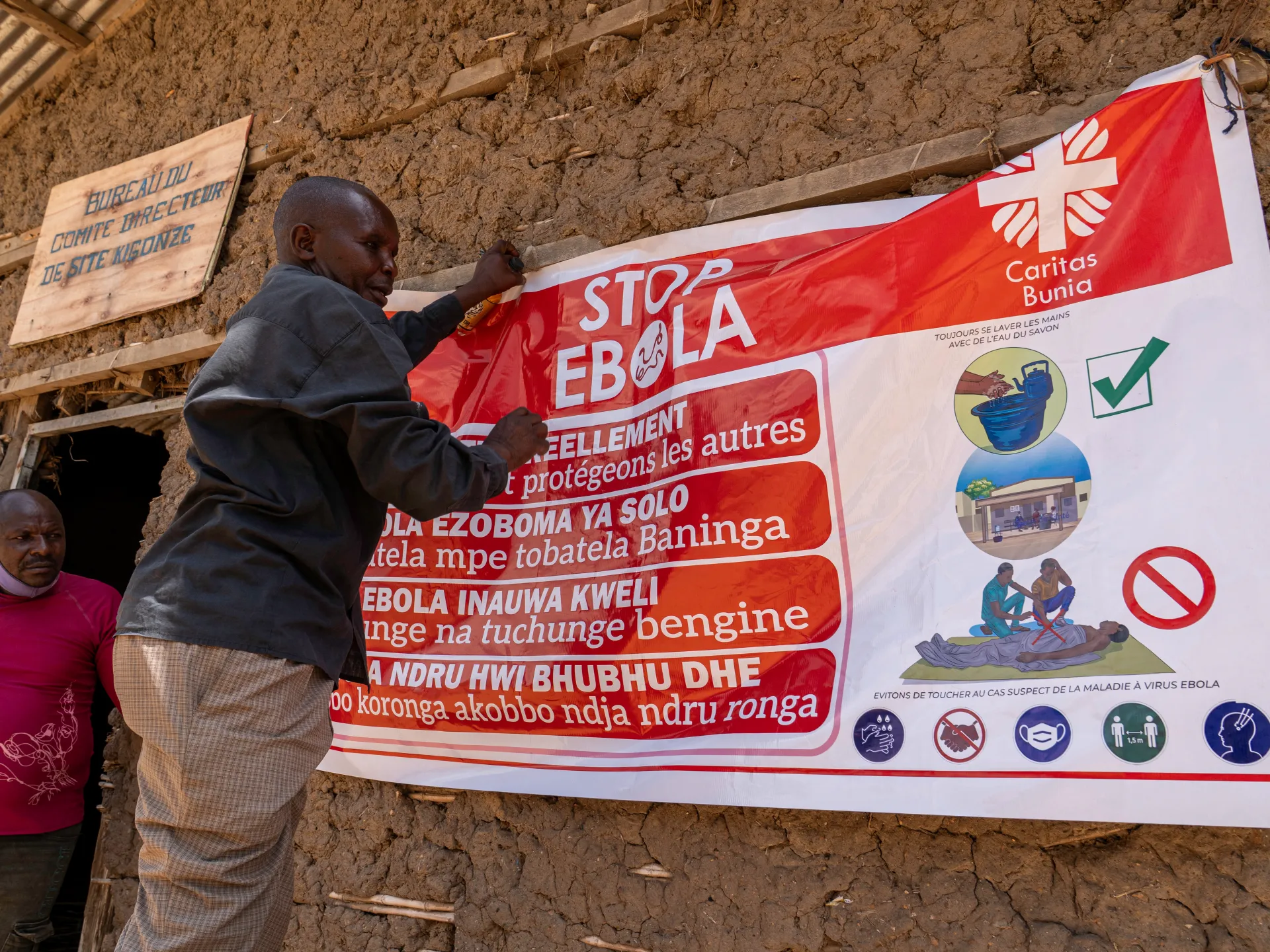
This agreement comes in the midst of an outbreak of the “Bundibugyo” Ebola virus in eastern Democratic Congo, which the Congolese government announced on May 15, and which has so far recorded more than a thousand suspected cases and about 220 deaths.
The World Health Organization reported that Ituri region in the northeast of the country accounts for more than 90% of cases, while Uganda confirmed recording seven cases and one death linked to the outbreak. The organization’s director, Tedros Adhanom Ghebreyesus, warned that “eastern Democratic Congo today faces a catastrophic collision between disease and armed conflict.”
There is no vaccine or specific treatment approved yet for this Bundibugyo strain.
The administration of President Donald Trump chose not to receive Americans exposed to the virus on its soil, in a line that reflects a position previously announced by Trump during previous outbreaks when he criticized the return of patients to the United States. Instead, Washington directed some infected citizens to European countries, as an American doctor who was working in the Democratic Republic of the Congo was transferred to Germany for treatment, while another American missionary was taken to the Czech Republic.
American doctors criticized this trend, and one of them described it as “a moral abandonment of what this country owes to its citizens,” according to what was reported by the Associated Press.
At the European level, Italian Prime Minister Giorgia Meloni called on European Union leaders to strengthen vigilance at borders and coordination to prevent the virus from reaching the continent.