


The administration of US President Donald Trump has announced a relationship between the famous Paracetamol (acetaminophen) and the risk of autism.
The Minister of Health and Humanitarian Services, Robert F. Kennedy, said that “the autism epidemic is spreading,” according to the Washington Post.
But is paracetamol really the reason? Is autism spread a parent?
The number of cases diagnosed with autism increases, often due to improving examination and increasing awareness, but determining the real causes is not an easy thing, as autism is a complex condition, and its symptoms may differ from one person to another.
What is autism exactly?
“Autism is not one case, but rather multiple cases with various causes,” says Geraldine Dawson, a professor of psychiatry and behavior science at Duke University and the director of the Duke Center for Autism and Brain Evolution of the newspaper.
Autism spectrum disorder – which is known for an abbreviation of autism – is a nervous development characterized by difficulties in social and communication skills, and repeated behaviors.
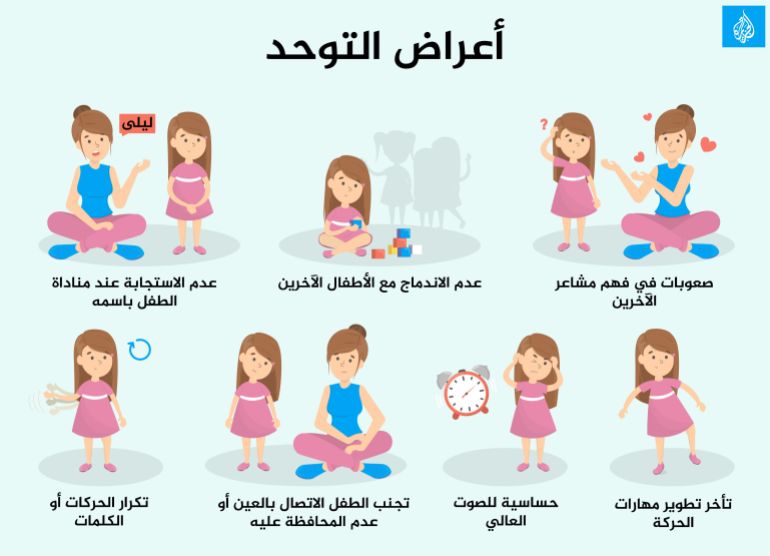
The symptoms of the condition vary and include:
- Difficulties in social interactions, including difficulties in maintaining visual communication, understanding the intentions of others, or adapting to social standards.
- Difficulties in forming or preserving relationships.
- Repeated movements such as tear of hands or swinging back and forth.
- Very limited or focused interests.
- Sensory sensitivities, including touch, sounds and vision.
About 30% of people with autism suffer from a major mental disability, very limited linguistic skills, and they may need life care.
Researchers note that the differences in how people interact with unity with others may not always be bad.
What causes autism?
Autism is a multi -manifestation pathological condition, which is likely that there is no one reason, but researchers said that the changes in the brain, especially in the areas responsible for social interaction and communication, are the common factor.
Experts indicated that he believed that these changes in the brain begin before birth, and neurological photography studies have found changes in the brain areas and their nerve circles at an early age of 6 months in children who will be diagnosed with unity later.
These infants have shown an accelerated growth in the cortex compared to their siblings who have not been diagnosed with autism.
Other research shows indications of a change in brain function that can be observed at the age of 3 and 6 months.
“After 30 years of research, it is agreed that your autism means that you were born with it,” said David Amar, a professor of psychiatry and behavior science at the University of California, Davis in the United States.
Genetics plays a big role, as research shows that autism is 80 to 90%, and environmental factors can also affect the growth of the brain before birth.
When a woman is pregnant, chronic inflammation, as a reaction to a serious infection or due to health conditions such as obesity and diabetes, may affect the growth of the fetus’s brain and the risk of autism, an active research field that revolves around what is known as the hypothesis of immunity to the mother.
Charles Nelson, professor of pediatrics and neuroscience at Boston Children’s Hospital and the Harvard University College, said that researchers looked at pesticides, air pollution and water pollution, and found increases in risk with a “small effect size” related to autism, but they do not necessarily cause it.
Research has been repeatedly showed that vaccines do not cause autism, and the measles vaccine, mumps and measles are often blamed, but Amar indicated that the first dose of it was given at the age of 12 to 15 months, that is, after observing the brain changes associated with autism.
Nelson said: “It is a very complex interaction between genes and the environment, as genes interact with other genes, and multiple factors in the environment interact with each other,” Nelson said.
How is autism diagnosed?
Doctors diagnose autism based on the behavior of a child or adult. “There is no blood test, a vital chemical test or a biometric test, although there may be in the future,” says Farid Volcar, an honorary professor of child medicine, pediatric and psychiatry at the Yale University Studies Center.
The American Academy of Pediatrics recommends examining all children to detect autism at the age of 18 and 24 months, as well as monitoring their growth regularly, and a proper diagnosis often requires assistance from various medical specialties.
Pediatricians use uniform examination tools, such as “modified autism list in young children”, and they are referring to children at risk of autism to specialists to conduct a comprehensive follow -up evaluation.
Autism can be diagnosed reliably in children at the age of 18 to 24 months, but differences in behavior can be detected early.
Geraldine added that at the age of 6 to 9 months, the infants who are diagnosed with autism usually pay less attention to face, visual communication, social interaction decreases, and the speech decreases.
By the age of one year, infants may not pay attention to their names, or by the age of 18 months, there may be delay in the language.
Nelson said: “What I would like to say to parents is that you do not need to worry about this, but rather they should be vigilant,” just as is the case with other stages of their children’s growth.
Autism can also be diagnosed in adulthood by a psychiatrist, psychiatrist or nervous psychologist.
Factors increase the risk of autism
It is known that there are a number of factors that increase the possibility of a child with autism, such as the presence of an autism brother, which means that the possibility of the next child with autism is 20%.
Birth of elderly parents may increase the risk of autism, and the influence of older fathers is stronger than the influence of older mothers, with age, bodies tend to accumulate slight genetic deletion in our chromosomes; If the random mutation affects a gene associated with autism, this may increase the possibility of autism, said Geraldine.
It can increase premature birth, especially if it is a very early birth, or if the child’s weight is very low at birth from the risk of autism. “If the child is born 32 weeks before pregnancy, the possibility of diagnosing autism is approximately 4 times higher,” said Geraldine.
The risk of autism may increase due to the complications of childbirth, especially the lack of oxygen, as the brain does not get the oxygen it needs.
Is autism increasing?
Autism is increasing globally, according to a large -scale twinous analysis conducted in 2022, which stated that nearly one child of every 100 children is diagnosed with autism all over the world. Diagnosis of boys with autism is 4 times more common than girls.
A recent report issued by the Centers for Disease Control and Prevention in the United States estimated that the rate of autism in the United States is about one child in 31 children at the age of 8 in societies examined by the agency using data in 2022, an increase of 2000, when the rate of spreading one in every 150 children.
Experts emphasize that autism is not an epidemic, the researchers said that some of these increase in cases may be due to the improvement of examination, increased awareness and wider diagnostic criteria for autism.
Autism examination is a standard procedure in pediatrician clinics, which was not decades ago, which means diagnosing more cases, Nelson said.
The scope of autism diagnosis standards also expanded to include lighter and more accurate symptoms.
A major study conducted in 2015 on all children born in Denmark from 1980 to 1991 found that 60% of the increase in the spread of autism was due to the expansion of the scope of diagnostic and changes in the practices of reporting injured children.
There may also be other factors that contribute to a real increase in the spread of autism, although it is difficult to know its amount. For example, there are more older fathers; More premature children survive; Ethical diseases are increasing, all of which are risk factors for autism.
“It is very difficult to follow the real height in the spread of autism due to the change of many factors over time,” said Geraldine.
What treatment strategies are available?
Each case is treated in a way of its own, especially in the early stages. It has been proven that behavioral interventions improve social skills and performance by forming social behavior and reducing symptoms.
Applied behavior analysis, which is one of the common behavioral remedies, encourages positive behaviors through rewards with unwanted behaviors.
About 10% of children with autism lose their diagnosis as they are old, and girls tend to improve more than boys.
A research paper published in 2023 stated that 37% of 213 participants no longer meet the criteria for diagnosing autism by the age of seven.
There are no drugs for autism. The American administration has promoted an old drug, which is ingovorin, as the first possible autism treatment.
Lyocoforin is a form of vitamin B9 – also known as folic acid – and is traditionally used as a fever of the toxic effects of cancer drugs.
Doctors may prescribe antipsychotics to treat children with anger and excitement attacks. They may also prescribe other medications for any additional condition such as attention deficit disorder, hyperactivity, anxiety, or seizures.