

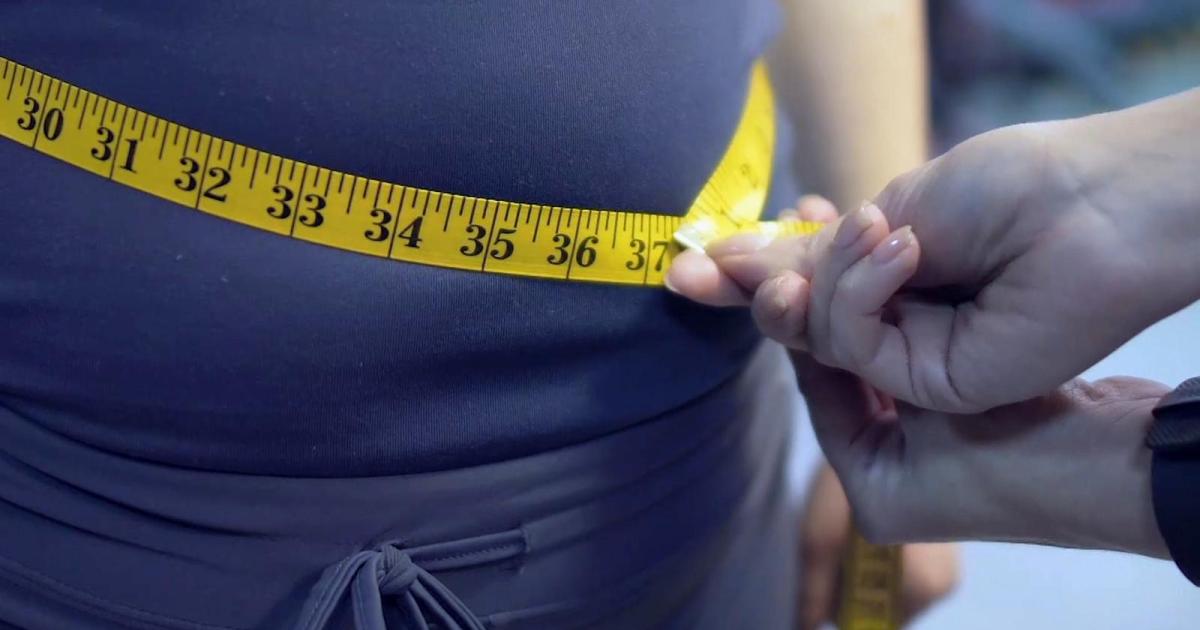
A recent study found that excessive thinness may be more deadly than weight gain or slight obesity, as the researchers concluded that it is possible that the person is “fat but he has physical fitness.”
The study was conducted by scientists in Denmark, and published on the “Science Daily” website. The study will be presented at the annual meeting of the European Association to study diabetics in Vienna, Austria.
Scientists have found that people with weight gain or slight obesity are no more likely to die than those who fall into the upper healthy body index (22.5 to 25).
This phenomenon is sometimes referred to as metabolic health or “obesity with physical fitness”.
What is the body mass index?
The body mass index is a number that is calculated using a person’s length and weight, which is a reliable indicator in most cases to assess excess weight or weight loss in most people. The body mass laboratory does not measure the amount of fat in the body or its ratio, but the researchers found that it is usually associated with the percentage of grease in the body, and therefore it is an indication of the amount of fat in the person, as it is a way to assess health risks using a person’s weight and length.
The BMI (BMI) – also known as body mass laboratory – is calculated by dividing a person’s weight per kilogram by a square of length per meter, for example if a person length is 170 centimeters and weighs 75 kilograms, then 170 centimeters are converted into a meter unit and it becomes 1.7, then the weight is divided into a box:
75/2 (1.7) The result is in this case 25.95.
How do you read the results?
For people who have reached 20 years or more, the BMI is evaluated through the following:
- Less than 18.5: The person suffers from weight loss, which may lead to his weak immune system and increase the risk of bone thinning. Lack of weight may be associated with a person suffering from a food disorder.
- 18.5 and until 24.9: The weight is normal, which means that there are no health risks related to weight on the health of a person, with confirmation that this does not mean that there are no health risks related to other matters.
- 25 to 29.9: The person suffers from weight gain.
- 30 and more: The person has obesity.
Obesity with fitness
In the study, the category of “obesity with physical fitness” included people whose body mass index ranges between 25 and 30 – and they are actually overweight – and people whose body mass index ranges between 30 and 35, whose weight places in the lower end of obesity.
On the other hand, their analysis found that people who fall into the weight loss category – which are classified as a body mass index ranging from 18.5 and less – were 2.7 times more likely to die than the reference category.
It is interesting that even those who fall into the lower end of the healthy range, where their body mass index ranged between 18.5 and 20.0, they were twice more likely to die.
The researchers said that one of the possible causes of these results is the opposite causal relationship, as some people may lose their weight due to an inherent disease.
Likewise, people who are in the middle of the healthy domain, with a body mass index ranging from 20.0 and 22.5, were 27%more likely to die.
However, people whose body mass index ranged between 35 and 40.0 known as a second -class obesity, which is the category between obese and obesity was 23%more likely to die.
The main researcher, Dr. Sigrid Berge Ghusrasholt of the University of Aharros Hospital, explained that there are many considerations that must be taken into account when looking at the data.
“In these cases, the disease is not the low weight in itself is what increases the risk of death, which may make it seem as if the high body mass index provides protection … since our data came from people who have undergone checks for health reasons, we cannot completely exclude this.”
But she added: “It is also possible that people with a high body mass index and who live for a longer period – most of the people we studied were elderly – certain preventive features that affect the results.”
“However, in line with previous research, we have found that people with weight loss are much higher for death.”
A fatal heart attack
The study comes in the wake of a study published last month that found that slim people may still be at risk of a fatal heart attack due to hidden fats that accelerate the aging of the heart.
Dangerous fats – known as visceral fats – accumulate in the depths of the body, and wrap around the liver, stomach and intestine.
Unlike the fats that can be seen and touched, they are invisible from the outside, which means that many people who look skinny may still have harmful amounts.
The researchers found that those who have higher levels of fat showed signs of aging of their hearts and their bloody consciousness faster.
The results, published in the European Heart Journal, also indicate that the shape of the body may be more important than weight alone when it comes to heart health.
Men with fats around the abdomen in the form of a “apple” body were more likely to infection with the aging of the heart faster, compared to women who were genetically willing to store fat around the hips and thighs – known as the fat and thigh fat – as a “pear”. Women had more healthy and youthful hearts.