

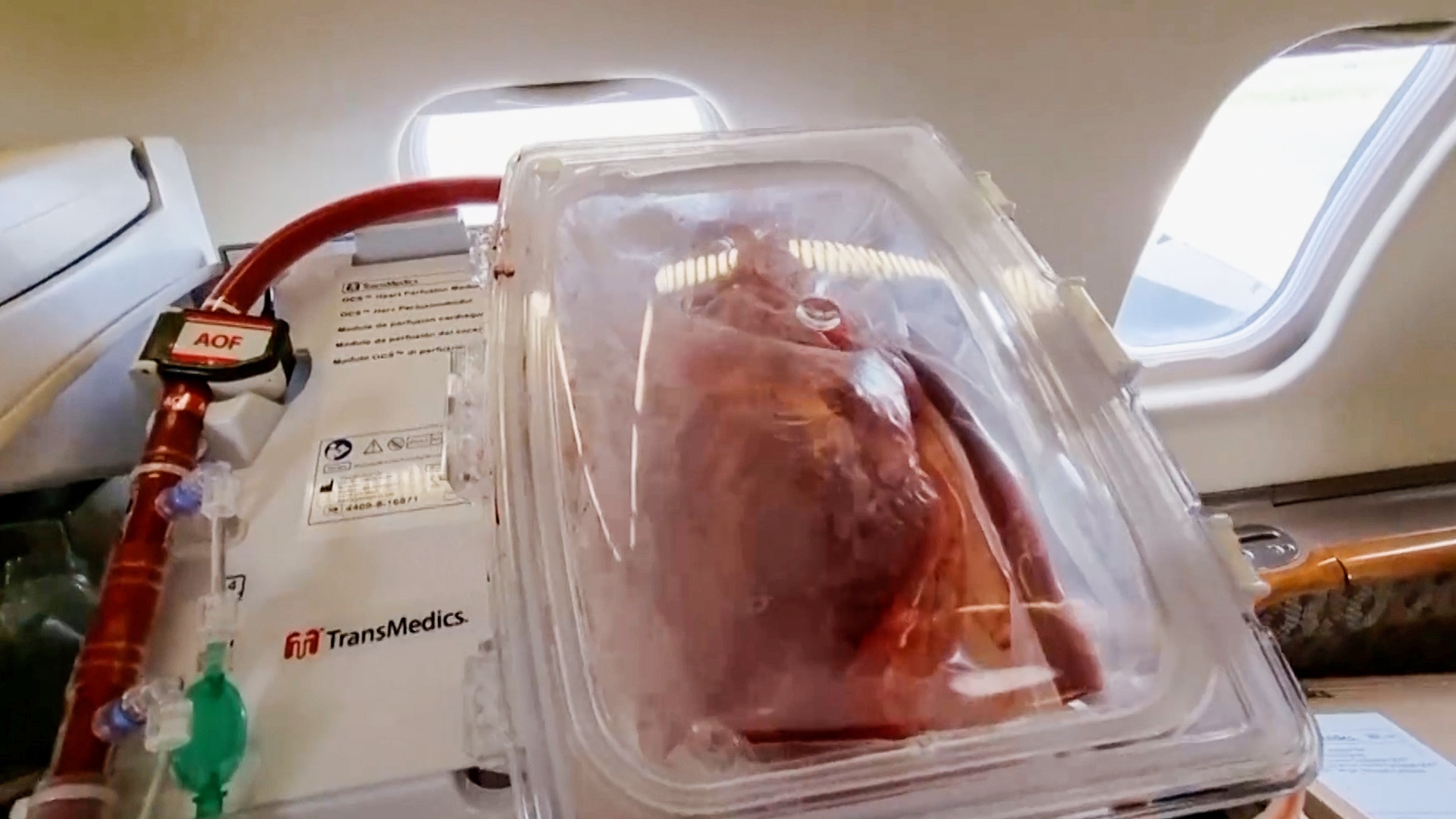
More than 100,000 people in the United States are waiting alone to obtain a heart, kidneys, or another organ as part of organ transplant surgeries, and many of them leave life during the waiting journey. Some researchers believe that the hope for saving these spirits is to obtain members of genetically modified pigs, and this is the technical solution to a fundamental problem that is that the number of those who need to grow organs exceeds the number of members that can be obtained from survived donors or clinically deceased people.
During the past few years, a few people in the United States and China have received hearts, livers and kidney genetically modified pigs, but ensuring the continued effectiveness of these organs within the bodies of patients in the long term involves great challenges, according to an Annual Review of Animal BiSciences last year.
Now, thanks to the progress of technological and medical sciences, a company working in the field of biotechnology began and bearing the name “United Therapetex” in the US state of Maryland.
“Unfortunately, while we are talking now, someone who dies is waiting for a organ transplant.”
After a long journey of organ transplant experiments from the animal, scientists concluded that pigs are the main source of obtaining organs for cultivation in human bodies, due to the ease of raising these animals and the speed of their growth, and that their organs are similar to the size of human organs, and there are no many diseases that can affect both humans and pigs, which reduces the chances of infection transmission between the two parties.
Genetic amendments
“I think the pig is an ideal donor for organs to humans,” says Wening Kane, Vice President of the American E Genesis, Vice President of the American E Genesis, a company, a company in the state of Massachusetts. Genetic adjustments to these organs, the human body will attack it immediately. “
The “acute pronunciation of the cultivated organs” occurs inside the patient’s body when the antibodies to the immune system recognize the implanted organ as a strange body. Kane explains that the human immune system can identify 3 molecules for sugary substances that live on the blood vessels of the pigs, where antibodies are attached to the cells of these vessels and perform a series of reactions that cause stroke and prevent blood flow within the implanted organ. “Within 10 minutes, the organ turns from pink to black and dies inside the patient’s body,” Kane added.
In order to confront this problem, researchers from the “E Genesis” and United Therapixus succeeded in employing a technique of genetic modification called Crisper/CAS to adjust the genetic acid of pigs, as they succeeded in getting rid of 3 genes responsible for the formation of sugary molecules on the blood vessels of the pigs. The researchers found that the human immune system was able to identify and attack the transplanted organ.
Researcher Mansour Mohiuddin told Knowble Magazine that traditional immunosuppressive drugs that are used in cases of organizing organs between human beings do not work with the same effectiveness in the case of transferring organs of pigs to humans.
Experts from the two companies introduced human genes into the cells of the pigs, and these genes make a layer of human proteins on the surface of pig cells so that they disguise as if they were human cells. In the context of similar experiments, I Genesis announced that 5 out of 15 monkeys who have had kidney transplant surgeries who have been alive for a year.
Muhyiddin and other researchers have developed drugs that could inhibit the immune response to the planted organs of other types, as during the experiments they succeeded in planting the hearts of pigs within the bodies of 5 of the chamomile monkeys. Thanks to these new drugs, monkeys have been alive for a period of two and a half years.
Other researchers hope to reach the possibility of dispensing with immunosuppressive medications after organ transplant surgeries by training the body’s immune system to ignore the transplanted organ, whether they are organized organs of humans or animal types.
The immune system
Researcher Meghan Sykes, director of the Colombia Center for Immune Research in New York City, conducted experiments in this direction by planting additional tissues from the immune system of the donor, such as the bone marrow inside the patient’s body, which will get the organ. Through this technology, it hopes to make the recipient’s immune system “more tolerant” about the implanted organ.
Experiments are currently being conducted to reduce the amount of immunity inhibitors that some of the chamomile monkeys have been obtained by organs of organs according to this new technique. “We are living in an exciting time in the field of organ transplantation between living species, and I think we will witness tangible progress in this field in the near future,” said Sykes.
“We do not claim that we have reached the ideal solution, but we hope that the planted organs of animal species will become a actual source of the supply of living organs to humans, especially in light of the genetic modification of pig cells and progress achieved in the field of research that may reduce the need to take immunosuppressive drugs for long periods,” said researcher Mohiuddin.