


The damage that may occur to the teeth is not only related to neglecting to clean them, but may sometimes result from using the brush at an inappropriate time. After consuming acidic foods or drinks, the enamel layer becomes more susceptible to being affected, and brushing the teeth directly and vigorously may lead to increased erosion and the appearance of sensitivity over time.
Therefore, proper dental care depends on more than just the frequency of brushing, as it includes choosing the appropriate timing, controlling the force of pressure, following the correct movement, using a toothpaste containing fluoride, in addition to cleaning the spaces between the teeth.
When is brushing teeth immediately after eating beneficial? When does waiting become the safest option?
Should I wait?
The American Dental Association recommends not brushing your teeth immediately after consuming acidic drinks, but rather rinsing your mouth with water, as saliva helps neutralize the acids and gradually remove them from the mouth.
A scientific review published by the journal Caries Research indicated that the available evidence regarding setting a standard waiting period before brushing is still inconclusive.
This is why experts advise consulting a dentist to determine the most appropriate timing, according to the condition of the teeth and the person’s susceptibility to cavities or enamel erosion.
When the enamel weakens
Prosthodontist Dr. Nejad Rene Mina says that brushing teeth immediately after eating may harm them instead of protecting them, especially when the meal contains sugars or acidic drinks and foods.
He explained to Al Jazeera Net that these foods and drinks affect the pH level inside the mouth, and may make the surface of tooth enamel temporarily softer, until saliva helps neutralize the acids and restore the natural balance.
He added that using the brush during this stage, especially when applying forceful pressure, may increase friction with the enamel layer, which is more susceptible to infection, and with repeated repetition of this habit, signs of tooth wear or sensitivity may appear.
The American Dental Association indicates that frequent consumption of soft drinks and acidic foods and beverages represents a major factor in tooth erosion, as the risk is related to the number of times exposure to acids, the way they are consumed, and the length of time they remain in the mouth.
Before or after food?
Dr. Mina says that a person has two options for taking care of his teeth, the first of which is to brush them before eating using a toothpaste that contains fluoride, so that the teeth can benefit from its protective effect before they are exposed to sugars and acids.
If a person wants to brush his teeth after eating, it is recommended to wait for a period ranging between 30 minutes and an hour, especially after consuming acidic foods or drinks, until the mouth gradually regains its balance before using the brush.
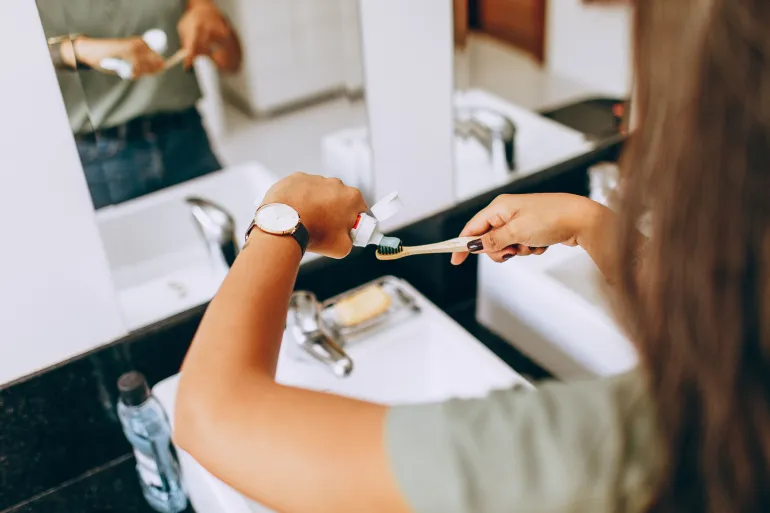
The American Dental Association recommends brushing your teeth twice a day, each time taking about two minutes, using a fluoride-containing toothpaste, and cleaning the spaces between your teeth daily.
The association confirmed that fluoride is linked to reducing the risk of cavities, and helps replace minerals lost in the enamel layer.
Alternatives that protect teeth
Dr. Mina points out the possibility of taking care of the mouth directly after a meal without using a brush, through three methods that help remove food residue and reduce the effect of acids.
The first method is to rinse your mouth with lukewarm water, to help remove food debris and reduce the concentration of acids inside the mouth.
The second method is to use medical dental floss or a device to clean the spaces between the teeth with water, to reach areas that the brush cannot reach, without rubbing the enamel surface.
The third method is to chew sugar-free gum, as chewing helps stimulate the secretion of saliva, which plays an important role in washing the mouth and neutralizing acids.
The American Dental Association indicates that sugar-free gum may contribute to reducing the risk of tooth decay when used alongside brushing with fluoride toothpaste and cleaning the spaces between the teeth, but it is not considered a substitute for these practices.
Method before force
Orthodontist Dr. Muhammad Akef Abdel Rafiq says that brushing the teeth violently or with incorrect movements may harm the teeth and gums, stressing the importance of adjusting the angle of the brush and the direction of its movement.
He explained to Al Jazeera Net that the brush should be placed at an angle of 45 degrees, so that the bristles touch the surface of the teeth and the edge of the gum together, then move it gently in small circular movements, before pulling it from the gum towards the tip of the tooth.
He added that this movement is repeated on the external and internal surfaces of the teeth, while the chewing surfaces are cleaned with a light forward and backward movement, avoiding violent horizontal rubbing.
A scientific review published in the journal “Health Care” indicates that the method of brushing, the force of pressure, and the use of highly abrasive toothpaste may affect the hard and soft tissues inside the mouth.
The review explained that controlling the force of pressure and choosing less harsh products help limit potential damage to teeth and gums.
Care doesn’t stop at the brush
Dr. Akef stressed the importance of using dental floss to clean areas where the brush bristles cannot reach, in addition to rinsing the mouth well after meals to help get rid of stuck-on food residue.
He warned against excessive consumption of soft drinks due to their harmful effect on the enamel layer, pointing out the importance of performing a regular dental examination every 6 months, even in the absence of pain or visible symptoms, to monitor the health of the teeth and gums and detect problems in the early stages.
Good oral care does not mean brushing the teeth vigorously or immediately after every meal, but rather it means removing bacterial plaque without harming the enamel or gums.
Brushing your teeth twice a day with a fluoride-containing toothpaste, cleaning the spaces between them, reducing frequent exposure to sugars and acids, and choosing the appropriate timing and method are the basis for long-term protection.