

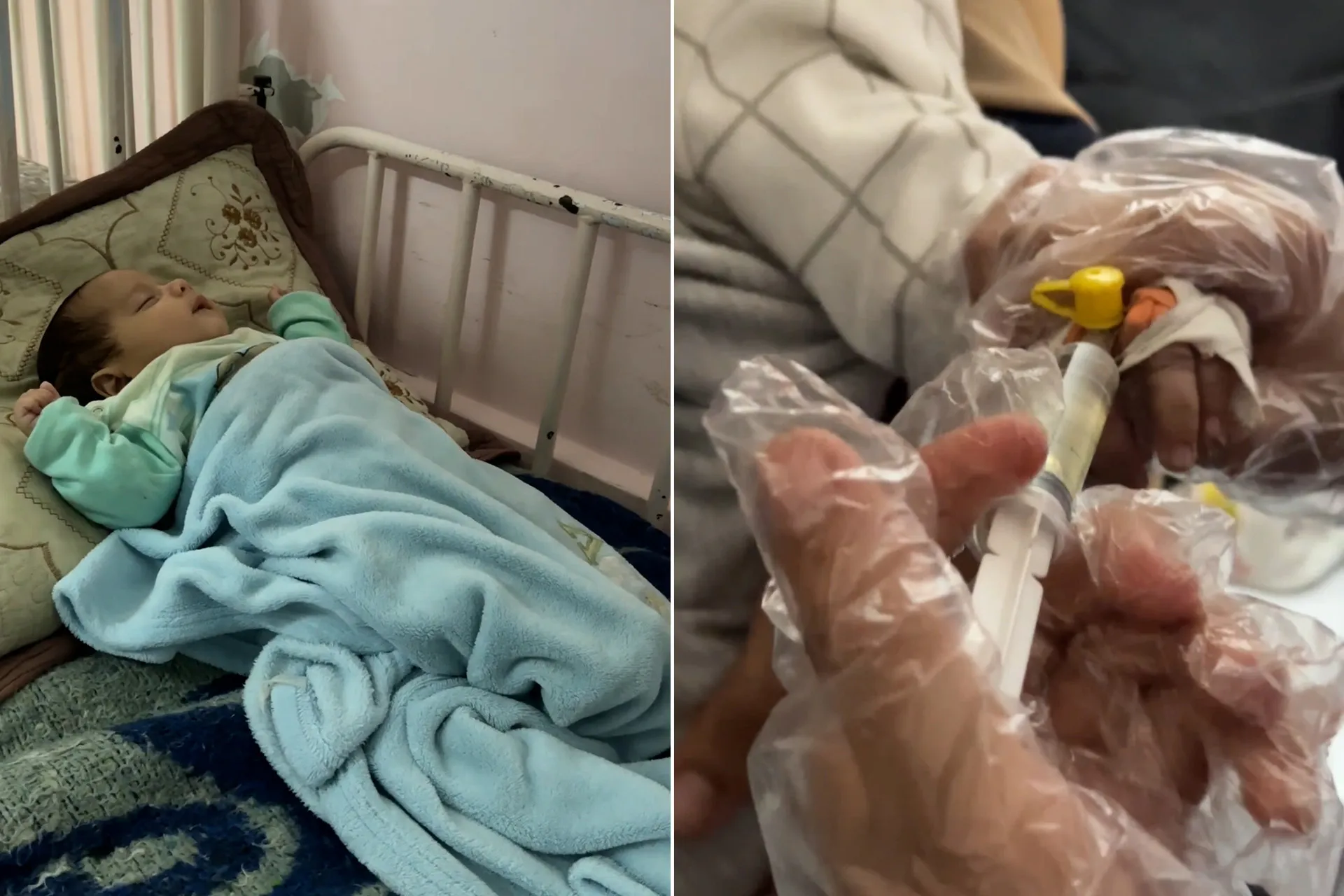
The Palestinian child Naseem Saqr (7 years old) lies in the isolation room at the Nasser Medical Complex in the city of Khan Yunis, south of the Gaza Strip, after contracting bacterial meningitis, at a time when doctors have warned of an increase in cases of the disease among children, amid a shortage of medicines and protective supplies and difficulties in dealing with critical cases.
The child’s grandmother, Naseem, told Al Jazeera that the family noticed a repeated increase in his temperature, before tests revealed that her grandson was infected with bacterial meningitis, noting that a bacterial index in the test results reached 30,000, which is the highest among the current cases in the complex, according to what the family was informed of.
For his part, the head of the pediatric department at Nasser Medical Complex, Dr. Ahmed Al-Farra, said that Naseem’s case is not the only one, noting a noticeable increase in the number of children infected with bacterial meningitis, and the blood infections that accompanied some of the infections.
A growing phenomenon
Speaking to Al Jazeera, he said: “We are talking about a noticeable phenomenon, which is the increase in cases of bacterial meningitis accompanied by blood infection.”
He explained that before the Israeli war of genocide on the Gaza Strip, the complex recorded one to two cases of the disease annually, but within one month it received 6 cases, and 4 of the infected children died, “indicating the seriousness of the injuries that medical teams dealt with recently.”
Al-Farra attributed the increase in infections to the deterioration of health and living conditions in the Gaza Strip, including severe overcrowding in places of displacement, malnutrition, weak immunity, declining levels of personal hygiene and water pollution, in addition to the psychological pressures that children experienced during the war and displacement.
The limited medicines and protective supplies increased the challenges faced by medical teams in dealing with critical cases, in light of the need for early diagnosis, rapid treatment, and taking isolation measures to limit transmission of infection.
Al-Farra warned that the rise in cases of bacterial meningitis represented a worrying development for children’s departments in Gaza’s hospitals, especially with the ability of some pathogens to be transmitted between people, and the persistence of conditions that helped spread the infection.
Official data
According to data published by the Palestinian Ministry of Health on the occasion of World Food Day on October 16, the rates of malnutrition and starvation in the Gaza Strip have reached “catastrophic levels that are killing children, the elderly, and vulnerable groups.”
She pointed to expectations that more than 1.4 million Palestinians (67% of the population) will face severe levels of food crisis or worse until the end of 2026.
It confirmed the death of 157 children due to malnutrition, and 158,000 cases of acute malnutrition were recorded among children under five years old from 2024 until August 2026, including 28,716 severe, life-threatening cases.