


In a scientific achievement that reflects the acceleration of the pace of research development in Qatar, the Qatar Institute for Biomedic Research, affiliated with Hamad Bin Khalifa University – a member of the Qatar Foundation for Education, Science and Community Development – succeeded in developing a new and unique medical technology, which depends on tracing eye movement to diagnose autism spectrum disorder in less than 4 minutes.
The idea of the new technology depends on noting an imbalance in the eye movement in people with autism spectrum disorder, which is an imbalance that does not specialize in the same eye or by looking, but it is a defect in the brain cells responsible for visual communication, as autistic people suffer from weak visual communication or his absence during the conversation, so they do not focus in their eyes on the face of the speaker, which is one of the distinctive signs of this disorder.
What distinguishes the new device is that it does not depend on the experience of the person in charge of the examination, unlike traditional methods that depend on personal tools and diagnoses that are based on experience and self -analysis. Consequently, the device provides a steady accurate diagnosis, and does not change from one examination to another, according to the statements of the main researcher at the Qatar Institute for Biomedic Research for Al -Jazeera Net, Dr. Fouad Al -Shaaban, who led the research team for this technology.
The two peoples say that the new technology is the product of a joint research work with the Cleveland Clinic Hospital in the United States Diagnosis without the child or the patient feels exhausted or dispersed.
Monitor
In his interview with Al -Jazeera Net, the two peoples explain the mechanism of the work of the new device, indicating that it depends primarily on monitoring the imbalance in the movement of the eye, which is a defect related to the brain cells responsible for visual communication, as more than 95% of those with autism suffer from this imbalance, and based on this matter, the eye movement tracking works according to this scientific basis.
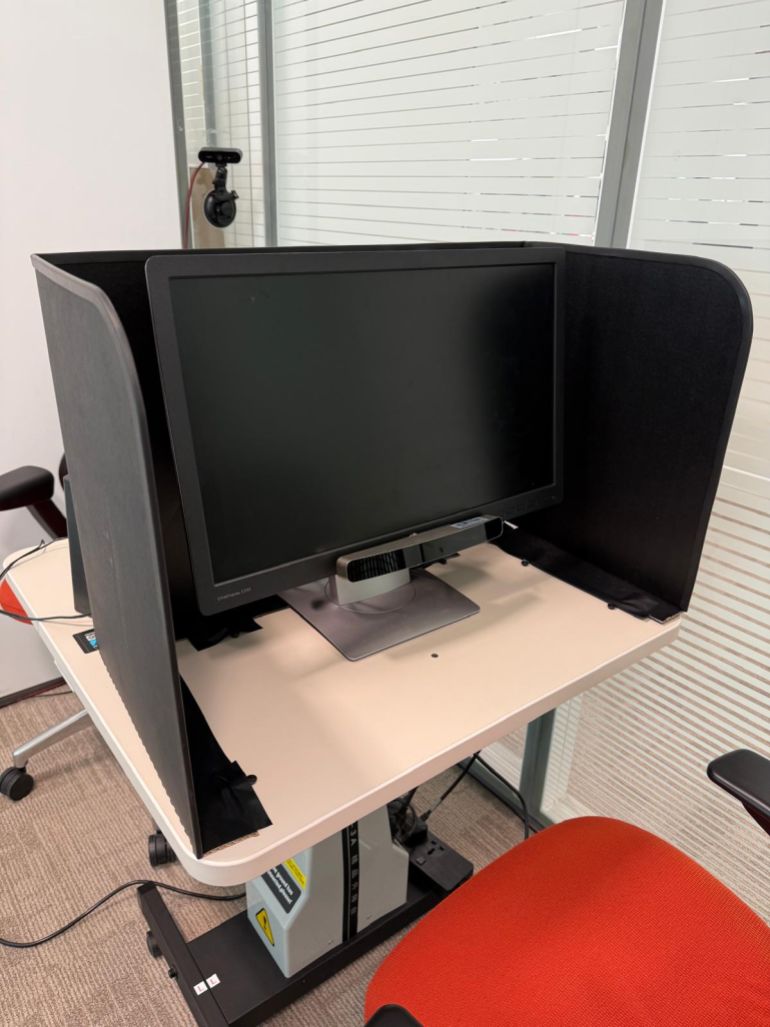
During the examination, the person sits in front of a computer screen equipped with a special device and a specific camera for 4 minutes, during which the eye movement is determined and monitored and all signals that help the diagnosis, which reaches more than 95%, is a high percentage.
The researchers at the Qatar Medical Research Institute found that a period of 15 minutes is long and no child or person can focus and pay attention to the device, and therefore the technology was worked to reach the current time period, which is only 4 minutes.
Age groups
The two peoples reviewed the age groups with which this device is suitable, saying that it targets all groups from the age of 5-6 months and above, and in severe cases for children can diagnose cases at the age of 4 months, and it can also be used for large ages without a specific ceiling, explaining that more than 550 people have already been examined and the device has proven effective in diagnosing cases of autistic people.
Autism spectrum disorder is a chronic disorder and no healing, but it can be managed and dealt with appropriately medically, which contributes to improving the quality of the life of autistic people and facilitating its integration in society.
Documentation stage
Technology has gone through accurate and long -term scientific stages, as well as the fruit of research efforts that spanned more than 8 years in cooperation with one of the most ancient medical institutions in the world, with the aim of developing an accurate and fast tool to diagnose autism spectrum disorder.
Regarding clinical experiences and scientific studies, the two peoples said that extensive research was conducted with the American Cleveland Clinic Foundation, and contributed to the development of technology and multiple and documented studies were conducted, published in prestigious international scientific journals.
The accuracy and efficiency of the device was also documented scientifically, and the results have proven the effectiveness of this technology in the diagnosis of autism spectrum disorder, especially the brief version of the tool that depends on the follow -up of eye movement and takes only 4 minutes, which lasted 3 years and has also undergone extensive scientific studies and these studies are documented, and they are now in the publication and academic documentation stages.
Ready to market
The two peoples say that the new technology is ready for commercial marketing, and the necessary steps are being taken to establish a specialized company that takes this task, and it is expected that the device will be available for actual use during the next few months, whether within the State of Qatar or in the Middle East region, but at the global level.
One of the most prominent advantages of this technology is its low cost, as it does not exceed $ 14,000, which is a very appropriate number in view of the cost of other specialized medical equipment, especially those that are included in the field of diagnosis of neurological and developmental disorders, and this factor makes the new technology a practical choice for countries and health institutions that seek to enhance its ability to early diagnosis of autism spectrum disorders.
The two peoples believe that the traditional methods currently used to diagnose the autism spectrum disorder suffer from a number of challenges, most notably the length of the waiting period to obtain an appointment with qualified specialists to conduct a diagnostic evaluation, and they are basically limited numbers, a problem that is not limited to Qatar only, but most countries of the world suffer from.
Waiting periods
In some cases, the waiting period may range from 6 months to two years, and this greatly delays the early intervention needed to treat and develop infected children. Based on these data, the two peoples believe that the introduction of the new technology in the health care system would make a fundamental shift in this field, especially with regard to improving the quality of the lives of children with autism and their families, by providing early treatment interventions that are appropriate to the needs of each case.
The delay in the diagnosis often leads to negative results for the affected child, as it is deprived of precious opportunities for early intervention, which is the factor that all scientific literature confirms as one of the most important determinants in improving the path of social and behavioral growth and behavior among individuals with autism spectrum.
Regarding this matter, the two peoples assert that early diagnosis constitutes the first stage within a series of subsequent therapeutic and qualifying steps, which may include behavioral intervention programs, early educational training, sometimes drug intervention or multi -specialized treatment, and that the more the condition is diagnosed at an early age, the more effective of these interventions and the higher the possibilities of the child integration into society and its achievement of tangible functional developments.