


Granting the great progress that occurred in the treatment of cancer healing to many patients, but this does not change the fact that cancer constitutes a burden that weighs the shoulders and their families, and its psychological and material effects extend to the adults and children who stole cancer from them loved them.
But the discovery of cancer is not the end. Rather, it may be the beginning that saves the patient and his loved ones from a monster hiding inside his body, whenever he gives him time, he will be well.
Early detection of cancer enables doctors to discover the tumor when it is small and confined to its place before any symptoms that can be observed appear, which makes the treatment options easier and more effective, as patients are treated in some cases with a simple surgery or using a treatment for a short period without resorting to more complex treatments.
What is the early detection of cancer? What is its importance? And who should we submit to? And when? In this report, we answer these and other questions.
How do we discover cancer early?
Early detection of cancer depends on two main strategies: early diagnosis and periodic tests.
An early diagnosis of cancer can be reached if the patient gives his body a time and goes to see a doctor about the symptoms that accompany him without giving it to her, such as the appearance of a strange block, especially if it is solid and grow up over time and if not painful, or bleeding without a clear reason, such as noting the presence of blood in the urine or blood with stool or bleeding in women after menopause.
The changes that continue without a clear reason for a long time are sometimes a dangerous indication that requires a doctor’s review, and these indicators may be a continuous difficulty in swallowing, or diarrhea or constipation without a known reason for a long time, or changes in the shape of the skin or a change in the size of the mole or its color or shape, and such a loss of weight quickly without a diet or excessive physical activity, this good change in its phenomenon may not be in fact.
Periodic tests are the cornerstone of the early detection of cancer, and they are conducting tests for healthy people who do not feel any symptoms at all regularly with the aim of detecting any abnormal changes in its early stages.
What cancer can be detected early?
Many common cancers can be detected early, which greatly increases the chances of recovery from them, and here are the most important and how to reveal them:
1- Breast cancer
Discovery of breast cancer has become easier thanks to the mammogram (mammogram), and this examination reduces the risk of death by breast cancer by up to 40%, which makes it very important because it is able to detect the tumor in its early stages when it is small to the point that the woman cannot feel or discover it.
The American Cancer Society recommends women between the ages of 40 and 44 to start performing breast photography once every year, while women from the age of 45 to 54 years must be photographed by breasts with radiology annually.
Women can age 55 and above turn into a mammogram every two years, or continue to make it annually, and the examination must be continued as long as the woman is in good health, and it is expected to live at least 10 years.
Early detection of breast cancer helps start treatment in a timely manner, which greatly increases healing chances and provides easier and less complex therapeutic options.
2- Cervical cancer
Cervical cancer is a malignant tumor that begins in the cervix, which is the lower area of the uterus, and is globally the third most common cancer among women, and the infection of the HPV is the main cause of the disease.
The World Health Organization indicates that women should be examined to detect cervical cancer every 5-10 years starting at the age of 30 years, while women with HIMONODEFICINCY VIRUUS are examined every 3 years starting at the age of 25 years.
The organization recommends a test of at least twice during life using a high -resolution Human Papillomavirus virus test, the first at the age of 35 years and the second at the age of 45 years.
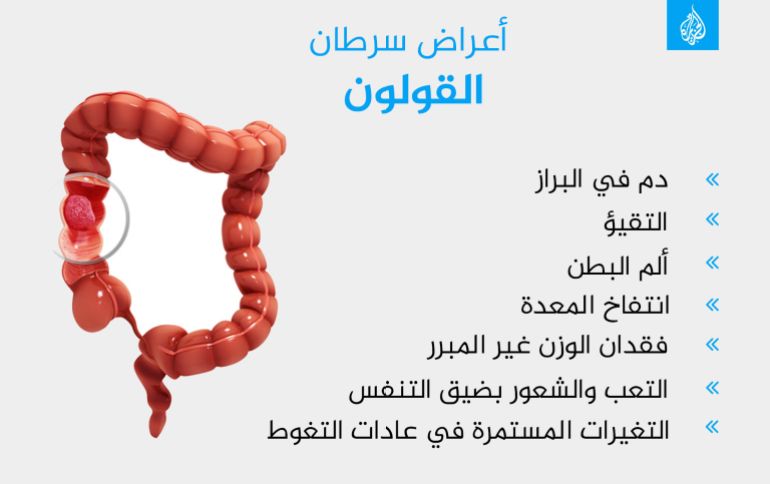
3- Colon cancer
Most people should start a colon and rectal cancer examination after they reach the age of 45 years shortly in accordance with the Centers for Disease Control and Prevention in the United States, then continue to conduct the examination regularly.
Some people may need to perform the examination before the age of 45 if they suffer from inflammatory bowel diseases such as Crohn’s disease or ulcerative colitis, or they have a personal or family history of colon and rectal cancer or colon and rectum.
It can be detected early about colon and rectum cancer by conducting a stool examination or through theoretical, and the importance of theorizing is not limited to early detection only, but it can prevent the occurrence of cancer as well.
4- Lung cancer
Symptoms of lung cancer usually do not appear until after the disease reaches an advanced stage, and even when lung cancer causes symptoms, many may mix between them with other problems, such as infection or long -term smoking effects, and this may delay the diagnosis.
The discovery of lung cancer has become early available through a CT scan, and this inspection is especially recommended by evil smokers, and they are the ones who smoke a box of cigarettes per day for 20 years or more, and those between the ages of 50 and 80 years.
Doctors advise to conduct this examination once every year for smokers within this age group, as it contributes to reducing the risk of lung cancer by up to 20%, because it reveals tumors at a very early stage in which they can be treated very effectively, while the best way to prevent lung cancer remains completely quitting smoking.
The patient must always remember that the examination is just a tool for help, not a final diagnosis. If the result shows an abnormal thing, this means that the patient needs more confirmation tests, which must be discussed with the doctor to choose the appropriate examinations for his age, condition and the history of his family.