

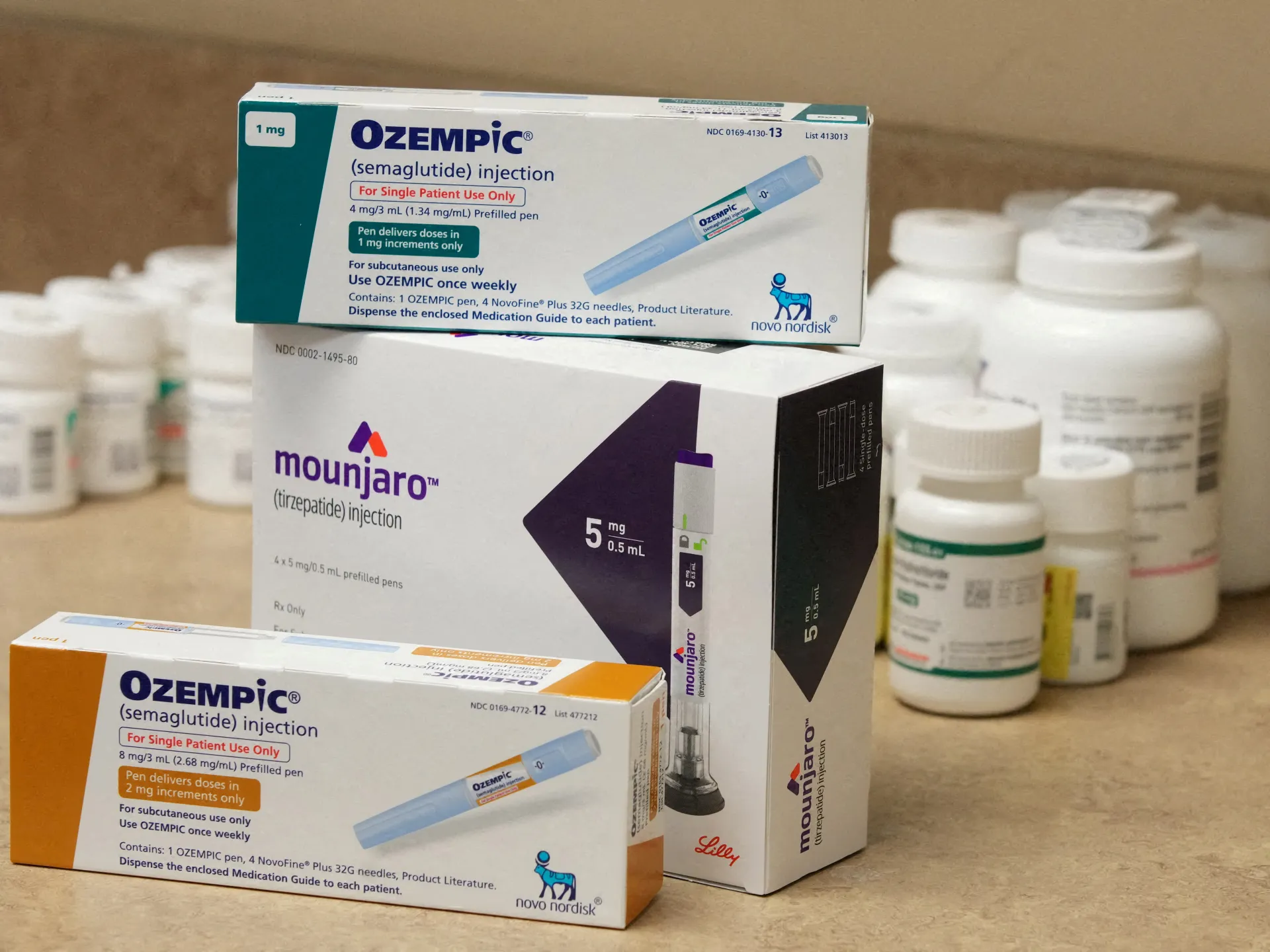
Many slimming injections have recently gained wide popularity among those who rely on them as a treatment for type 2 diabetes and those who want to lose a few kilograms of their weight, and some consider them a “magic” solution to achieve an ideal body in a few months.
However, a recent scientific study warns those who take slimming injections to treat diabetes or lower cholesterol, of the potential risks of stopping their use with an unhealthy lifestyle, which may lead to strokes and heart attacks.
Cardiac protection fades quickly
A new study published by the American medical journal BMJ found that the famous weight-loss drugs “glucagon-like peptide-1,” known on the market under the names “Monjaro, Wigovi, and Ozambik,” in addition to their ability to improve blood sugar levels, reduce inflammation, improve insulin resistance, reduce harmful cholesterol, and lose weight. However, when patients – especially type 2 diabetics – stop using them, they are at risk of strokes and heart attacks.
333 thousand participants
The study, conducted by researchers at Washington University School of Medicine in St. Louis and published on March 18, included more than 333,000 former American soldiers with type 2 diabetes for three years, and compared with continuous use, they found that stopping GLP-1 treatment, or interrupting it for only six months, is associated with a significant increase in the risk of cardiovascular disease.
Increased infection rate
The researchers discovered that the longer the treatment break, the greater the risk, reaching a 22% increase in the risk of heart attacks, strokes and death two years after stopping GLP-1, largely erasing the cardiac protection gained during treatment.
The results show that the consequences of stopping GLP-1 medications extend beyond just weight regain, and underscore the importance of continued treatment to protect the heart in the long term.
Why does the “magic solution” fail when stopping?
In the summary of the study, the lead author of the study and clinical epidemiologist at the University of Washington, Ziad Al-Ali, said: “Many people stop taking the medication after a few months because of the cost, side effects, or shortages in the products, and when they stop, not only do the weight return, but they also suffer from an increase in inflammation, blood pressure, and cholesterol.”
Al-Ali adds: “This sudden metabolic disturbance is harmful to heart health, and resuming taking the drug helped restore some protection, but only partially, which indicates that stopping taking it leaves a lasting effect.”
The study concluded that stopping the use of GLP-1 medications for a year or two without resuming increases the risk of cardiovascular disease by 14% to 22%, compared to continuing to take them. This means that any benefits gained during the period of taking GLP-1 medications quickly disappear when patients stop taking them.
The study recommends continuing GLP-1 therapy to maintain cardiovascular protection, with the need to develop strategies to reduce treatment interruption to maximize cardioprotective effects.
How do these injections affect the body?
For his part, Dr. Mohamed Adel Moaty, a consultant in general internal medicine, hepatology, gastroenterology and endoscopy in Egypt, said that GLP-1 injections work on the hormone “glucagon-like peptide-1” found in the stomach, which works to slow down the stomach emptying process. When injections are used, this hormone increases, making the stomach emptying process take longer, giving a prolonged feeling of fullness.
Maati added to Al Jazeera Net that the injections affect the hunger hormone and the appetite is less than usual, but when you stop using the injections the appetite returns to normal and the hormone decreases and the stomach emptying process returns to its normal rate, and the stomach movement goes normally, which is why one must be careful not to return the body to its normal state that it was in before using the injections.
Consequently, the results of treatment decline and the body begins to regain the lost weight unless attention is paid to stabilizing the body by following a healthy diet and exercising to maintain the starting point that began when using slimming injections.

Moati explained that GLP-1 treatments are excellent for patients with type 2 diabetes in lowering blood sugar levels, reducing inflammation, increasing insulin resistance, reducing harmful cholesterol, and protecting the heart muscle, which reduces the risk of strokes and heart attacks. However, when use is stopped – especially with high doses for diabetics – the body loses all the health benefits it gained during treatment, and begins to regain weight and appetite. Thus, the level of sugar and cholesterol increases.
How to reduce damage?
Moati advises the necessity of following a healthy diet and exercising a minimum of 3 times a week to maintain the results of GLP-1 treatments to reduce the risk of exposure to the possibility of a recurrence of the health effects associated with stopping the use of GLP-1 treatments for diabetics, especially since these treatments are not a magic solution or an alternative to healthy diets (diets).
He warned of the necessity of following doctors’ instructions when stopping taking “GLP-1” treatments for diabetics, specifically by reducing doses gradually to maintain heart protection, and replacing “GLP-1” treatments with other diabetes treatment medications that protect the heart, arteries, and nerves, but their effect on weight loss is not the same as the effect of “GLP-1” treatments.