


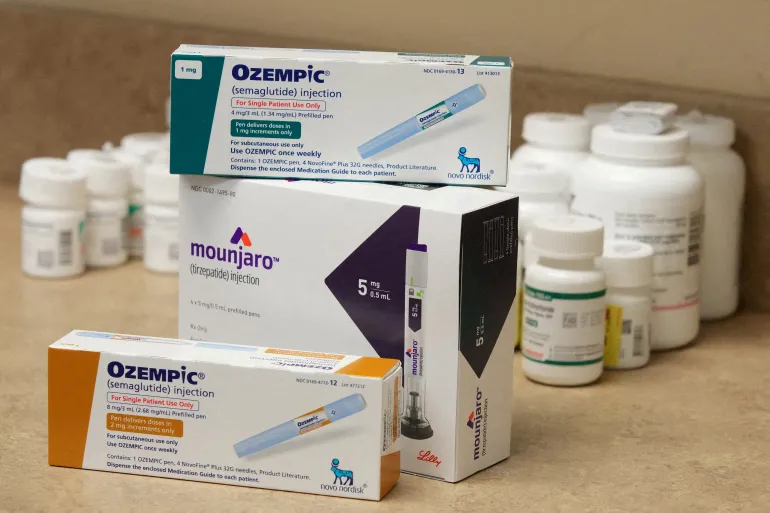
The variation in the response of diabetic patients to the drug Ozempic has remained a puzzling mystery to doctors. While the drug succeeds in lowering sugar levels and helping to lose weight in many people, it does not achieve the same results in a wide segment of patients.
It is estimated that less than half of patients with type 2 diabetes succeed in reaching the target level of HbA1c, which prompted researchers to search for the reasons for this discrepancy.
Genes…the key to interpretation
A recent study conducted by the University of Oxford and Stanford University, and published in the journal Genome Medicine, revealed that genetic factors may be behind the difference in response to GLP-1 receptor mimetics, such as Ozempic and Wegovy.
The results showed that some patients suffer from resistance to the GLP-1 hormone despite its high levels in the body, due to a mutation in the PAM gene responsible for activating this hormone.
This mutation impairs intracellular signal transduction, reducing the effectiveness of drugs.
According to the study,:
- Enzyme activity decreases by about 52% in mutation carriers.
- Hormonal response decreases by 18%.
- The effectiveness of the drug decreases by about 44% compared to those who do not carry the mutation.
In contrast, this mutation did not affect other drugs such as Metformin, which reinforces the idea of “customized treatment” according to the genetic characteristics of each patient.
Efficacy versus side effects
These medications are based on semaglutide, which has proven effective in reducing appetite and regulating blood sugar, but it is not free of side effects.
A scientific review has shown that users may lose a significant percentage of muscle mass, in addition to the possibility of a decrease in some vitamins and minerals, as a result of a decrease in appetite.
Common symptoms also include:
- Nausea.
- Vomiting.
- Constipation.
- Fatigue.
- In less common cases, complications such as pancreatitis or kidney disorders may occur.

What does the real world say?
In an attempt to understand patients’ daily experience, researchers analyzed hundreds of thousands of posts on Reddit.
The results showed that:
- 43.5% of users reported side effects
- Nausea was the most common (36.9%).
- Followed by symptoms such as fatigue, vomiting, and gastrointestinal disorders
- Less common complaints, such as menstrual disturbances and changes in body temperature, also appeared.
A promising alternative without irritating effects?
In a remarkable development, researchers from Stanford University published a study in the journal Nature about a natural molecule known as “BRP.”
Experiments showed that this molecule:
- Reduce food intake by 50% within an hour
- Contribute to weight loss without causing nausea
- Target the brain’s appetite centers with greater precision
BRP works through 3 main pathways, including GLP-1 receptors, making it a promising candidate as a more accurate alternative with fewer side effects.
Potential benefits go beyond weight loss
Despite the controversy, recent studies have begun to reveal additional benefits of these medications.
A study in The Lancet showed that semaglutide may help reduce anxiety and depression, based on data from thousands of patients.
Research published in the journal Cell Metabolism also indicated a potential role in improving liver health, especially in cases of fatty liver.
Towards more precise medicine
These findings reveal that the future of diabetes and obesity treatment is moving toward “personalized medicine,” where treatments are tailored based on the genetic characteristics of each patient.
Despite the great progress, there is still a need to develop safer and more effective medicines, especially in light of the increasing prevalence of obesity globally, and the varying response of patients to current treatments.