

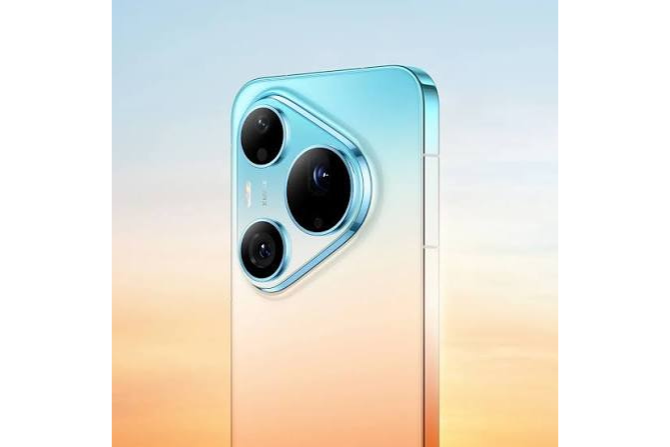
In light of the rapid digital transformation, the smartphone is no longer just a means of communication or an entertainment device, but rather has become an essential tool for managing the details of daily life and completing work. Through the phone screen, the user carries out banking transactions, tracks his accounts and payments, orders food and supplies, uses map and transportation applications, follows up on e-mail, participates in business meetings, and accomplishes many professional and personal tasks without the need for another device.
With this increasing dependence, the ease of use of applications, the speed of access to them, and the smoothness of their operation have become no less important factors than the power of the processor or the quality of the camera. The user does not only want a phone with powerful specifications, but rather he wants a device that guarantees him that the application he needs will work efficiently, and that the services he relies on will be available without complications or alternative solutions.
Here one of the most prominent weaknesses in Huawei phones emerges, especially the versions that do not rely on the Google Mobile Services system. The user may face restrictions or differences in accessing some applications and services, which is reflected in the ease of daily use, and makes the phone experience less smooth compared to phones that operate within the full Android system, such as the Samsung Galaxy S26.
When evaluating a phone like the HUAWEI Pura 90, the latest version of the Chinese company, it is not enough to compare the cameras, battery capacity, and charging speed with competing phones, especially when the phone is directed to a user who relies daily on banking, navigation, work, delivery, and communication applications.
Here the most sensitive issue in Huawei’s experience arises: Can the Gulf user rely on the Pura 90 as his main phone without facing problems in the applications he uses every day?
WhatsApp…the experience is not the main problem
The Pura 90 user can access WhatsApp, and Android applications can be installed on Huawei devices through various channels, but the most important issue is the method of obtaining the application and the stability of the services associated with it.
Huawei provides the AppGallery store as the official application distribution platform for its devices, and the company explains that the store includes applications and categories directed to markets and users around the world.
But for a user who is used to Android with Google Play, the difference here is that the experience of downloading and managing apps may not be identical to what a Galaxy S26 user gets.
Google Maps.. This is where the real problem begins
If WhatsApp is an app that can be worked around, Google Maps is more complicated for non-Google Mobile Services versions.
The Chinese version of Pura 90 does not come with the traditional Google system, as it runs on HarmonyOS 6.1.
This means that the user who relies primarily on Google Maps will not get the usual original experience found on the Galaxy S26, for example.
In contrast, a Samsung user can run Google Maps normally within the Android and Google ecosystem.
YouTube.. Watching is possible, but the “original application” is the difference
The absence of Google services in some versions of Huawei means that the user does not get the original YouTube experience the way he is accustomed to on traditional Android phones. Recent tests of non-GMS versions indicate that apps such as YouTube, Gmail, and Google Maps are missing natively, with workarounds available to run some services. The phone can access content, but accessing it does not necessarily mean getting the same experience. The user may rely on the browser or other solutions, but loses the ease of login, updates, and direct integration with the rest of the Google ecosystem.
Gmail.. The problem is not mail, but the Google system
The same applies to Gmail, email can be accessed via the browser or some workaround, but a user who relies on the official Gmail app and integration of Google services will find Android phones more comfortable.
This is an important point for the business sector; The user who relies on Gmail, Google Calendar, Google Drive, and other Google services every day is not just looking for the ability to open mail, but for an integrated system that works in the background.
Banking applications
The absence of Google may result in the user being unable to use banking applications on a Huawei phone. Compatibility varies from bank to bank, and requirements for banking applications and security updates may change over time. You must check each application individually before purchasing. This point in particular should be on the checklist before purchasing the Pura 90 for the Gulf user.
Delivery apps…don’t judge by the name of the app alone
Delivery applications represent a more complex case; Because some apps work well as a standalone interface, while some of their internal functionality may depend on Google services, especially Maps, Location, and Notifications.
Therefore, the presence of the application on the phone does not necessarily mean that all its functions will work in the same way as they do on Android. Here, local applications that the user actually depends on, such as food delivery, grocery, and transportation applications, must be tested, and not just make sure that the application can be installed.
Microsoft 365.. Can the user work on Pura 90?
For a user who relies on Word, Excel, PowerPoint, Outlook and OneDrive, the issue is also not just “Can the app be installed?”
Many Android apps can run on Huawei devices, but the absence of Google services in some versions may make the experience of some apps and services less integrated than on a traditional Android phone.
So, for the business user who considers the phone to be an extension of the computer, Android and Apple phones remain the most obvious and secure choice in terms of overall compatibility.
Pura 90 and the Gulf user
Testing reveals that the problem with the Pura 90 is not its inability to run applications at all; But the real problem is that the user may find himself facing a different experience in accessing applications and services that depend on the Google system.
If the phone will be mainly used for calling, WhatsApp, photography, content viewing and officially supported banking, the Pura 90 may be a suitable choice.
However, if the user relies heavily on Google Maps, YouTube, Gmail, Google Drive, and other Google services, then there is a clear superiority for Android and iOS phones, which clearly excel because it presents this system in an original and integrated way.
From the above, it is clear that Huawei can provide a very powerful phone in photography, battery, and screen, but for the Gulf user who relies on Google services daily, the software system remains the biggest reservation about the Pura 90.