

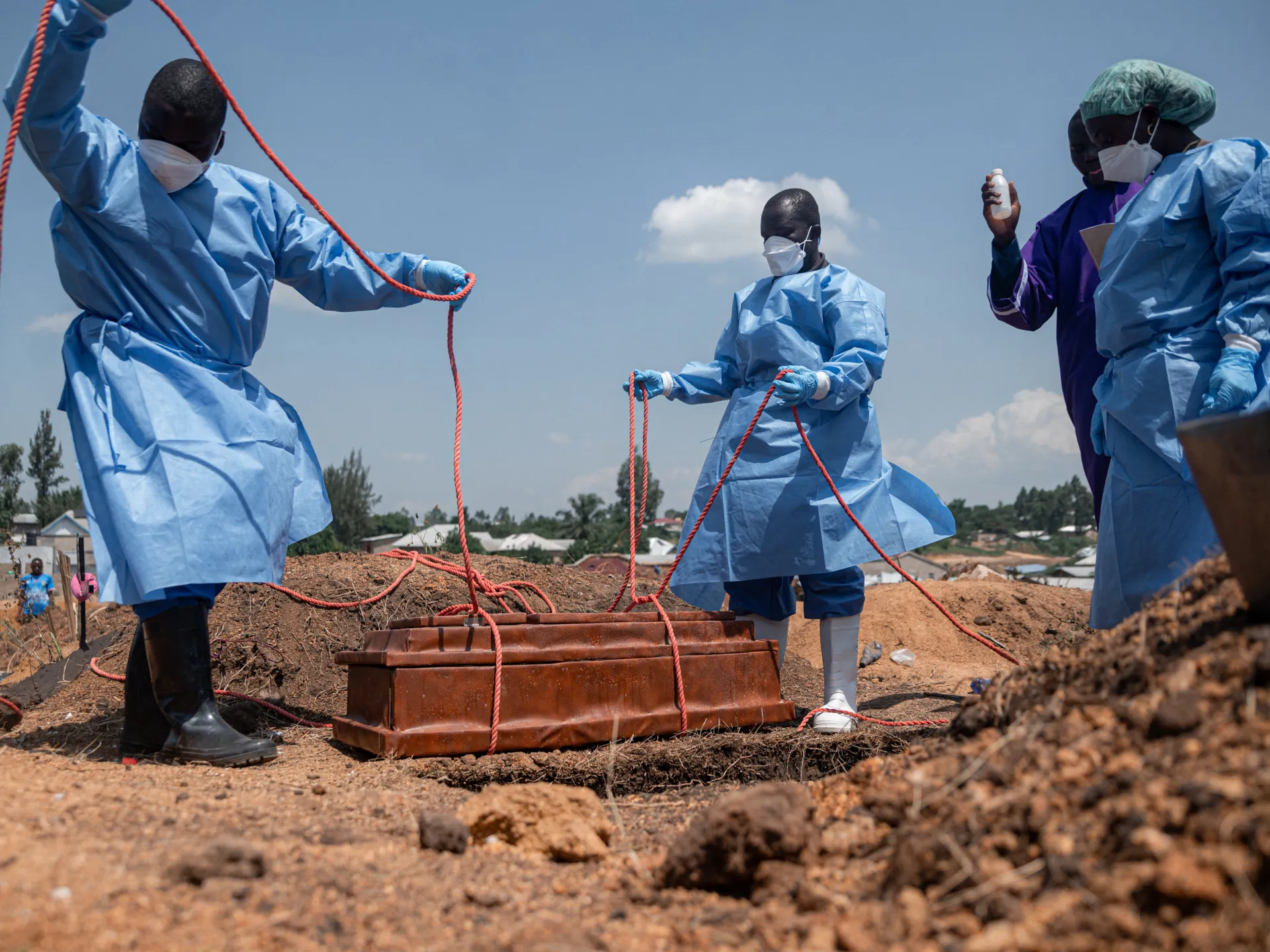
The Democratic Republic of the Congo announced the death of 2,011 people as a result of the outbreak of the Ebola virus, the fastest spreading ever, as health authorities struggle to deliver aid to remote areas. Due to conflict between the rebels, poor road conditions, and work stoppages due to wage problems.
Government data published last night showed that the virus outbreak recorded 4,381 confirmed cases, including 2,011 deaths, and 704 patients are undergoing treatment in hospitals and isolation.
The outbreak was announced on May 15, but health authorities say that genetic sequencing showed that it began months earlier, in February.
It took about 9 weeks for the outbreak to register its first 1,000 deaths, and it only took about 3 weeks for that number to double, indicating that the health crisis is worsening faster than efforts to track and manage it.
This outbreak is the second largest outbreak in history, after the outbreak of the disease in West Africa between 2014 and 2016, which recorded more than 28,000 cases, including more than 11,000 deaths.
The current Ebola outbreak is different from most previous outbreaks; There are no approved vaccines or treatments for the rare Bundibugyo virus that causes it. Clinical trials of these vaccines and treatments have begun in Ituri Province, the epicenter of the outbreak, in eastern Congo.
Aid workers say the outbreak is still outpacing the response, which is expanding to include the five affected eastern provinces.
Many health workers have gone on strike to protest not receiving their wages since the outbreak was announced.
Infection
The World Health Organization reported that most new cases are still recorded outside the scope of monitored contacts, indicating that transmission is still outside the control of health workers.
Ebola can be caused by different types of viruses, and although the type responsible for the outbreak between 2014 and 2016 is considered the most deadly, government data shows that the current outbreak in Bundibugyo has killed a higher proportion of people; Because care and support do not reach patients quickly enough, many cases report symptoms late or not at all.
The mortality rate in the current outbreak so far has been 45.9%, which is higher than the 39.6% rate recorded in the outbreak in West Africa between 2014 and 2016.
Paul Hunter, a professor of medicine at the University of East Anglia in the United Kingdom, says: “In the absence of an effective vaccine, controlling (the outbreak) depends on identifying cases and then caring for them in safe facilities until they recover or, unfortunately, die.”
“In such a remote area, with ongoing conflict and communications blackouts, routine monitoring may be very difficult, and it may be impossible to identify cases early enough to prevent the spread of the disease,” Hunter adds.
The World Health Organization announced yesterday that at the beginning of the outbreak in one of the most isolated and fragile regions of the Congo, some cases were wrongly attributed to malaria and typhoid, and that early tests were conducted to detect the most common type of Ebola virus.
The WHO’s regional director for Africa, Mohamed Yaqoub Janabi, stated in a press conference that officials are “chasing the virus, but it is ahead of us.”
It is noteworthy that the first Ebola virus was identified in 1976 near the Ebola River in what is now known as Congo, and the current outbreak is the 17th and largest facing this central African country.