


Reaching the age of fifty does not mean that the disease has become inevitable, but it represents a stage in which the map of health risks gradually changes, and some tests and vaccines become more important, not necessarily in search of an existing disease, but rather in an attempt to prevent it or detect it at an early stage before its symptoms appear.
Modern preventive care is based on a simple principle: Do not wait for the body to tell you that there is a problem. High blood pressure, diabetes, some types of cancer, and osteoporosis may develop for long periods without obvious symptoms, while appropriate examinations can detect some of them early.
But turning fifty also does not mean undergoing every test available. Modern medical recommendations have become more accurate, and take into account age, gender, family history, smoking, weight, chronic diseases, and previous examinations, which makes the periodic visit to the doctor closer to a “personal prevention plan” than to a fixed list of tests for everyone.
Colon…the examination has already begun
If you’re over 50 and haven’t started colorectal cancer screening, it may already be too late for the recommended age to start screening for people with average risk.
The US Preventive Services Task Force (USPSTF) recommends starting colorectal cancer screening at the age of 45 and continuing until the age of 75, while the decision becomes more individual between the ages of 76 and 85, according to the health condition, previous examinations, and the person’s preferences.
Screening does not necessarily mean performing a colonoscopy every time, as multiple options are available, including periodic stool tests, colonoscopy, and CT colonography, and the intervals vary between one test and another.
Those with a strong family history or diseases that increase the risk of infection may need to start at an earlier age or undergo more frequent examinations.
Breast cancer: the forty starting points
For average-risk women, the USPS TF currently recommends a mammogram every two years from ages 40 to 74. This means that a woman in her 50s should already be on a regular early detection programme, and not start thinking about it after a lump or symptoms appear.
The plan may differ if there is a strong family history of breast cancer, known genetic mutations, or other factors that increase the risk, as a different follow-up program may be used.
Cervical cancer does not end at fifty
A woman reaching the age of fifty does not mean that the need for cervical cancer screening has ended.
The American Cancer Society recommends that screening continue for people at average risk until at least age 65. Primary HPV testing every 5 years is the preferred option, with alternatives including combining HPV testing with a Pap smear every 5 years or a Pap smear alone every 3 years when basic testing is not available.
The examination stops after the age of 65 in many cases only when the previous examinations are regular and negative according to the recommended standards.
Smokers: a test may save the lung
Here the importance of not applying tests to everyone in the same way becomes clear. Low-dose CT scanning to detect lung cancer is not recommended for everyone over the age of fifty, but rather targets those at high risk.
HPV recommends annual screening for people between 50 and 80 years old who have a smoking history equivalent to at least 20 packs/year, and who still smoke or have quit within the past 15 years. A pack/year means smoking a pack a day for a year, or its equivalent.
Here, knowing your smoking history becomes an essential part of determining whether the examination is useful at all.

The prostate… is not an automatic examination for every man
After the age of 50, men may expect that the prostate-specific antigen (PSA) test will become an undisputed routine examination, but the recommendations are more complex.
The American Cancer Society recommends beginning discussions of the benefits and risks of screening with average-risk men at age 50, with an earlier start in some higher-risk groups.
As for HPV, it considers that the decision to screen for PSA between 55 and 69 years of age should be an individual one after discussing the potential benefits versus the possibility of false positive results and excessive diagnosis and treatment, and it does not recommend routine screening after the age of 70 years.
This relative difference between recommendations reflects the essence of modern preventive care: more testing is not always better.
Blood pressure and diabetes…the silent danger
The importance of measuring blood pressure is not related to the age of 50 alone, as HPV recommends that all adults be examined starting at the age of 18, with the diagnosis confirmed by measurements outside the clinic before starting treatment when high blood pressure is suspected.
But the importance of follow-up increases with age and the accumulation of risk factors.
As for diabetes, HPV recommends screening adults between 35 and 70 years who are overweight or obese to detect prediabetes and type 2 diabetes.
These tests reveal disorders that may remain silent for years while gradually causing damage to the heart, kidneys, blood vessels and nerves.

Bones after 65
Osteoporosis strongly enters the map of preventive examinations with age.
In an update issued in 2025, HPV recommended that all women age 65 and older be screened for osteoporosis, and it also recommended that postmenopausal women under 65 be screened if they are at high risk of fractures.
There is not the same general recommendation for all men, which reaffirms that screening should be related to the level of risk and not to age alone.
Checking once may prevent disaster
A lesser-known test is screening for abdominal aortic aneurysm, a condition that may remain asymptomatic until a serious rupture occurs.
HPV recommends a single ultrasound scan for men between 65 and 75 years old who have ever smoked, while the decision is made more selectively for men of the same age who have not smoked.
Vaccines: Protection does not end with childhood
It is a common mistake to view vaccinations as a matter for children, while some of them become more important with age due to changes in the immune response and a higher risk of complications.
The influenza vaccine comes at the forefront of seasonal vaccines. The US Centers for Disease Control and Prevention (CDC) recommends obtaining it annually, with special importance for groups most at risk of complications.
As for the shingles vaccine, CDC recommends giving it in two doses to all adults aged 50 years and over, even to those who have previously had shingles, with additional recommendations for immunocompromised people at younger ages. CDC indicates that the vaccine is more than 90% effective in preventing shingles and post-herpetic neuralgia in immunologically healthy adults aged fifty and over.
Pneumococcal vaccine starts at age 50
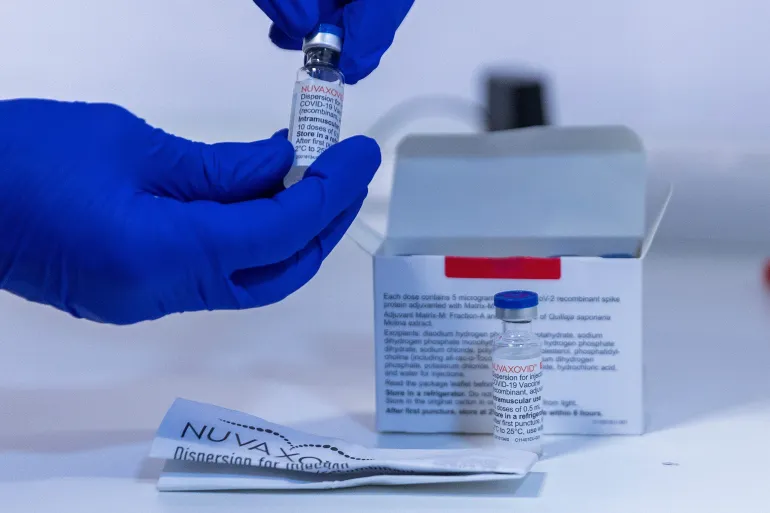
One of the most notable changes that deserves attention is that the current CDC recommendations include vaccination against pneumococci for adults aged 50 years and over who have never received a pneumococcal conjugate vaccine or do not know their vaccination history. Subsequent doses vary depending on the type of vaccine used and the previous history of vaccination.
This is an important point because some old guidelines linked routine vaccination in the minds of many to the age of 65 years.
The RSV vaccine is not for everyone over fifty
The respiratory syncytial virus (RSV) vaccine has also entered the prevention map for the elderly, but its recommendation is not the same for all people over fifty.
The CDC currently recommends one dose for all people aged 75 and over, as well as for people between 50 and 74 if they are at high risk of severe infection, such as some with chronic heart, lung or kidney disease or other health conditions that increase the risk. The vaccine is not currently considered an annual vaccination.
You should also review your history of tetanus, diphtheria, pertussis, and other vaccinations that may be due depending on age, health condition, travel, and risk factors, in addition to following the national vaccination recommendations in effect in the country where the person lives.
Fifty is not an appointment to examine the whole body
Perhaps the biggest mistake after the age of fifty is moving from neglecting prevention to the other extreme: performing dozens of tests and x-rays just to be reassured.
A good medical examination does not mean randomly searching for diseases, because some tests may reveal changes that will not cause a problem throughout the person’s life, or produce false positive results that lead to more unnecessary tests and procedures.
Therefore, there is no one “50-year-old package” that fits everyone. A person who has smoked for years needs a plan different from a non-smoker, a woman with a family history of breast cancer is different from someone with average risk, and someone with diabetes or a weak immune system may need vaccines and follow-up different from a healthy person.
After 50, the most important checkup of all may be a structured session with the doctor to review 3 things: what has already been checked, what is due, and what there is no real benefit from having it done.