

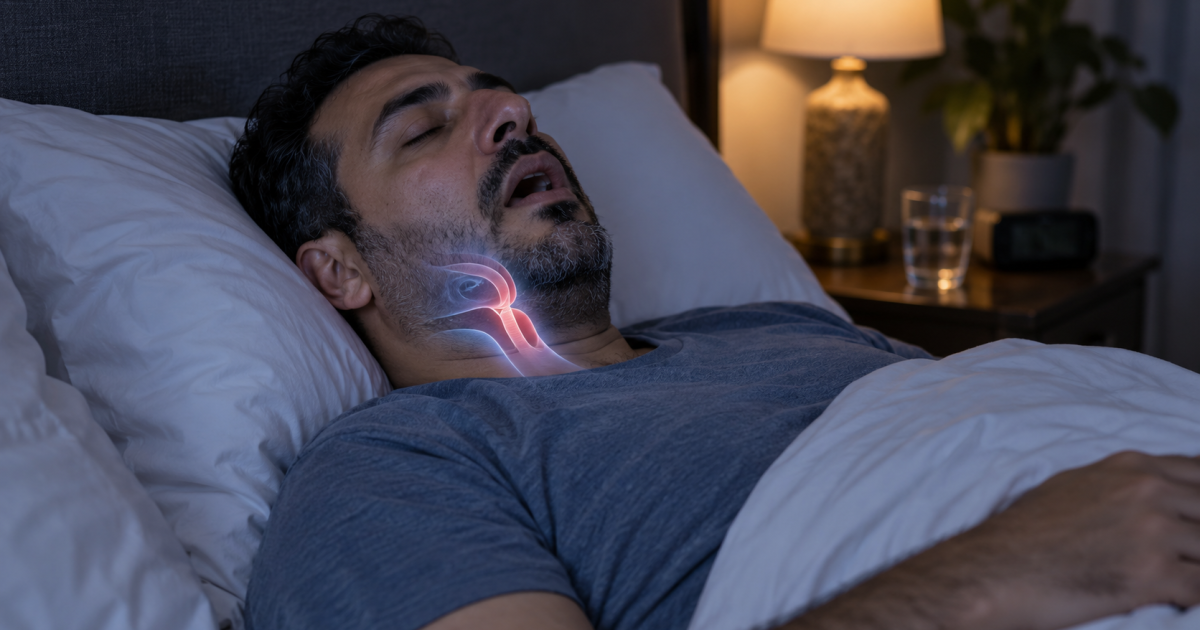
The world was not widely aware of the extent of the spread of obstructive sleep apnea until after the combined study published by The Lancet in 2019, which estimated that about 936 million people between the ages of 30 and 69 years suffer from this disorder around the world.
Since then, the disease has received increasing medical attention, not only because of its direct impact on sleep quality, but also because of its associated risks that may affect the heart, blood vessels, metabolism, and daily life of the patient.
Obstructive sleep apnea is a common sleep disorder that occurs when the upper airway narrows or becomes repeatedly blocked during sleep, leading to a decrease in airflow or a temporary cessation of it for seconds that may exceed 10 seconds, and then breathing returns after partial awakening or sudden suffocation.
How does the disease occur?
According to the US National Library of Medicine, obstructive sleep apnea appears in many patients as recurring episodes of airway obstruction during sleep, and these attacks may occur more than 5 times per hour. This leads to low oxygen levels, interrupted sleep, and constant body fatigue, even if the patient appears to be sleeping for sufficient hours.
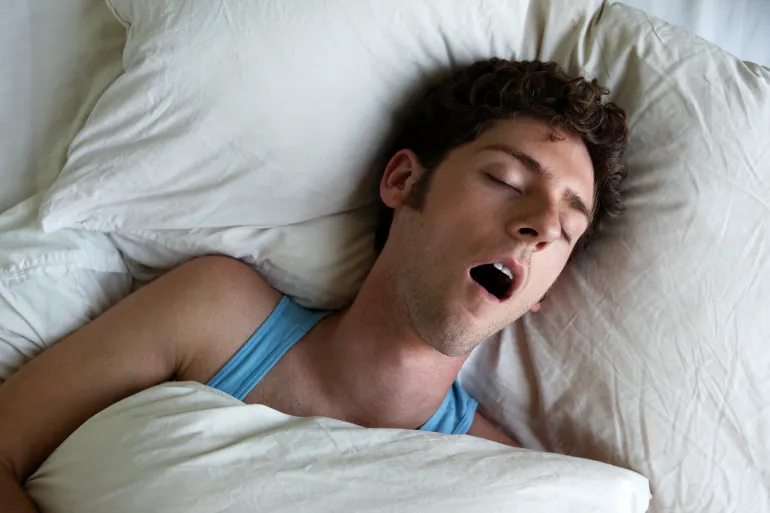
The condition often manifests itself through clear symptoms, such as loud or irregular snoring, a feeling of suffocation or gasping at night, frequent awakenings, excessive daytime sleepiness, morning headaches, and lack of rest after sleep.
This disorder occurs as a result of narrowing of the upper airway during sleep, and anatomical deformities or problems in the airway are among the most prominent contributing factors to it, in addition to another important factor, which is obesity.
Increased fat around the neck, tongue, and abdomen contributes to narrowing the airway and reducing the efficiency of breathing during sleep. It may also lead to decreased lung volume and increased chances of obstruction.
New hope
A recent clinical study published in the journal JAMA Otolaryngology – Head & Neck Surgery this September holds a glimmer of hope for patients with obstructive sleep apnea, especially those whose condition is linked to obesity.
The researchers relied on a review of published studies to evaluate the role of glucagon-like peptide-1 (GLP-1) receptor stimulators, a drug class primarily used in the treatment of diabetes and obesity, in reducing the severity of obstructive sleep apnea.
The results showed that these drugs, especially terzepatide, are able to reduce the sleep apnea index, which is the index used to measure the severity of the condition and the number of episodes of stopping or decreasing breathing during sleep.
The data, which included patients during the period from January 2021 to November 2025, also showed that terzepatide helped a much larger number of patients reach complete recovery after one year, as the percentage ranged between 42% and 50%, compared to only about 14% to 16% in the placebo group.
Promising and cautious results
Despite these encouraging results, the researchers stressed that this improvement does not necessarily mean a final solution for all patients. The main benefit of these medications seems clearer in people whose condition is linked to obesity, while they may not achieve the same effect in those who suffer from apnea due to anatomical causes in the jaw, throat, tongue, or airway.
The researchers also pointed out that relapse remains a possibility, especially if the weight increases again after stopping treatment. This raises important questions about the long-term effectiveness of these medications, their cost, and the safety of their continued use.
Therefore, GLP-1 medications are not viewed as an absolute alternative to other treatments, but rather as a potential complementary treatment that may benefit some patients, often in parallel with traditional therapeutic methods, most notably the continuous positive airway pressure device known as CPAP.
Why is CPAP still the top choice?
Despite the growing controversy surrounding new drug treatments, the CPAP machine remains the most common and reliable treatment for patients with obstructive sleep apnea, especially in moderate to severe cases.
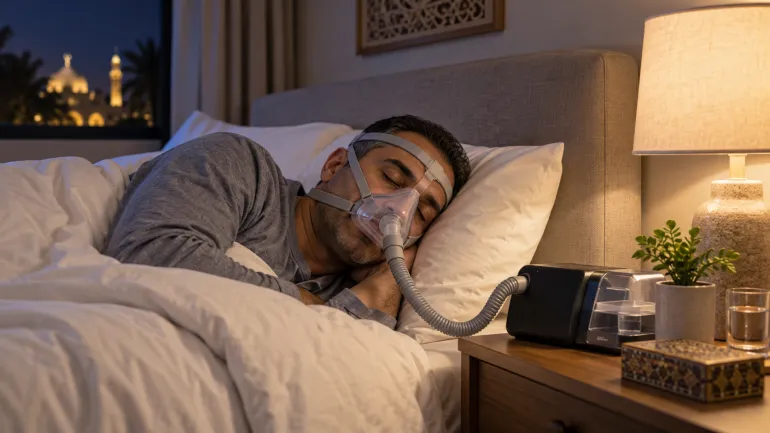
This device works by delivering continuous air pressure through a mask that the patient wears while sleeping. This pressure is sufficient to keep the upper airways open, which prevents respiratory arrest or significantly reduces its attacks.
CPAP is still more effective in reducing apnea episodes, as it can reduce them by about 31 times per hour, compared to about 22 times with tirzepatide.
According to the Mayo Clinic, positive airway pressure treatments, along with some oral appliances, may prevent sleep apnea and reduce snoring. Although some patients find the mask annoying or uncomfortable at first, many adapt to it after a while by adjusting the fastening straps and choosing the appropriate size of the mask.
When is surgery required?
Not all cases can be treated with medications or assistive devices alone. Some patients may not respond adequately to treatment, which prompts doctors to consider surgical intervention, but it usually remains the last option after other methods have been exhausted and ineffective.
In general, it is recommended to try other treatment options for at least 3 months before considering surgery, except in limited cases where the anatomical defect is clear and makes surgery a first choice.
Surgical options include removing excess tissue in the throat, pharynx, tonsils, or adenoids, or using radiofrequency ablation to reduce tissue in the back of the throat, especially in patients who cannot tolerate a CPAP machine or oral appliances.
It is also possible to correct the position of the jaw by moving it forward, which increases the space behind the tongue and soft throat and reduces the chances of blockage.
In other cases, a device implanted in the chest may be used to stimulate the hypoglossal nerve, which helps keep the tongue in a position that allows the airway to remain open during sleep. This option is usually used when non-surgical treatments fail.
The danger is not limited to sleep
The danger of obstructive sleep apnea lies not only in disturbed sleep and daytime fatigue, but also in its association with health complications that may be serious if left without proper treatment.
According to epidemiological studies published in the US National Library of Medicine, sleep apnea increases the risk of cardiovascular disease, and is associated with an increased risk of coronary artery disease, congestive heart failure, and stroke.
These studies also indicate links between the disease and disturbances in clotting factors, endothelial damage, platelet activation, and increased inflammatory mediators, all of which are biological pathways that may contribute to the pathogenesis of cardiovascular disease.
In contrast, studies show that treating sleep apnea using CPAP may achieve important benefits, including lowering systolic blood pressure, improving left ventricular function in the heart, and reducing platelet activation.
Therefore, the disease is not a single condition, and therefore it cannot be treated with a one-size-fits-all treatment. A patient whose condition is linked to obesity may benefit from weight-loss medications, while another patient who suffers from an anatomical problem in the airway needs a CPAP device or surgical intervention. Therefore, accuracy in diagnosis and determining the cause of the condition and its degree of severity seems to be the basis for choosing the most appropriate treatment.