

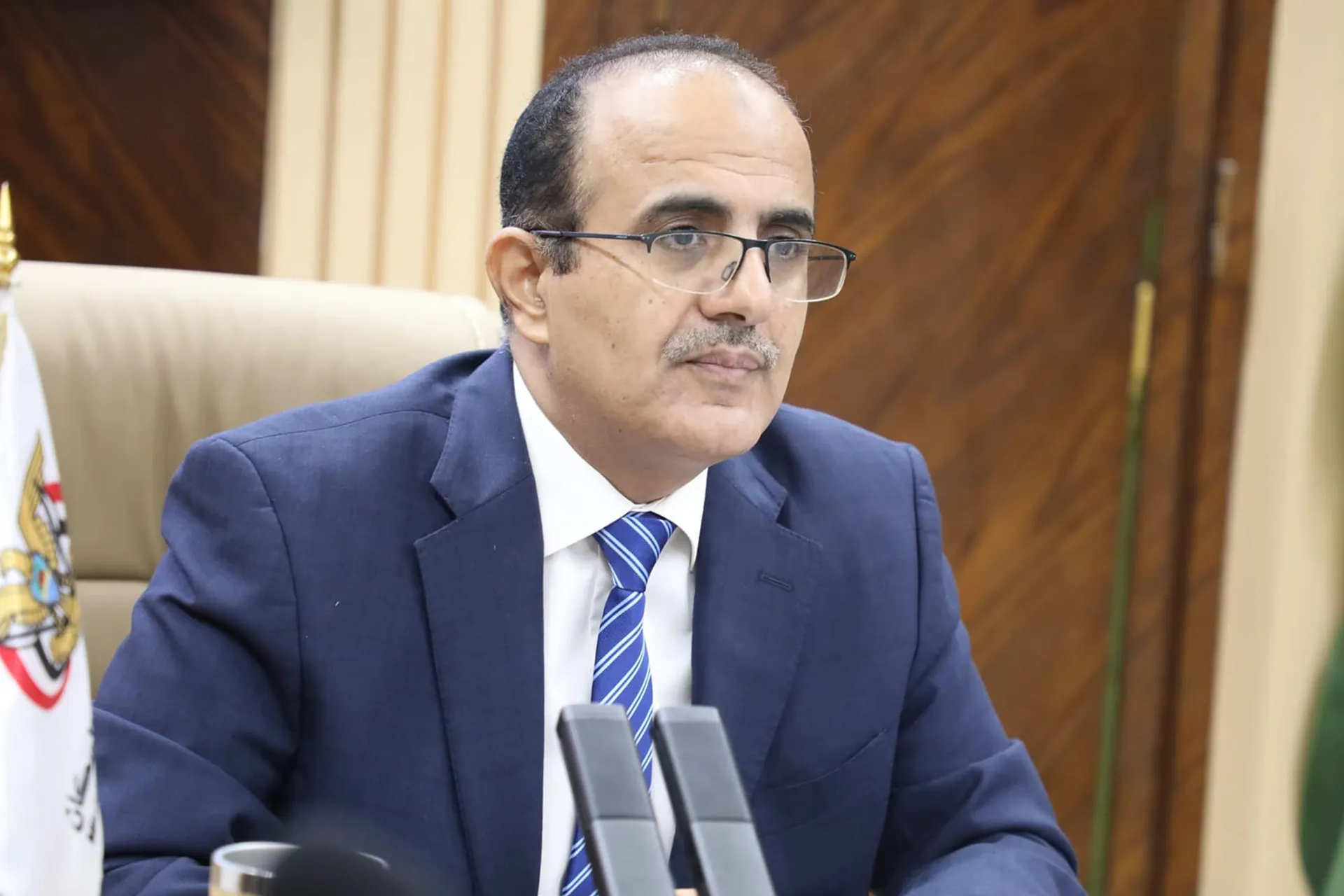
Aden- The Minister of Public Health and Population in the Yemeni government, Qasim Buhaibah, warned that the continued decline in funding may lead to the complete loss of health services in some areas, stressing that the sector’s ability to absorb additional waves of displacement is not open without limits.
Buhaibeh said, in an interview with Al Jazeera Net to be published later, that the lack of resources has led to the cessation of health facilities and the scarcity of medicines, supplies and fuel, and threatens in particular emergency services, maternal and child health, immunization and nutrition, in addition to dialysis and oncology treatment.
He pointed out that health data, updated until June 2026, indicate that 19.3 million people in Yemen need health assistance, while response funding did not exceed 17% of the required amount.
He said that the percentage of facilities operating at full capacity had fallen, according to his estimate, to less than 50%, compared to about 60% reported by the World Health Organization in an estimate published at the beginning of the year. Speaking about the escalation on the west coast, the minister cited figures indicating the displacement of 134,550 people from June until September 22, most of them concentrated in Taiz, Lahj, and Aden. He said that the influx of displaced people increased pressure on health facilities that were already suffering from limited resources.
Buhaibeh warned that displacement, malnutrition, and poor immunization coincide with the outbreak of cholera, measles, and polio, pointing out that more than 27,000 confirmed cases of measles have been recorded during the year 2025, and that about half of Yemen’s children under five years old suffer from chronic malnutrition.
Regarding patients with cancer, kidney failure, and thalassemia, the minister said that the decline in funding may gradually lead to the interruption of treatment sessions, medications, and examinations, revealing that what the citizen pays directly to obtain care represents more than half of health spending in Yemen.
He said that uploading health data from Houthi-controlled areas has been halted for nearly a year, which prevents the formation of a complete national epidemiological picture, noting that the health fund, which the ministry hopes will contribute to financing services, is still in the process of completing its regulations, structure, and management mechanisms.
The Minister of Health identified 3 main threats during the coming period, which are the repercussions of emergencies and displacement resulting from escalation, the continuation of epidemics and the decline in basic services, in addition to the erosion of the ability of the health system itself to continue.
He stressed that the continued work of the health sector after years of war and crises does not mean that its ability to withstand is unlimited, calling for protecting the remaining services and providing more sustainable financing for health facilities and programs.
This comes as the displacement crisis in Yemen has sharply worsened following the recent military escalation and intensification of battles between government forces and the Ansar Allah group (Houthis), forcing thousands of families to flee in search of safety.
The International Organization for Migration announced the displacement of more than 134,000 people since the recent escalation of fighting, most of whom were displaced between August 1 and September 22, 2026.