

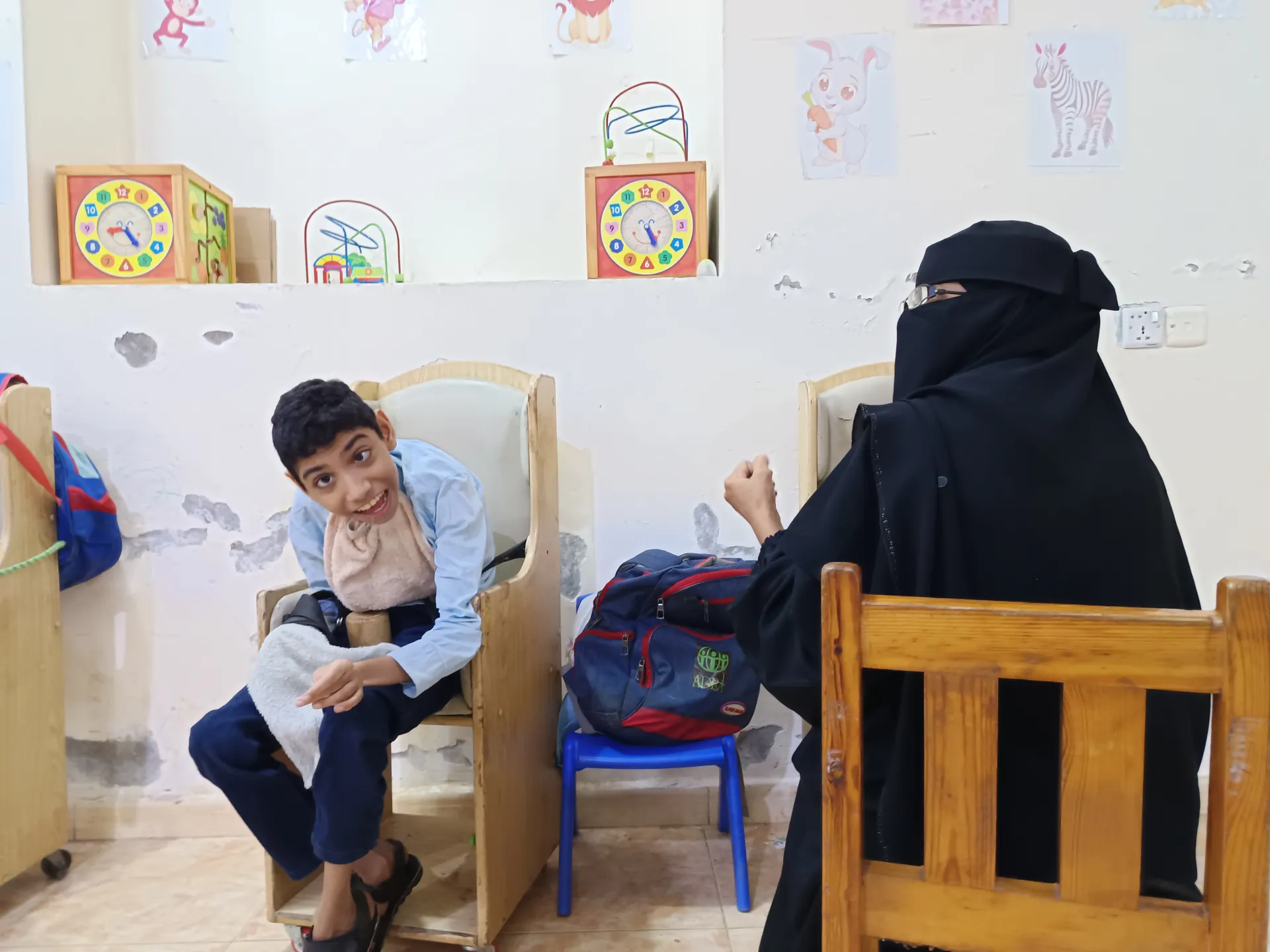
Sumaya Ali Nasser was not looking for a job when she went to the Right to Life Foundation in the temporary capital of Aden in southern Yemen, but rather for treatment for her child, Ahmed, who suffers from cerebral palsy. There she found free physical and occupational therapy sessions, and then she also obtained a job opportunity that helped her support her family and participate in caring for children suffering from the same condition.
But the care that relieved Sumaya and her family of the burdens of treatment and living, its continuity has become threatened with the decline in funding that the organization relies on to provide its services to hundreds of children, in a country whose economy and basic services have been exhausted by war.
Sumaya told Al Jazeera Net that the decline in support affected the transportation that used to transport children to the center for free, and the prices of medicines and treatments have become a heavy burden on families who need continuous care for their children.
The repercussions of the crisis are no longer mere fears, as the Foundation confirms that the percentage of children attending treatment sessions has decreased to only 30%. At the beginning of last September, it announced the death of a boy and a girl who benefited from its services on close days, without the medical reasons for the two deaths becoming clear.
Financing crisis
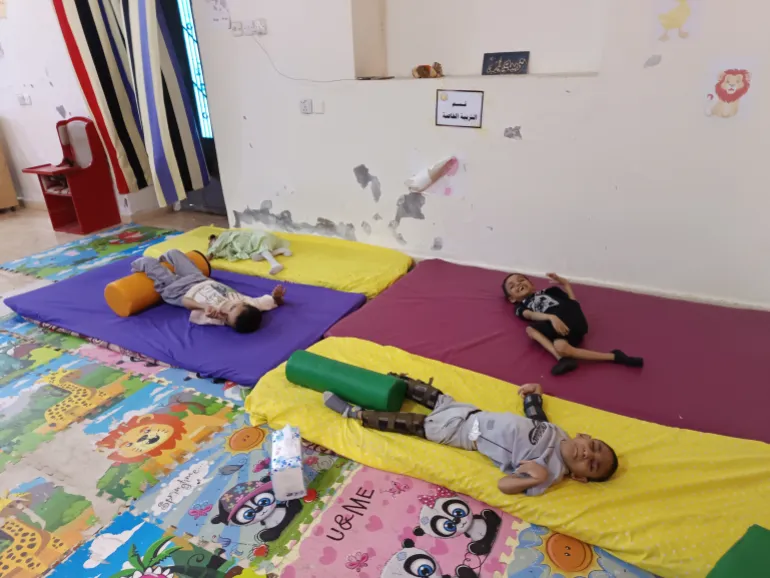
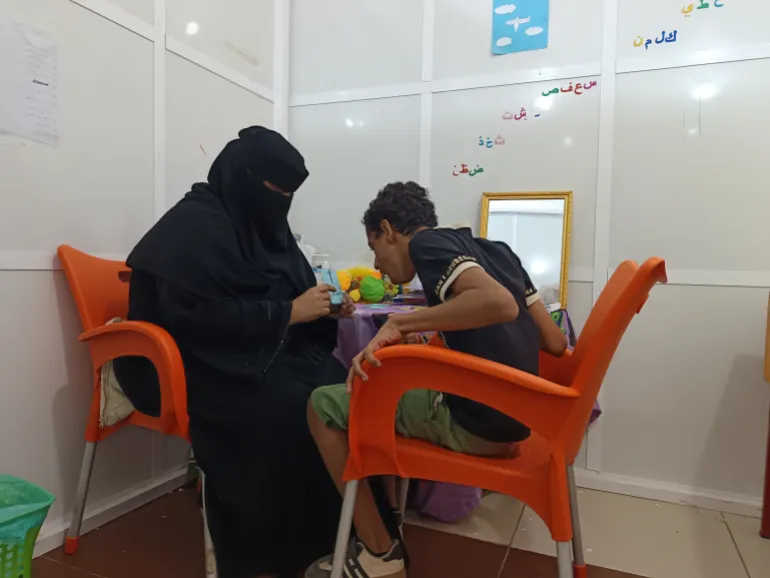
At the Right to Life Foundation’s headquarters in the Al-Khasaf area of Crater, one of the oldest neighborhoods in Aden, children receive physical, occupational, and speech therapy services, in addition to educational and rehabilitation programs aimed at improving their motor abilities, communication, and self-reliance.
The Foundation’s media officer, Ali Al-Kuwaiti, told Al Jazeera Net that the Foundation, which was established in 2006, provides its services to more than 400 children and people with disabilities resulting from cerebral palsy, belonging to the eight districts of Aden.
He points out that the decline in the contributions of some donors in the recent period caused a financial deficit that affected the regularity of services, after the organization relied on this support to cover a large part of its operational needs.
Al-Kuwaiti reveals that attendance decreased to only 30% due to the crisis, stressing that dozens of children have already stopped attending, an indication of the extent of the difficulties facing families in benefiting from rehabilitation programmes.
One of the most prominent manifestations of the crisis is the failure of free transportation, which used to transport children from their homes to the center and return them after the end of their sessions, as the lack of funding and fuel led to a reduction in the service.
Last August, the Foundation warned of the repercussions of the fuel shortage on the continuation of transportation, which has added a burden to families who need to transport their children frequently, and some of their members face difficulties in moving around without assistance.
But the decline in funding raises broader concerns about the disruption of transportation, related to the institution’s ability to maintain treatment, rehabilitation, and education programs, at a time when the needs of children are increasing and their families’ ability to bear the costs of care outside the center is weakening.
For Sumaya, providing rehabilitation sessions does not eliminate other health burdens, especially medicines and treatments, the prices of which she says have become exorbitant, calling on government agencies to provide them free of charge to children whose families are unable to bear the costs of their treatment.
Two deaths and fears
Amidst these challenges, the Right to Life Foundation announced on September 5 the death of a boy and a girl among the beneficiaries of its services on close days, in an incident that restored attention to the health conditions of children, some of whom need continuous follow-up and care.
Speaking to Al Jazeera Net, Al-Kuwaiti linked the two deaths to the inability to reach care services for the two children, warning of the danger of interrupting services for children whose cases require regular health follow-up.
However, the medical causes of the two deaths were not independently clarified, and there is no documented medical information proving that the failure of services was a direct cause of them.
The health needs of children with cerebral palsy vary according to the severity of their conditions, as some of them face difficulties in movement, balance, and communication, and others may need to follow up on problems with spasms, swallowing, feeding, and other complications.
The foundation’s physical therapist, Dr. Osama Muhammad Ahmed, explains that the rehabilitation programs aim to improve movement, walking, turning, and speech, and enhance children’s ability to perform daily activities with greater independence.
He points out that a number of children have achieved noticeable improvement thanks to rehabilitation sessions, which highlights the importance of continuing the appropriate treatment programs for each case.
Although the primary brain injury in cerebral palsy does not worsen over time, some of the accompanying muscle and movement problems may increase with growth, which makes regular follow-up and rehabilitation important to maintain motor abilities and reduce potential complications.
Treatment and living
The burdens facing families of cerebral palsy children do not stop at providing treatment and rehabilitation, but extend to providing medicine, food, and daily life needs, in light of the decline in purchasing power and the high cost of living.
At Al-Haq Bakery in Aden, Ammar Abdullah, the father of a child with cerebral palsy, works to secure an income that helps him support his family and meet some of the costs of caring for his son.
Between dough and bread ovens, Ammar spends his day doing work that alleviates some of his economic burdens, but it does not eliminate the difficulties faced by families of children with disabilities in obtaining medicines and health care.
He told Al Jazeera Net that providing treatment and medicine represents an ongoing challenge for many of these families, in light of the high costs and limited capabilities, especially since the needs of some children require continuous health and rehabilitation follow-up.
Ammar got a job opportunity in the bakery associated with the Right to Life Foundation, which is one of the projects that contribute to providing job opportunities for some parents, in addition to supporting the Foundation’s activities.
Ammar describes the institution as “a white dot in this darkness,” because of the care and attention it provided to his child.
His experience reveals another side of the suffering of families of children with cerebral palsy, as the need to provide income for the family overlaps with the requirements for health care and rehabilitation, while the decline in free services increases the burdens borne by parents.
Education is threatened
The needs of children with cerebral palsy are not limited to health care, but also include education, skills development, communication, and participation in daily life.
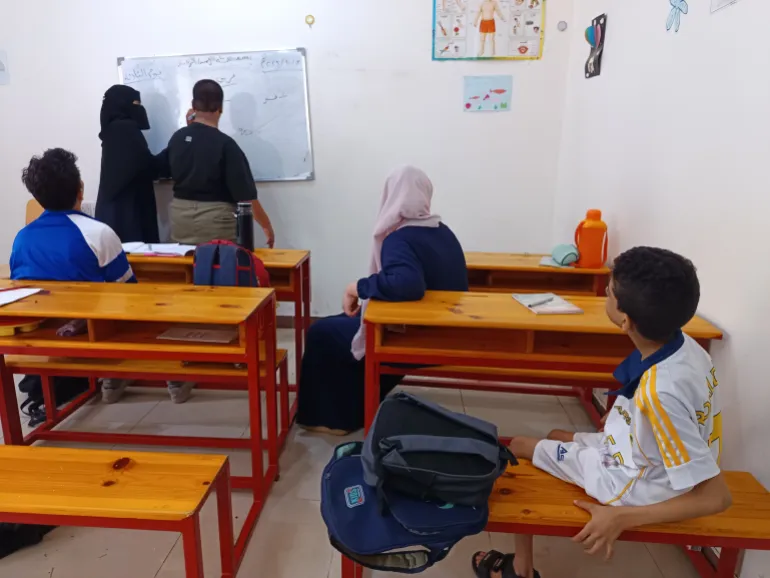
The Right to Life Foundation provides educational programs that begin with pre-academic education and kindergarten, and extend to the first grades, as part of attempts to prepare children for learning and integration into society.
However, providing appropriate educational opportunities for this group requires more than having classes inside the rehabilitation center, as some children need aids, a prepared school environment, and teachers trained to deal with their different needs.
On October 6, the Yemeni Minister of Education, Adel Al-Abadi, discussed with representatives of the Foundation the possibility of signing a memorandum of understanding to enhance educational opportunities for children with cerebral palsy, and provide an educational environment that takes into account their needs and helps integrate them into the educational process.
Efforts to expand educational opportunities come at a time when existing treatment and rehabilitation services face the challenge of continuity, with declining funding and a decrease in children’s attendance at the center.
As for Sumaya Ali Nasser, who went to the institution in search of treatment for her son Ahmed, her concern today is that he does not miss the sessions he needs, and that the costs of care do not become a burden beyond the capacity of her family.
This is a concern shared by other families whose children have stopped attending, not because their need for treatment and rehabilitation has decreased, but because their ability to access them has become more difficult.