

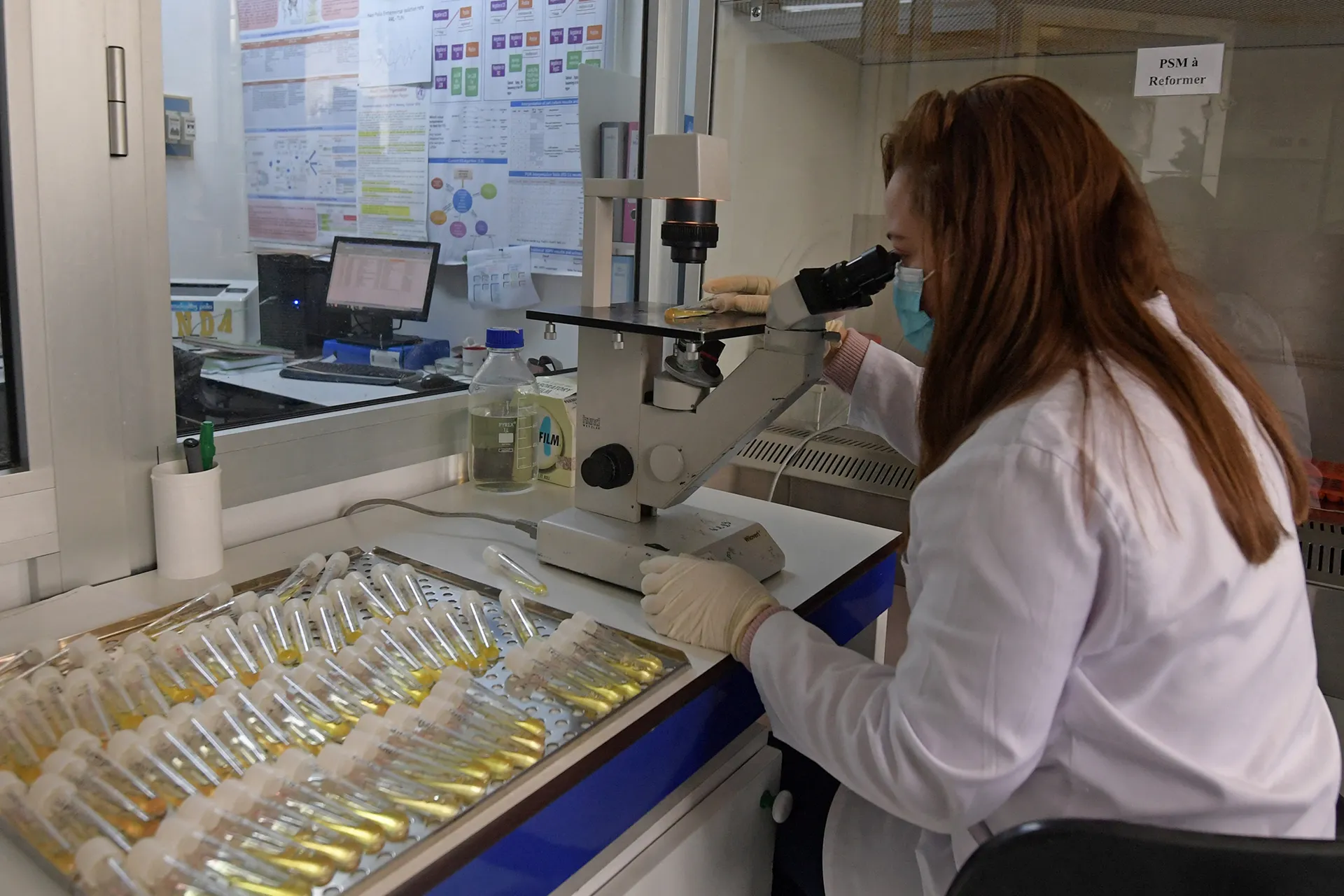
Comprehensive health crises continue and deadly epidemics spread across continents at an unprecedented speed. The world finds itself facing burning existential questions that go beyond traditional medicine and the concept of abstract healing limited to treating symptoms.
The frightening question that is being heard today in the corridors of international organizations and global research centers is not just a passing inquiry into the genetic sources of viruses and bacteria, but rather a profound philosophical and scientific investigation into how zoonoses were able to storm human fortresses in the modern era with such ferocity and lethality.
Data issued by the World Organization for Animal Health (WOAH) and the World Health Organization confirm that at least 60% of infectious diseases that affect humans are of animal origin (zoonotic diseases).
It is no longer possible to view the pandemic or health crisis as a biological incident isolated from its vital and social surroundings. Rather, there has become an urgent need to formulate a new philosophical vision that rehabilitates the existential integration between man and his world.
In addition, 75% of newly discovered or emerging animal diseases over the past three decades have been transmitted from animals to humans.
Starting with the acquired immunodeficiency virus (AIDS), which has claimed the lives of more than 40.1 million people since its discovery (according to statistics from the Joint United Nations Program on AIDS, UNAIDS), through the Corona pandemic (COVID-19), which has caused more than 7 million officially confirmed deaths, according to World Health Organization reports, and has caused losses in the global economy that the World Bank estimated at more than 12 trillion US dollars, all the way to the outbreak of the Ebola virus, Marburg fever, and bird flu. (H5N1) And imminent threats still lurk in the turbulent recesses of nature.
At the heart of these accelerating global challenges, the Arab region and North Africa stand out as if it were an open living laboratory ravaged by intersecting environmental, health and political crises.
It is no longer possible to look at the pandemic or health crisis as a biological incident isolated from its vital and social surroundings. Rather, there has become an urgent need to formulate a new philosophical vision that restores consideration of the existential integration between man and his world.
From here comes the concept of “One Health”. Not only as a modern scientific approach adopted by the four international bodies (WHO, FAO, UNEP, WOAH), but also as a philosophical, moral and existential necessity that calls on us to rebuild our connection with nature, and dismantle the illusions of consumer control that have disturbed the environmental balance and released epidemics from their impregnable places.
The philosophical and anthropological development of the concept of “one health”
Before the concept of “One Health” was formulated in the corridors of the World Health Organization and the United Nations as a modern strategy for preventing pandemics, this approach represented an existential axiom and an intense pillar of ancient humanitarian thought and Arab-Islamic medicine.
In the medical and philosophical heritage of such figures as Ibn Sina in his reference book, “The Law on Medicine,” or Ibn Khaldun in his “Introduction,” or Ahmad ibn al-Jazzar al-Qayrawani in his treatises on the policy of boys and medicine for the poor, the human body was not an isolated body or a closed fortress. Rather, it was always understood within a complex vital network in which climates, waters, countries, and climate changes affect the body’s humors and the nature of diseases.
In these eras, a comprehensive view has prevailed that defines health as a state of delicate balance and harmony between the human interior and the environmental exterior. The chiropractor knew that any imbalance in the environment of an organism – whether animal or plant – immediately reflects on the health of human society.
However, this existential axiom was severely broken with the outbreak of the industrial revolution in the West and the dominance of the mechanized capitalist model, as nature was transformed in the Western civilizational imagination and its economic practices from an incubating mother and an integrated biosphere to a mere open repository of raw materials and a mine for quick profit.
The animal was reduced from a living being in a balanced ecosystem to a mere protein production unit crowded into giant, overcrowded feedlots.
According to reports by the United Nations Environment Program (UNEP), human activity has altered and disturbed more than 75% of the terrestrial environment and 60% of the marine environment on the planet.
This systematic leveling of forests and oases and the crushing of natural buffer zones has caused the removal of more than 10 million hectares of forests annually worldwide.
This destruction of natural environments has reduced the gaps between wild organisms and human communities, leading to higher transmission rates of unknown pathogens, or what is known as “species jumping,” by more than 31% compared to stable environmental areas.
The jump of viruses and pathogens from the bodies of wild animals to humans is not a stroke of biological misfortune, but rather a violent and hostile reaction from nature against the consumerist pattern that has violated the ecological safety barriers that have been formed over millions of years.
According to reports by the United Nations Environment Program (UNEP), human activity has changed and disturbed more than 75% of the terrestrial environment and 60% of the marine environment on the planet.
The reality of the Arab region: environmental specificity and complex fragility
When we transfer this ecological approach to the field reality of the Arab region, including North Africa, we find ourselves faced with a complex picture in which environmental crises overlap with social and political fragility.
Our region is classified as one of the regions in the world most affected by climate fluctuations and water stress, and according to reports of the Intergovernmental Panel on Climate Change (IPCC) and the Economic and Social Commission for Western Asia (ESCWA), the following is recorded:
- High temperatures and water scarcity: Temperatures in the Arab region are rising at a rate up to twice the global average, and the region includes 18 of the 20 countries in the world that suffer most from severe water stress.
- Land degradation and drought: More than 73% of the land area in the Arab world suffers from severe or moderate desertification, which threatens exceptional life networks such as the southern oases in Tunisia, Algeria, and Morocco, and the Jordan Valley and fertile areas in Jordan, Iraq, Syria, and Egypt.
The decline of vegetation cover and the erosion of oases force wild animals, rodents, and disease-carrying insects (such as Aedes and Anopheles mosquitoes) to migrate toward population centers in search of water and pasture, which doubles the rates of direct biotic contact and creates dangerous contact points.
The matter becomes more complicated with the scarcity of potable water. The Arab Water Council estimates that more than 50 million Arabs lack access to clean and safe drinking water, which forces local communities in hotspots of water scarcity to rely on polluted sources shared with livestock and stray animals, thus reproducing ancient diseases such as cholera (Yemen, Syria, and Sudan have recorded tens of thousands of cases) and parasitic infections in a contemporary manner.
On the other hand, the region lives under the weight of a hybrid consumption pattern. It combines excessive pressure on fragile pastures from overgrazing with increasing dependence on global supply chains for meat and intensive poultry and livestock farms. In this context, antimicrobial resistance (AMR) constitutes one of the most profound and unsung biological crises.
Data from the World Health Organization and the Food and Agriculture Organization (FAO) indicate that about 70% to 80% of global sales of antibiotics are used in the animal sector, not the human sector, and are often exploited as growth stimulants or as a preventive measure against overcrowding on farms.
In the Arab region, field studies show that the rates of microbes resistant to first- and second-line drugs are alarmingly high in animal and food samples.
Scientific reports issued by the One Health Alliance estimate that antimicrobial resistance currently causes the direct death of about 1.27 million people annually around the world, with expectations that this number will rise to 10 million deaths annually by 2050 if decisive measures are not taken, and the Middle East and North Africa region will be among the most affected by its economic and health consequences.
In addition, the anthropology of live markets and random points for selling and slaughtering livestock in crowded cities constitute an ideal environment for the direct transmission of pathogens, especially on seasonal and religious occasions, in the absence of strict veterinary control, as well as slaughter and sale in unsupervised places.
The complex picture of fragility is completed in the hotbeds of conflicts and wars in Yemen, Syria, Sudan, Libya, and the Gaza Strip. In these areas, more than 50% to 70% of health and veterinary facilities are out of service, according to reports by the World Health Organization and the World Food Programme.
The collapse of infrastructure and the forced movement of displaced people (as the Arab region contains more than 35% of all refugees and internally displaced people in the world) has led to the endemicization of serious co-morbidities and the exacerbation of infections such as rabies, Rift Valley fever (RVF), cutaneous leishmaniasis and skin fungi, not to mention cholera and hepatitis.
The real transition towards a safe health future in the Arab region requires going beyond emergency approaches based on patchwork solutions and hoarding mostly imported medicines and vaccines, towards formulating a comprehensive structural revolution in thought and policies.
Foreseeing the future: Towards an alternative road map and dismantling isolated islands
The real transition towards a safe health future in the Arab region requires going beyond emergency approaches based on patchwork solutions and hoarding mostly imported medicines and vaccines, towards formulating a comprehensive structural revolution in thought and policies.
A. Dismantling cognitive and academic isolation
Firstly, at the academic and philosophical level, the state of cognitive isolation experienced by Arab universities and research institutions must be dismantled, as the faculties of human medicine, veterinary medicine, environmental sciences, sociology and anthropology still operate as isolated islands and separate knowledge colonies.
Statistics from the World Health Organization’s Eastern Mediterranean Regional Office (WHO/EMRO) indicate that less than 15% of countries in the region have effective and sustainable coordination platforms or committees between the ministries of health, agriculture and environment to confront common health threats.
Therefore, establishing a unified national and national scientific language, and establishing cross-disciplinary research programs that study epidemics as complex environmental and social phenomena, are the first step for the academic to descend from his ivory tower to the field and coexist with his environment.
for. Achieving ecological and food sovereignty
At the level of agricultural and food policies, ecological sovereignty has become an imperative necessity for shifting from a pattern of intensive imported production and consumption to supporting sustainable and environmental agriculture. This requires:
- Protecting unique ecosystems: Preserving oases, natural reserves, and pastures as the first line of health defense to reduce direct contact between wild pathogens and residential communities.
- Controlling veterinary legislation: Enacting and implementing strict legislation prohibiting the indiscriminate and excessive use of antibiotics in animal and poultry production, and activating programs to ban the use of antibiotics as growth stimulants, following European and international standards.
C. Regional governance and early warning systems
At the level of regional governance, nature and epidemics do not recognize political borders or historical colonial divisions. Migratory birds (3 of the world’s 8 major bird migration routes cross the Arab region), cross-border movement of livestock, dusty winds and climate change seamlessly cross regional borders.
This reality requires the League of Arab States and regional institutions to establish a joint One Health early warning system that links health and veterinary disease control centers with the ministries of environment and water resources in an organic and permanent manner, and based on real-time digital data.
True healing and reconciliation with the vital environment
The future of health in the Arab region as a whole will not be written within the corridors of universities alone, nor in luxurious hospitals if they are established as visual and urban islands isolated from their polluted surroundings, nor only in the laboratories of international pharmaceutical companies, but is fundamentally determined by the extent of our collective ability to protect our land, preserve our waters, be compassionate to our animals, and restore the environmental balance of our oases, pastures, and seas.
If we do not understand the lesson of “One Health” as an inevitable philosophical and existential necessity, we will continue to pay the heavy bill from the bodies of our children, the health of our societies, and the stability of our economies for a consumerist lifestyle that destroys nature and reduces humans to a mere robotic figure.
True healing and health sustainability will not be achieved by piecemeal solutions, but rather by concluding a comprehensive ecological reconciliation with the biosphere in which we grew up and from which we derive the elements of our existence and survival.
The opinions expressed in the article do not necessarily reflect the editorial position of Al Jazeera Network.