

Gaza- On the field of Al-Anan Stadium in the middle of the Gaza Strip, girls with amputated feet are throwing the ball, leaning on crutches with all the strength and balance they have left, running towards the round, looking for an opportunity to pass it, without any disability or injury preventing them from doing so.
As for the outskirts of the stadium, sports photographer Nelly Al-Masry follows the scene with her lens, sometimes running and sometimes squatting, to capture the details of the match and the stories of challenge carried by the participants.
But the challenge that Nelly documents on the field is not far from her story, as just days ago she discovered that she had breast cancer, and began to face another exam that she did not expect.
Nelly works as a media photographer specializing in sports journalism, and she also works as a sports trainer in a club in Gaza. She tells Al Jazeera Net: “I noticed a hard mass on the side of my chest and thought I had lifted weights heavier than my ability or performed an exercise incorrectly. I ignored the matter, but when the mass did not disappear, I decided to go to the hospital.”
After a weeks-long diagnosis journey, it was confirmed that she had breast cancer, and she vacillated between anxiety about a treatment journey whose details she did not yet know, and insistence that the disease not turn into something that disrupts her life or stops her from working.
But another obsession continued to accompany her; Due to her journalistic work, she knows the extent of the shortage of medicines and medical capabilities in Gaza, and realizes that her battle is not related to confronting the disease alone, but also about the possibility of obtaining treatment.
Therefore, she seeks to apply for a medical referral for treatment outside the Gaza Strip, and continues to live her life without being put on hold by the news of the infection.
Limited capabilities
Nelly is one of 947 breast cancer patients, according to what the Ministry of Health revealed to Al Jazeera Net. They are among 11,230 tumor patients in Gaza.
The medical director of the Gaza Cancer Center, Dr. Muhammad Abu Nada, told Al Jazeera Net that the war weakened the capabilities of diagnosing and treating breast cancer.
Before the war, the sector included about 20 mammogram machines, but today only 3 remain with limited capabilities. It is also impossible to perform some of the histological tests necessary to determine the characteristics of the tumor, including hormone receptor tests.
Abu Nada adds that about 40% of cancer patients need radiotherapy, which is not available in Gaza. Its absence affects surgical decisions; In certain cases, doctors may have to remove the entire breast instead of removing the tumor alone, for fear that it will not be possible to complete radiotherapy after the operation.
As for chemotherapy, Abu Nada says that the lack of medicines forces doctors to search for alternatives, including that in some cases they are forced to use expired medicines after referring to the competent health authorities, which puts oncology patients facing difficult possibilities regarding completing their treatment.
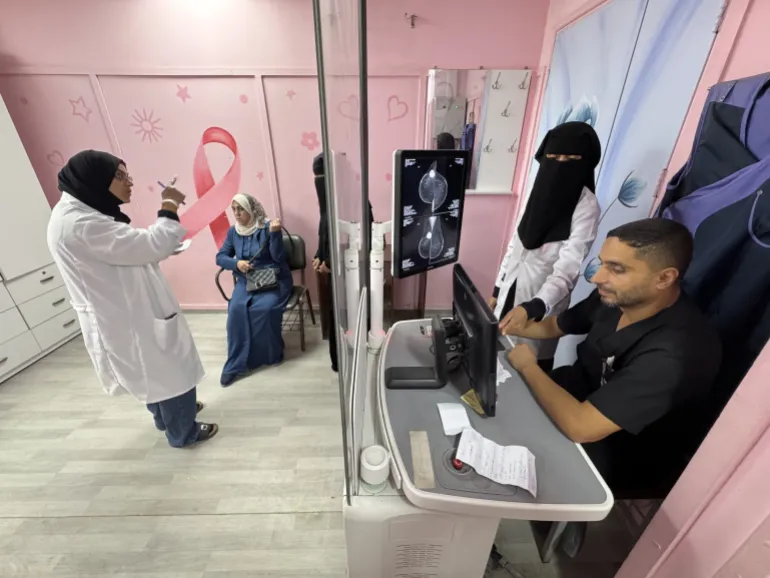
Abu Nada estimates that the shortage of medicines has increased from about 50% before the war to between 70% and 80% currently, according to his estimate, and this includes chemical medicines, analgesics, and immunological medicines.
He points out that the war also affected specialized personnel, with doctors and medical workers martyred, and others leaving the sector or some of them being arrested, which was reflected in tumor diagnosis and treatment services, including tissue examinations.
Gaza was recording about 360 new cases of breast cancer annually before the war, according to Abu Nada, compared to 250 cases in 2024 and 260 in 2025.
But he attributes the decline in registered cases to the difficulty for many women to access health services, as well as damage to patient registration and follow-up systems.
However, patients who are able to reach treatment centers find themselves facing another journey of waiting and lack of capabilities.
Potions stumbles into the corridor
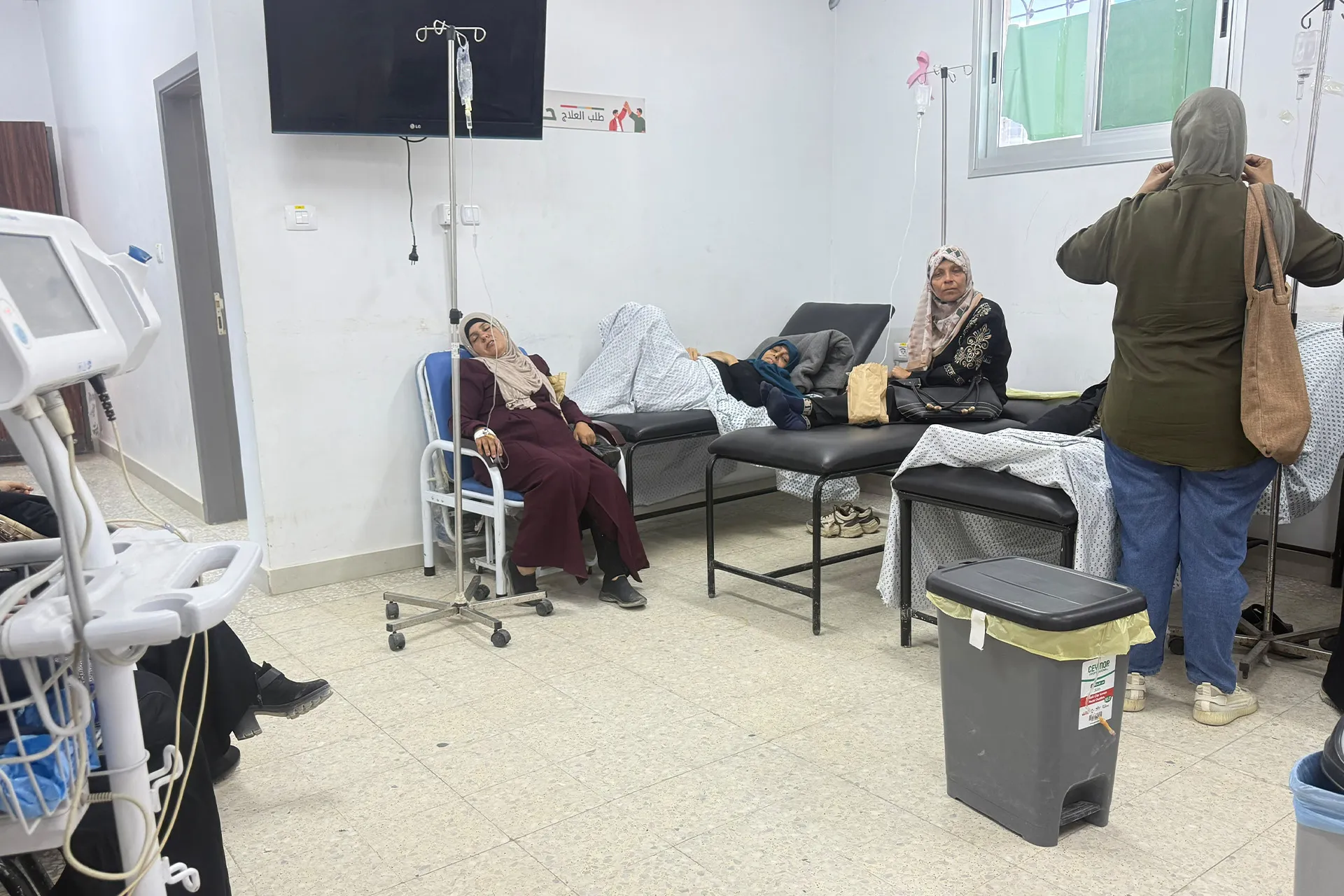
From the large, high-quality, specialized Turkish hospital that patients from the north to the south of the Strip visit to treat specialized tumors, these services have moved to a small temporary building (bricks) inside the Shifa Medical Complex, consisting of several small rooms and a narrow corridor, bringing together those waiting for doses and those receiving them.
There, Al Jazeera Net met Mrs. Zainab Anbar, who was receiving chemotherapy doses. The time was one o’clock in the afternoon, but the woman said that she came from Beach Camp at seven-thirty in the morning to catch the bus designated to transport cancer patients to the Shifa Complex.
Zainab had undergone a mastectomy, and three lymph nodes were removed. She says that the examination showed that one of them was infected, and that the doctor recommended a complete mastectomy in the absence of radiotherapy. She adds that the cost of the operation amounted to about 5,000 shekels (about 1,350 dollars).
But the end of the operation was not the end of the treatment journey; After she completed four doses of white chemotherapy, she was supposed to move on to four more doses of red chemotherapy according to her treatment plan.
However, she was surprised by the lack of medicine in Gaza, and faced the possibility of failing to complete her scheduled doses.
But the limited treatment options in the Gaza Strip do not push all patients down the same path. Mrs. Suzan Al-Nahhal refuses to receive cancer treatment inside Gaza, and insists on obtaining a medical referral that allows her to travel abroad, despite the development of the disease and its transmission, according to what she says, from the breast to the lungs.
Susan’s refusal is not related to the treatment itself, but rather to her fears of not having the necessary capabilities to complete it within the sector. She has been waiting for about two years for her medical referral, without being able to travel, while her illness increases and her suffering increases.
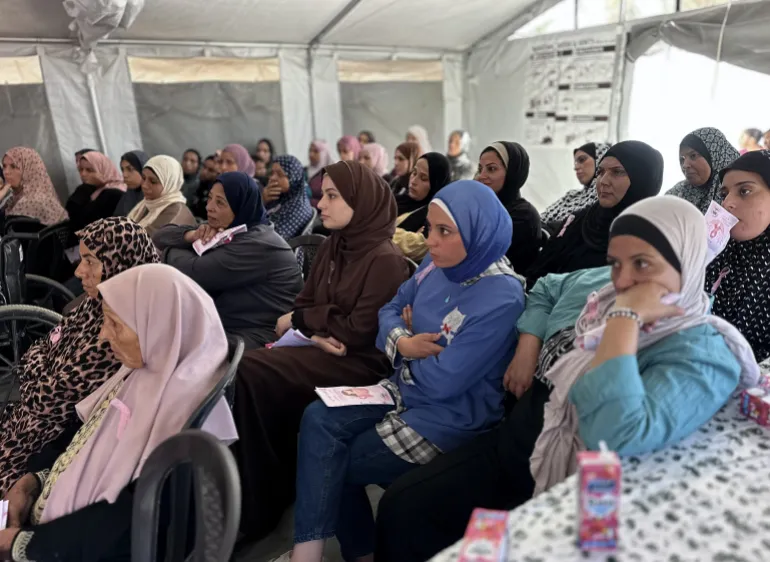
Al Jazeera Net met Suzan in her tent set up in the “Smile of Hope” camp for cancer patients in central Gaza, where 65 families live, each of which has at least one cancer patient.
Susan is trying to restore some of the features of her previous life, with her elegant arrangement of the inside of the tent, but it does not seem that these details can obscure the vast difference between what her life was and what it turned into, as she says.
“We had 10 residential apartments distributed between Rafah and Beit Hanoun, before we lost them between the destruction of some of them and what became located in areas inside what is known as the Yellow Line,” says Suzanne, who attributes her illness to a setback in her psychological state after her condition changed in a moment after which she no longer had anything.
Breast cancer patients in Gaza are still suffering from the disease under the effects of war, between the reality imposed by the difficulty of diagnosis, the harsh surgical options, the missed doses, the awaited referrals, and the unforgiving time facing a spreading disease and waiting for permission to travel.