

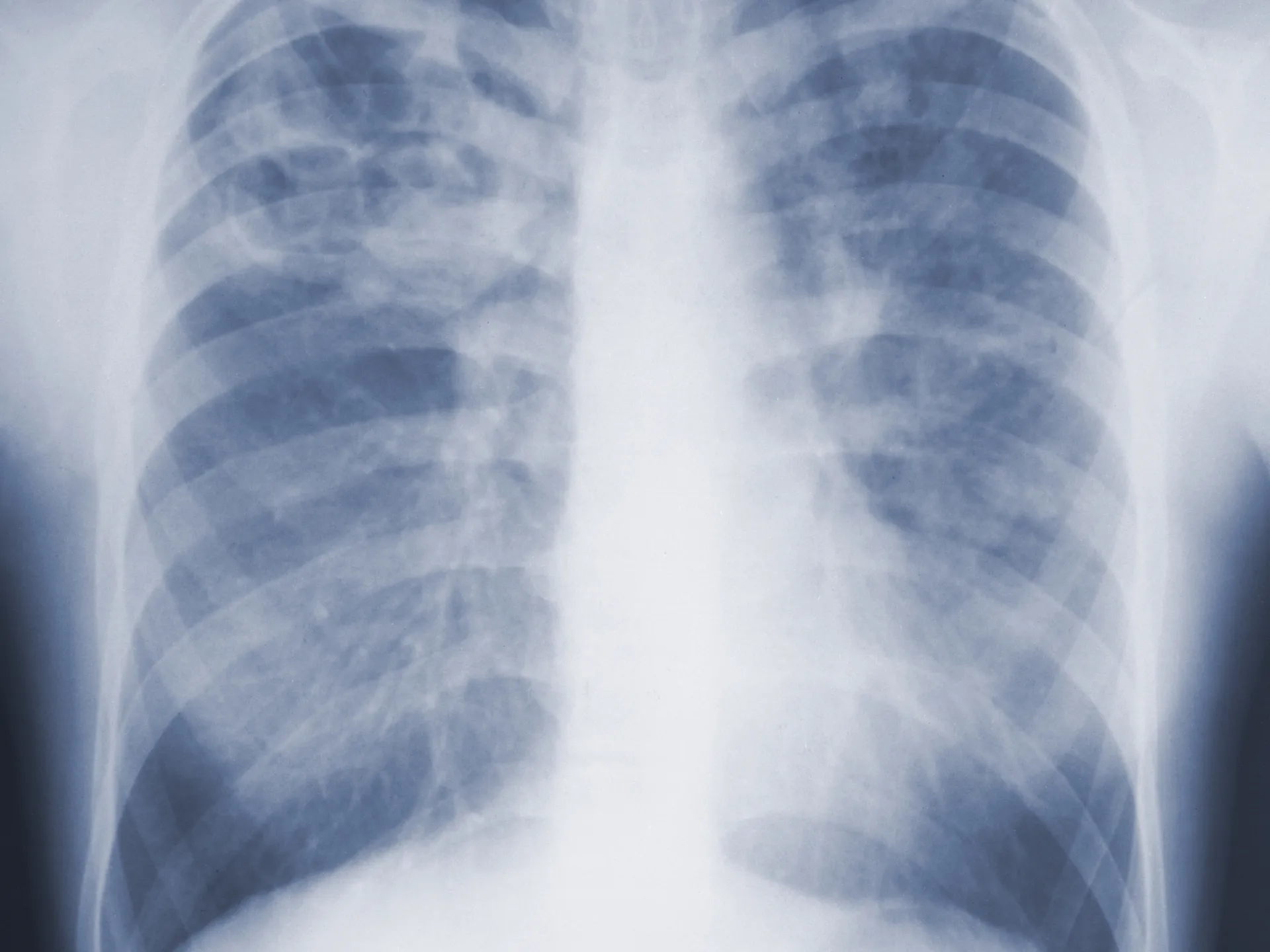
On Monday, the American pharmaceutical company Bristol-Myers Squibb announced promising results of an advanced clinical trial on a new experimental drug that succeeded in slowing the deterioration of lung function in patients with idiopathic pulmonary fibrosis, a serious disease that leads to scarring of lung tissue and a gradual decline in its ability to perform its functions.
What is interesting about the results is that the lower dose of the drug, called “admilparant”, achieved the main goal of the study, while the higher dose failed to achieve the same result from a statistical standpoint, despite recording a slowdown in the deterioration of lung function.
The trial, which reached the third clinical phase, included 1,255 patients with idiopathic pulmonary fibrosis, with the aim of evaluating the drug’s ability to slow the progression of the disease and preserve lung function.
A lower dose achieves the goal
The researchers tested two doses of the experimental drug, the first 60 milligrams and the second 120 milligrams, each taken orally twice daily, comparing them to a placebo over a period of 52 weeks.
The results showed that a dose of 60 milligrams achieved a statistically significant benefit in slowing the decline in lung function compared to placebo, while a dose of 120 milligrams did not achieve the main goal of the study, despite recording an improvement in the index itself that did not reach the required level of statistical significance.
The researchers relied on measuring the forced vital capacity of the lung, which is a test that measures the amount of air that a person can forcefully exhale after taking a deep inhalation, and is used to evaluate the efficiency of lung functions and follow the development of diseases that affect them.
The company said that the drug showed good tolerability when using both doses, with low rates of patients stopping treatment due to side effects, and close to the rates recorded in the group that received placebo.
How does the new medicine work?
Admilparant belongs to a new drug class that targets a protein receptor known as LPA1, which is involved in biological processes associated with the formation of fibrous tissue within the lung.
The drug works to inhibit this receptor, with the aim of reducing the processes that lead to tissue scarring and worsening pulmonary fibrosis.
If it obtains the necessary regulatory approvals, it may become the first approved treatment from this drug class for patients with idiopathic pulmonary fibrosis.
Several treatments are available to help slow the deterioration of lung function, including nintedanib and pirfenidone, in addition to niranomilast, which was approved by the US Food and Drug Administration in October 2025, becoming the first new treatment for the disease to receive its approval in more than a decade.
Despite these options, there is still a need to develop new treatments that have greater effectiveness and better tolerability, which is what clinical trials on ademilparant are seeking.
A disease that leaves permanent scars
Idiopathic pulmonary fibrosis is a chronic and progressive disease, as permanent scars form in the lung tissue, making it thicker and stiffer and gradually limiting its ability to expand during breathing.
As the disease progresses, the efficiency of the lungs in performing their functions declines, and those affected face increasing difficulty in breathing, which may affect their ability to carry out their daily activities.
Describing the disease as of unknown cause indicates that doctors cannot determine a clear and direct cause for the occurrence of fibrosis in those affected by it.
Currently available treatments do not aim to remove scars that have already formed, but rather seek primarily to slow the deterioration of lung function and limit the progression of the disease.
Expected results in 2027
Despite the encouraging results, ademiliparant is still an experimental drug and has not yet received the necessary approvals for use in treating idiopathic pulmonary fibrosis.
The company intends to complete detailed data analysis of the trial and communicate with regulators to support future approval applications.
It is also testing the drug in another phase III clinical trial targeting patients with progressive pulmonary fibrosis, a form of fibrous lung disease in which the condition deteriorates over time, with its initial results expected to be announced in early 2027.
These developments come at a time when Bristol-Myers Squibb shares rose by more than 3% during pre-opening trading in the US market, after the positive results of the trial were announced, in addition to encouraging results for another experimental cancer treatment drug called “RYZ101”.