

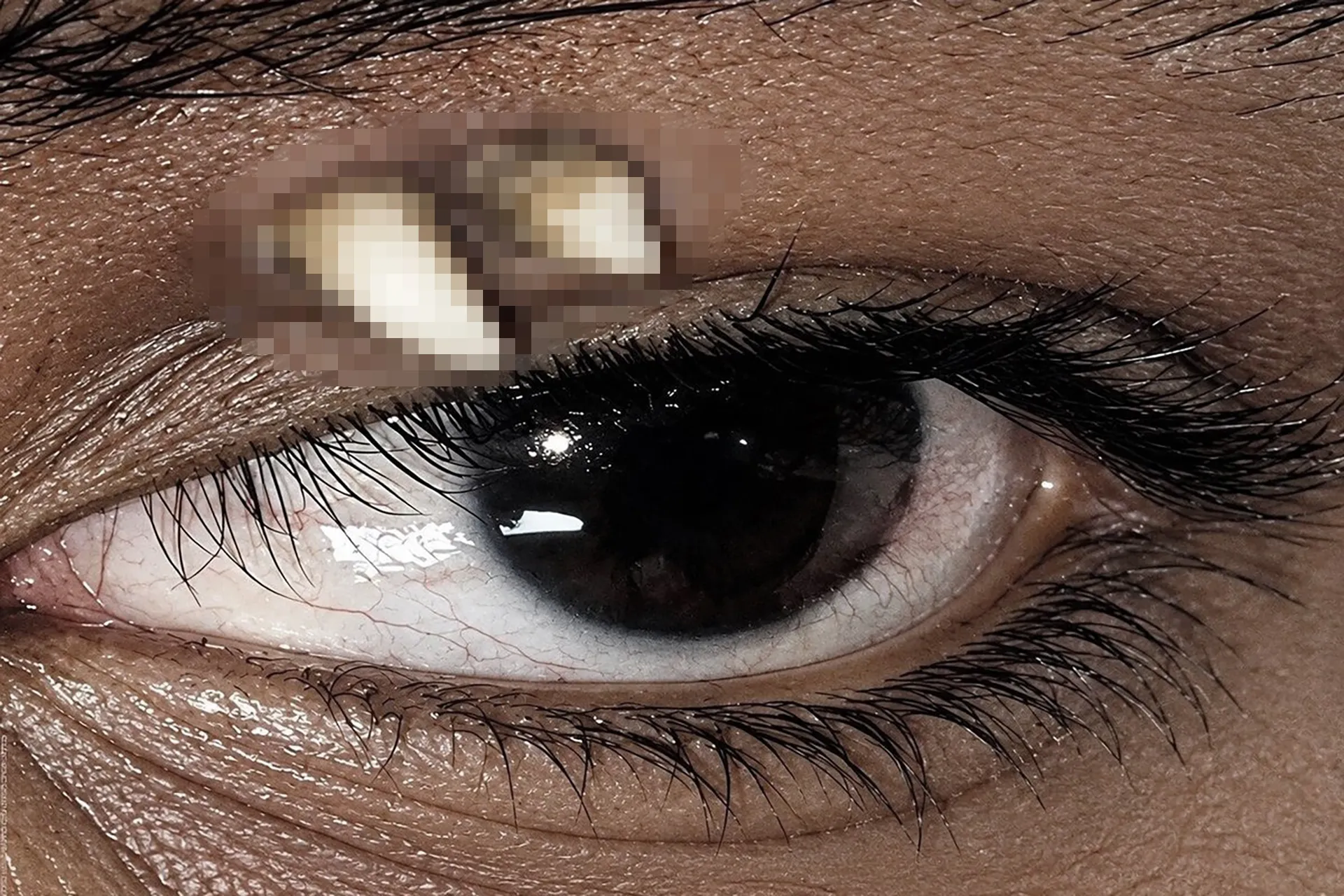
The story began with a painless swelling above the eye of an Indian teenager, and at first there was no indication that it was more than a passing skin problem.
But the appearance of two white, solid bumps from the swollen area prompted doctors to conduct more accurate examinations, searching for an explanation for what was happening.
Two white bumps reveal the surprise
A 16-year-old teenager visited Aravind Eye Hospital in the city of Madurai in southern India, after the swelling in his left upper eyelid continued for about a month. The examination showed two solid white protrusions in the inner part of the eyelid, without a previous history of infection in the area.
Computed tomography revealed a dense structure resembling the crown and root of a tooth, emanating from the roof of the eye socket and extending toward the tissue located in front of the surrounding barrier. When the surgeons removed it, it turned out to be a fully developed canine tooth, in a completely unusual position.
According to the case report published in the Journal of Ophthalmology, the examination did not show the presence of components indicating a teratoma, which is a type of tumor that may contain different tissues, and the imaging did not reveal other ectopic teeth in the teenager.
Teeth growing out of place
This phenomenon is known as “ectopic teeth,” meaning teeth that form or erupt in an abnormal position instead of their usual path inside the mouth. It may be a natural tooth from a child or adult, or an extra tooth than the usual number.
Ectopic teeth are observed in several places, most notably the maxillary sinus, which is an air cavity behind the cheekbone. Cases have also been recorded in the nasal cavity, the roof of the palate, the chin, and the jaw joint, in addition to the eye socket. Some cases may pass without obvious symptoms for years, while other cases cause swelling, pain, or headaches, depending on the location of the tooth and its effect on the surrounding tissues.
The rarity of the condition lies in the location of the tooth specifically, as doctors described it as the first documented case – to their knowledge – of an ectopic tooth in the upper part of the eye socket, with previous cases of ectopic teeth recorded in other locations in the socket.
Why does a tooth appear in an unusual position?
The face is formed during fetal development through the interaction of groups of cells and tissues, and the formation of teeth depends on precise interactions between these tissues. A disturbance in the growth process may lead to a tooth appearing in an unusual position, and in other cases factors such as injuries, some cysts or tumors are involved.
Computed tomography is an important tool in diagnosing these conditions, as it shows the position of the tooth and its relationship to the surrounding bones and tissues, and helps doctors estimate the need for surgery and plan it. Not every ectopic tooth necessarily requires removal, as the decision depends on its location and whether it causes symptoms or threatens the surrounding tissue.
In the case of the Indian teenager, the examination resulted in the tooth being surgically removed, but the reason why it grew near the eye instead of the mouth remained without a definite answer.