

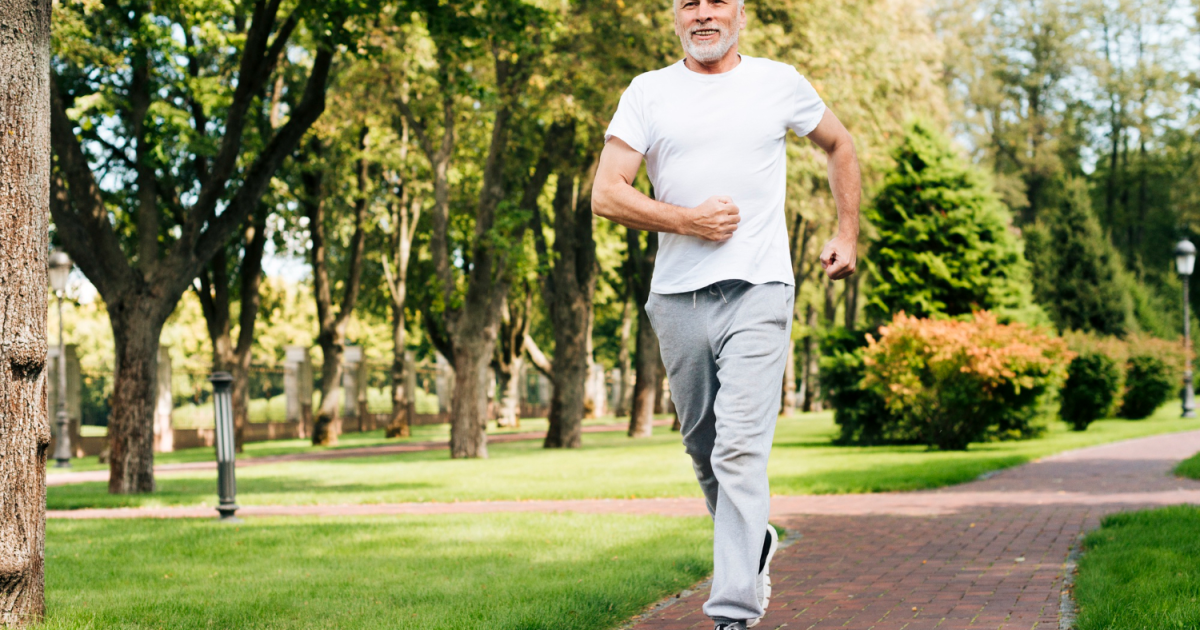
Many people link maintaining bone health after the age of 40 with calcium and vitamin D, but bones are a living tissue that is also affected by the type of movement and pressure placed on it. Are our daily steps sufficient to protect bones as we age, or do we need weight-bearing and resistance exercises as well?
Dr. Mohamed Abdel Baqi, consultant rheumatologist and physiatrist, and certified specialist in bone density measurement (CCD) at ICON Medical Center in Qatar, says that osteoporosis means that bones lose part of their natural ability to withstand pressure, making them more susceptible to fractures, explaining that the matter is not only related to low bone density, but also to the quality of their construction.
“CCD” refers to a professional credential granted by the International Society for Clinical Bone Density (ISCD) to practitioners qualified in the interpretation of bone density examinations.
Dr. Abdel Baqi likens the idea of long-term bone health to “bone stock.” The more a person is able to build strong bone mass during childhood, adolescence, and early youth, the greater reserve he will have in the face of the gradual loss that occurs with age, stressing that prevention of osteoporosis does not begin after the age of 40, but rather from childhood.
The US National Institute of Arthritis and Musculoskeletal and Skin Diseases indicates that bone mass reaches its peak in most people by their mid- or late twenties, and that the amount of bone mass built during childhood and young adulthood affects bone health later on.
Bones need to be “loaded”
Dr. Abdel Baqi believes that building and maintaining bones requires proper nutrition and the availability of calcium and vitamin D, in addition to pressure or mechanical load on the bones. Sports that carry the body’s weight or make the muscles pull on the bones provide a stimulus that helps them adapt and maintain their strength.
He added to Al Jazeera Net that these activities include walking, running, jumping, climbing stairs, and using the “trampoline” for children, in addition to resistance exercises, whether using weights, devices, or body weight, explaining that resistance exercises create tension through the muscles on the bones, and therefore their benefit is not limited to the muscles, but extends to the skeleton.
In a systematic review and meta-analysis published in 2023 in the journal Osteoporosis International, which included 80 studies and 5,581 postmenopausal women, exercise was associated with improved bone density in the lumbar vertebrae, femur neck, and hip.
Who is most vulnerable?
Dr. Abdel Baqi points out that post-menopausal women, especially as they age, and older men, are among the groups that deserve greater attention to bone health. The risk also increases for those with a family history of osteoporosis.
He added that risk factors also include prolonged use of some medications, most notably cortisone, and some cancer and hormone treatments, in addition to diabetes, glandular diseases, and hormonal disorders, such as hyperthyroidism or parathyroidism, lack of sex hormones, and early cessation of the menstrual cycle, as well as malabsorption diseases, chronic intestinal infections, and some rheumatic diseases.
Abdel Baqi also points out that smoking, excessive alcohol consumption, lack of exercise, and malnutrition are among the causes of osteoporosis, and points out the importance of follow-up after bariatric surgeries, especially bypass surgery, and adhering to the nutritional supplements prescribed by the doctor.
In the context of obesity surgeries, French guidelines published in 2022 in the journal Joint Bone Spine recommended assessing the risk of fractures and taking care of calcium, protein, vitamin D, and physical activity, with special attention to those who underwent gastric bypass and some procedures affecting absorption.
Abdel Baqi believes that the most vulnerable groups should pay attention to early detection of osteoporosis, by examining bone density when there are medical reasons for this.
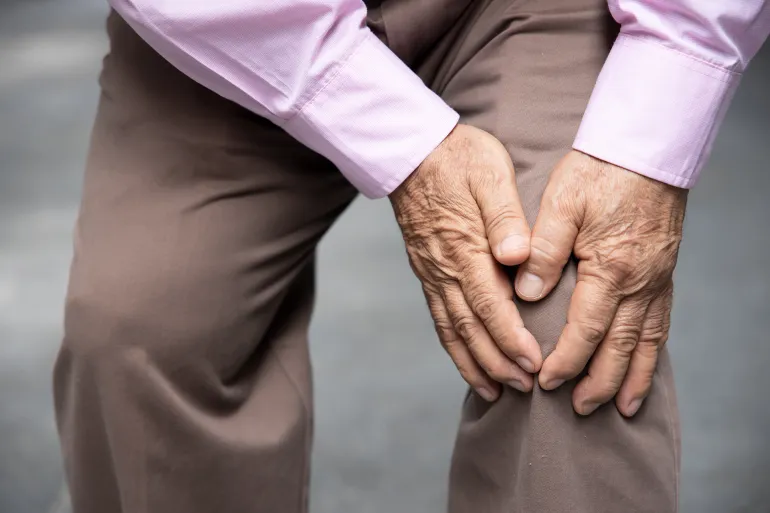
Is walking alone enough?
Dr. Firas Ashouri, Head of the Orthopedic Department at Aman Hospital in Qatar, says: “Daily walking is very important for the health of the bones and the body in general, but it alone is not necessarily sufficient.” Therefore, after the age of 40, he advises to combine walking with resistance exercises and body weight-bearing activities.
Dr. Ashouri explains that there is no single exercise that can be considered best for everyone; Brisk walking, climbing stairs, and weight-bearing activities help stimulate bones, while resistance exercises strengthen muscles, support joints, and improve balance. Therefore, the greatest benefit is achieved from combining these types rather than relying on walking alone.
In the journal Menopause, a systematic review and meta-analysis that included 10 trials concluded that walking alone did not show a clear effect on the density of the lumbar vertebrae or the body as a whole in women in the perimenopausal and postmenopausal stages, while there was a benefit in the neck of the femur with programs exceeding 6 months.
Why resistance exercises?
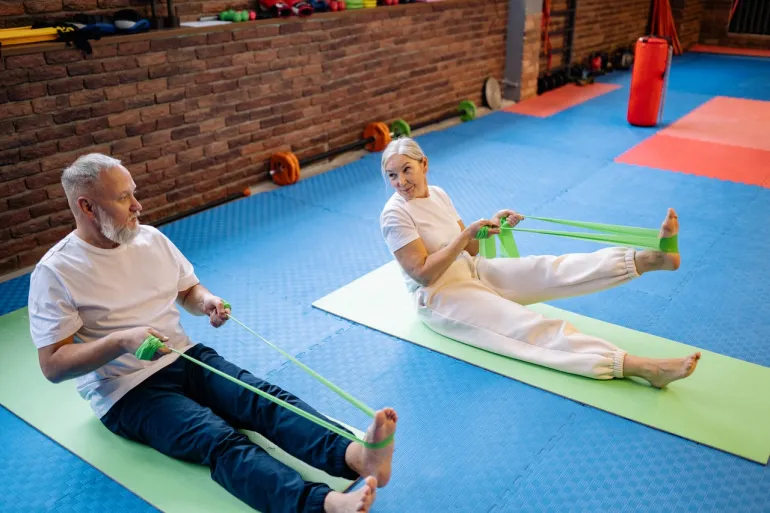
Dr. Ashouri says that the importance of resistance exercises increases with age, because they help maintain muscle mass and muscle strength, and at the same time give the bones a mechanical stimulus that helps maintain their strength. Improved muscle strength, balance, and stability also reduce the risk of falls and injuries.
A 2025 meta-analysis published in the Journal of Orthopaedic Surgery and Research, which included 17 randomized trials and 690 postmenopausal women, found that resistance training improved bone density in the lumbar spine, femoral neck, and total hip, with results varying across studies in some areas.
Dr. Ashouri adds to Al Jazeera Net that resistance exercises do not mean lifting very heavy weights, but rather you can start with a simple resistance and then increase it gradually, and the most important thing is to maintain the correct technique.
How do you start after 40?
Dr. Ashouri advises those who do not exercise regularly to begin gradually with simple exercises and light resistance, then increase the intensity as strength and fitness improve, stressing that the quality of movement and correct technique are more important than the amount of weight.
Among the mistakes that Dr. Ashouri warns against is suddenly starting heavy weights or high-intensity exercises, ignoring pain, and continuing despite its presence. People with osteoporosis or those with a history of fractures or problems with the spine and joints also need to modify exercises according to their condition.
In the same context, Dr. Abdel Baqi adds that some people over the age of 40 may suffer from problems with joint stiffness, and therefore exercises that provide load and resistance should be chosen, but without harming the joints or vertebrae if there is a pathological complaint.
The US National Institute of Arthritis and Musculoskeletal and Skin Diseases states that combining weight-bearing exercises with resistance exercises and balance exercises is the most appropriate for bone health and preventing falls and fractures, with consulting a specialist before starting a new program for those who have low bone density or fragility.
Dr. Ashouri summarizes his message to those over the age of 40 by saying: “Do not wait until you feel weak bones or muscles before you start taking care of them. Regular movement and resistance exercises are an important part of prevention, and the earlier and in the correct way a person starts, the easier it is to maintain his strength, movement, and independence as he ages.”
Therefore, bone protection after the age of 40 is not linked to one sport as much as it is linked to continuity and diversity of movement. Walking is still a good start, but adding resistance exercises and weight-bearing activities, appropriate to age and health condition, gives the bones and muscles together a better opportunity to maintain strength and balance and reduce the risk of fractures with age.