

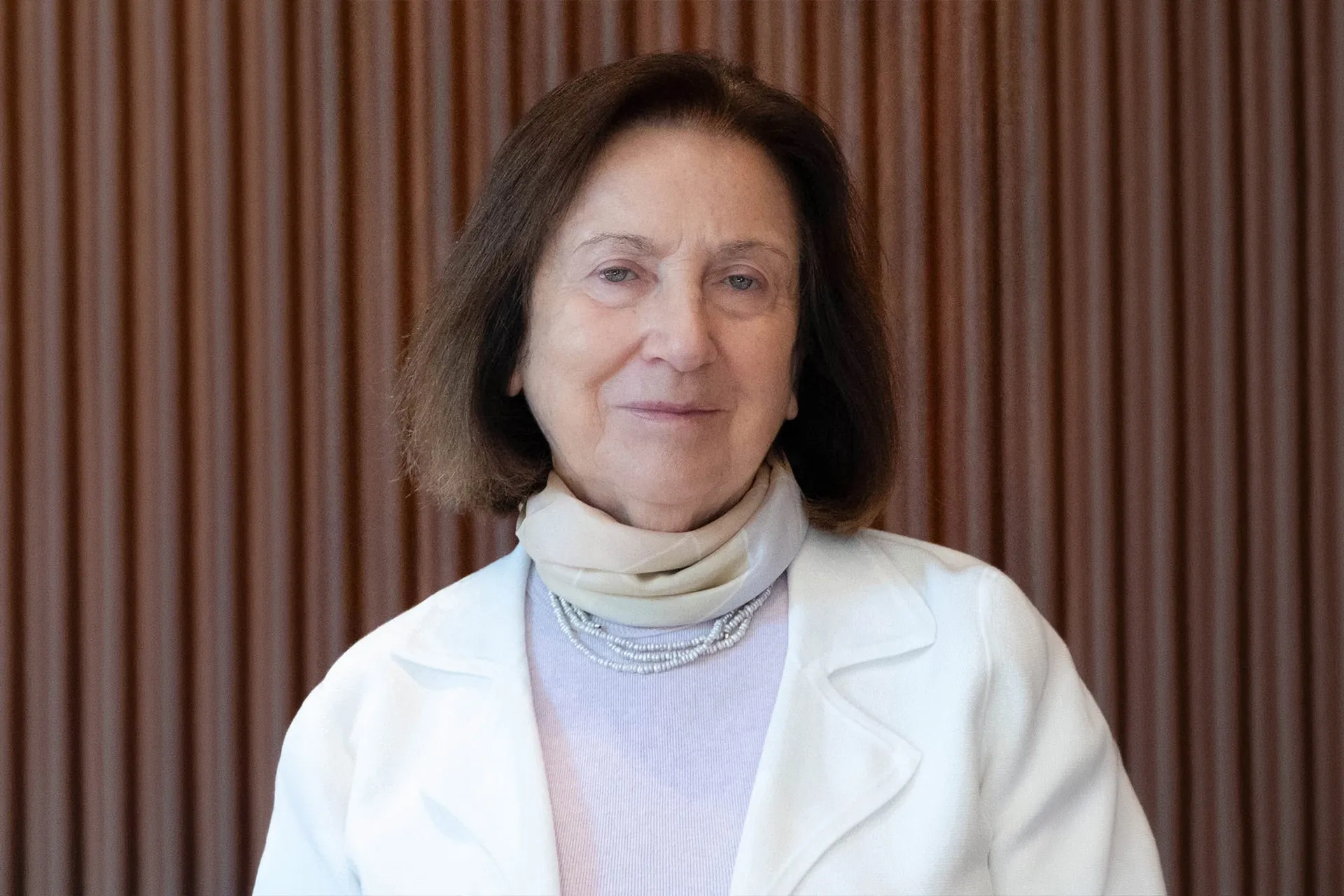
On September 17, 2026, the Claveret Foundation announced that biochemist Svetlana Mojsov, along with Daniel Drucker and Jens Juul Holst, had been named to the Citation Laureates in the field of medicine or physiology, in recognition of their research that helped discover the GLP-1 hormone and understand its activity within the body.
The selection of “Claveret” receives widespread attention every year, because a number of scientists included by the Foundation in its lists later won the Nobel Prize. However, the list does not mean an official nomination for the award, nor does it represent a confirmed prediction of winning in a particular year.
However, the selection brought Mogosov’s name back to the forefront days before the Nobel Prize in Medicine was announced for the year 2026, more than 4 decades after her research became part of the scientific basis for drugs that changed the treatment of diabetes and obesity.
But Mozhev’s story did not begin with Ozembek or Wigovi, but rather with a small series of amino acids that caught her attention in a laboratory in Boston in 1983.
31 amino acids that changed the story
In the early 1980s, scientists had discovered that the gene responsible for producing the hormone glucagon does not produce this hormone alone, but rather produces a larger protein that contains other parts similar to it, including a “mini-protein” peptide called “GLP-1.”
But scientists did not know precisely which form of this peptide works inside the body, nor what its true function is.
While Svetlana Mojsov was reviewing the protein sequence, she noticed that GLP-1 might not work in its complete form, consisting of 37 amino acids, but rather after the first 6 acids were cut from it. Thus, a shorter form consisting of 31 amino acids appeared, known as “GLP-1 (37-37)” (GLP-1 (7-37)).
This was not just a chemical observation; Scientists have known for years that taking sugar orally leads to the secretion of more insulin than giving the same amount intravenously, which means that the intestines release hormonal signals that help the pancreas after eating. Mojsov thought that the short form of GLP-1 might be one of these hormones.
From idea to laboratory
Mojsov began manufacturing variants of GLP-1 in the laboratory using her long experience in manufacturing peptides. But the hypothesis took years to be proven.
In 1986, experiments showed that the short form of GLP-1(37-7) was indeed found naturally in the intestine. A more important step came in 1987, when Mojsov and her colleagues demonstrated that this peptide was able to stimulate insulin secretion from the pancreas, while the longer form did not show the same effect as efficiently.
In 1992, a study on humans showed that GLP-1 can stimulate insulin secretion and lower blood sugar levels, beginning a new phase in thinking about the possibility of using this pathway to treat diabetes.
Today, scientists know two main active forms of the hormone: GLP-1 (37-7), consisting of 31 amino acids, and GLP-1 (36-7) amide, consisting of 30 amino acids, which is the most common form in the human body.
Before GLP-1…glucagon challenge
This discovery was not made in vain. Mojsov, who was born in 1947 in Skopje, studied physical chemistry at the University of Belgrade, then moved to Rockefeller University in the United States, where she obtained a doctorate in biochemistry in 1978.
Her professor was Bruce Merrifield, who went on to win the Nobel Prize in Chemistry in 1984 for developing a method for synthesizing peptides on a solid support.
During her studies, Mojsov chose to work on the hormone glucagon, which helps raise blood sugar levels. Manufacturing this hormone in the laboratory was very difficult at that time, but after about a year and a half of attempts, she succeeded in developing a method to manufacture and purify it.
This expertise in manufacturing peptides was later key to her research on GLP-1. After obtaining her doctorate, she stayed at the Merrifield Laboratory for about 5 years, before moving to Boston in 1983 with her husband, physician and scientist Michel Nossenzweig.
There she joined the Endocrinology Unit at Massachusetts General Hospital and managed a facility that specialized in manufacturing peptides for research projects.
When the idea turned into a medicine
GLP-1 research has not turned directly into a treatment. The natural hormone breaks down very quickly within the body, so researchers and pharmaceutical companies had to develop molecules that could mimic its effect and last for a longer period.
Over the years, a class of drugs known as “GLP-1 receptor agonists” emerged, and they became widely used in the treatment of type 2 diabetes, and then in the treatment of obesity.
These drugs include “Liraglutide”, which is marketed as Victoza for treating diabetes and Saxenda for treating obesity, “Semaglutide” which is marketed as Ozambic and Rebelsus for diabetes, and Wegovi for weight management.
Mojsov is listed as a co-inventor on a number of patents related to the use of GLP-1 in the treatment of diabetes.
But it is important to distinguish between her scientific role and the development of modern drugs themselves. Mojsov did not invent Ozambik or Wigovi, but rather she was one of the scientists who revealed the biological basis that made the development of these drugs possible.
Recognition came decades later
Despite the importance of her research, for many years Mogesov’s role was not as well known as some other scientists in the GLB-1 story. But the great success of diabetes and obesity drugs has revived interest in the history of the discovery of the hormone, and the role that Mogsouf played in determining its active form and proving its effect.
Since 2023, a wide wave of honors has begun. She received the VinFuture Award and was included by Nature magazine among the 10 most prominent figures who influenced science during the year.
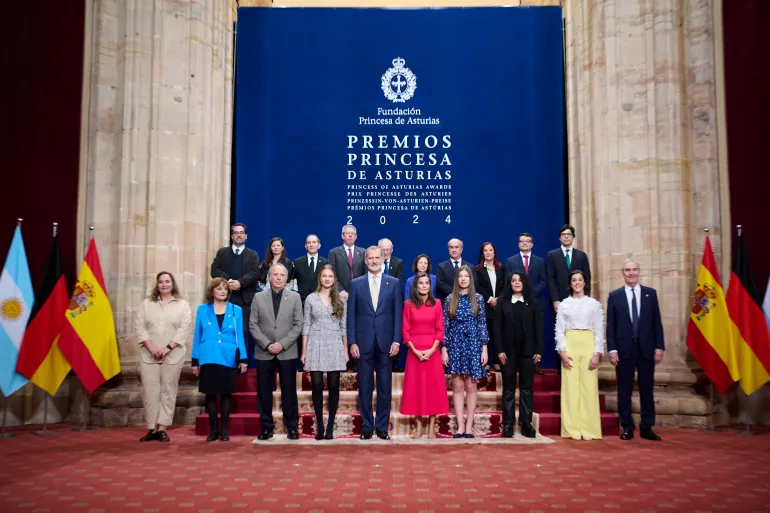
In 2024, she received the Pearl Meister Greengard Award, and Time magazine included her among the 100 most influential people. She also received the Tang Award, the Princess of Asturias Award for Scientific and Technical Research, and the Lasker DeBakey Award for Clinical Medical Research.
The awards continued in 2025, when she received the Warren Triple Prize, the Breakthrough Prize in Life Sciences, and other scientific awards, and she was elected to the US National Academy of Sciences.
In 2026, she received the King Faisal Prize in Medicine, in recognition of research that contributed to a transformation in the treatment of obesity. The Rockefeller University also promoted her in May 2026 to the rank of “research professor.”
Why did Claverette return her name to the Nobel Circle?
Claveret relies on a massive analysis of scientific research and its citations, in addition to the evaluation of specialized experts, to select scientists whose work it believes has made an exceptional impact in their fields.
The institution analyzes tens of millions of published and indexed papers since 1970, while only a very small percentage of scientific papers fall into the highest category in terms of number of citations.
Since launching the Science Laureates program in 2002, Claveret has selected hundreds of scientists, 89 of whom have subsequently won Nobel Prizes. However, this does not mean that the list predicts who will win each year, but rather refers to scientists whose achievements the Foundation believes stand at the level of work previously honored by Nobel.
In 2026, Mojsov was not selected alone, but rather along with Daniel Drucker and Jens Juul Holst, in recognition of their complementary contributions to identifying GLP-1 and understanding its activity within the body.
This reflects an important fact: the GLP-1 drug revolution was not the result of a single discovery or a single scientist, but rather the result of decades of work involving researchers from different institutions and countries.
But in the midst of this long story, a crucial moment remains; A scientist looks at a chain of 37 amino acids and assumes that the real secret lies in a shorter part of just 31.
After more than 40 years, the path that began with that idea became the basis for a class of the most famous diabetes and obesity drugs in the world, while the name of Svetlana Mojsov returned to the forefront again, this time in the circle of achievements that may one day find its way to the Nobel Prize.