

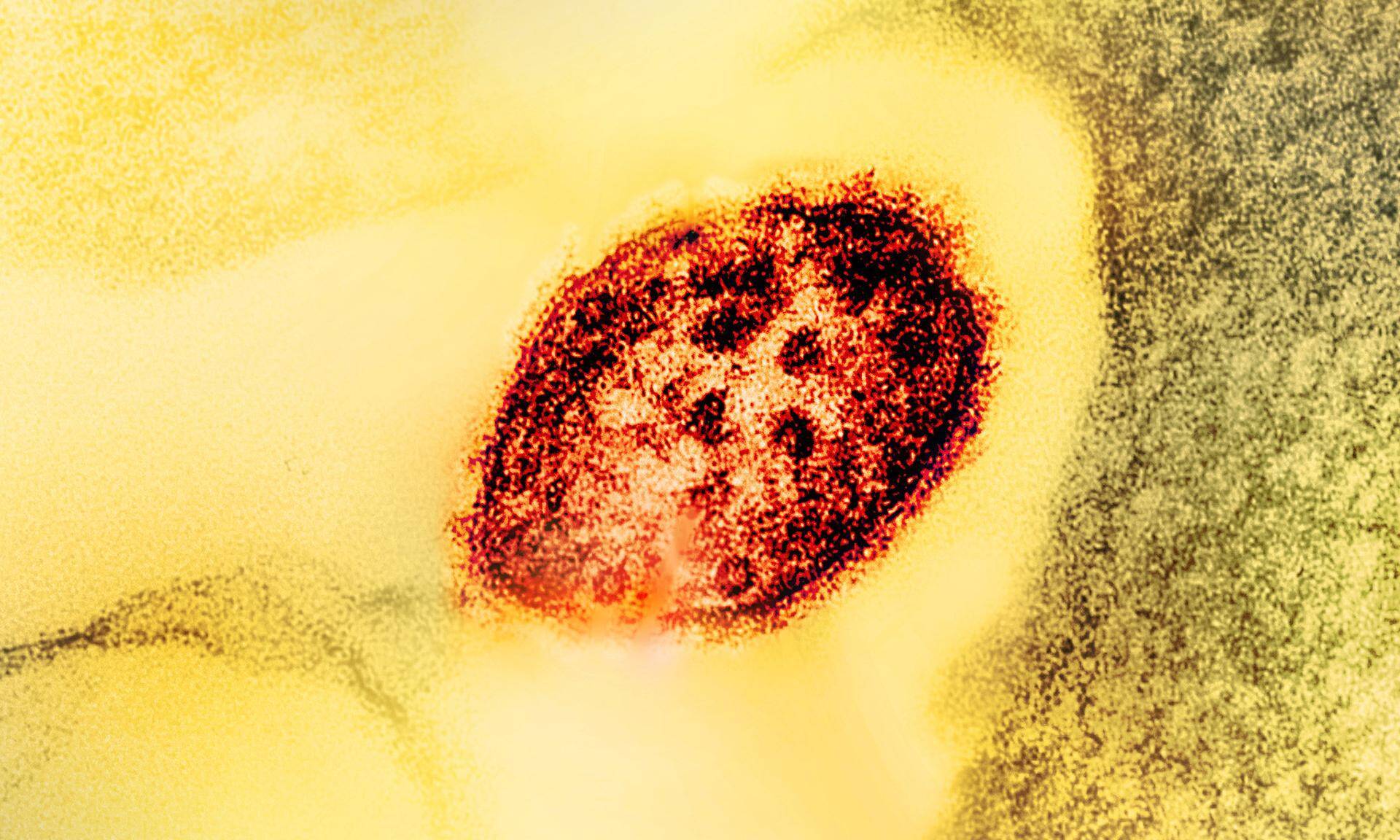
A mysterious disease has killed between 30 and 143 people in the Democratic Republic of the Congo since November 10, and has not yet been identified. Are we facing a new epidemic, as was the case with Covid-19?
All the deaths were reported in Panzi, Kwangju Province, southwestern Democratic Republic of the Congo, with symptoms including fever, headache, runny nose, cough, difficulty breathing and anemia, according to a report by Hattie Wilmoth in Newsweek.
“Laboratory test results are still due, so this is an undiagnosed and unknown disease at this time,” a WHO spokesperson told Newsweek.
“We will receive the results of the initial laboratory tests within the next few days from laboratories in the nearby city of Kikwit,” he added.
Official numbers for this outbreak vary. Gwangju province has recorded 394 cases and 30 deaths from the undiagnosed disease, a WHO spokesperson told Newsweek.
However, a statement published by the DRC’s Ministry of Health on X on Tuesday said 79 people had died. Both Reuters and the Associated Press reported that DRC officials believe 143 people have died.
A WHO spokesperson said: “The cases started in mid-October and the Ministry of Health picked up the signal on November 29.” “Among the cases reported as of December 3, 63% are children under the age of 15, who also account for 81% of the deaths reported. Among these, young children under the age of five are particularly affected.”
All recorded deaths were reported between 10 and 25 November, so it is unclear how many people may have died since then.
Investigations are underway to determine the cause of death of these people. DRC health authorities in Kwango have been working with a local WHO team since the end of November to strengthen disease surveillance and identify cases, according to a WHO statement published on Friday.
WHO is also sending a team of international experts – epidemiologists, clinicians, laboratory technicians, infection prevention and control and risk communication experts – to the scene to help, bringing with them medicines and laboratory supplies.
A WHO spokesperson said, “The area is rural and remote, and access has become more difficult due to the ongoing rainy season. The area is also affected by conflict, and malnutrition rates are high.”
“Teams will conduct tests for influenza (it is peak flu season in the region), Covid-19, malaria, measles, etc. “It is also possible that multiple diseases could be picked up through this signal.”
They said many patients suffer from malnutrition and anemia, as well as flu-like symptoms, but this may reflect the general health of the population rather than the disease itself.
What is the broader threat of this disease?
Hong Kong’s Center for Health Protection announced on Thursday that it will step up health screenings at airports for flights arriving from Africa in response to the situation in the Democratic Republic of the Congo.
Additionally, a hospital in Ohio announced that a patient who recently arrived in the United States from Tanzania was placed in isolation at the hospital with flu-like symptoms — but it is unclear if this is a related incident.
An epidemiologist told Reuters that it was mainly women and children who were severely affected by the disease. But little is known about the disease yet.
DRC health officials are urgently investigating this incident to determine the cause of this deadly outbreak. First, they will look at potential diseases known to be endemic in the area such as malaria, dengue or chikungunya.
But they are likely to face difficulties in discovering the cause due to infrastructure problems for diagnostic tests, as well as difficulties in collecting samples, transporting them to laboratories and conducting tests, Andrew Lee, professor of public health, University of Sheffield, wrote in The Conversation.
In low-income countries, such as the Democratic Republic of the Congo, many clinical laboratories can only test for common pathogens. Limitations on the quality and performance of some of its clinical laboratories are also a problem.
If it’s not one of the usual suspects, detecting rare pathogens often requires sending samples to more specialized laboratories that can perform specialized tests, such as gene sequencing.
This may mean that samples have to be sent to laboratories abroad. However, international sharing of such biological samples is highly controversial due to concerns that the benefits of doing so are often not shared fairly between countries.
Another priority for local health officials is understanding the extent and severity of the outbreak. The high death rate and number of cases of infected people is alarming. However, it is not easy to determine its true extent, as not all infected patients will go undetected.
Not all sufferers seek care. Clinics may be few and far between, especially in remote areas, and are often understaffed. In fact, the Democratic Republic of the Congo has fewer than two doctors per 10,000 people (compared to the United Kingdom, which has more than 31 doctors per 10,000 people).
Even if patients attend a hospital or clinic, not all infections will be diagnosed. Not all patients will be tested for infection, and not all detected infections will be reported to health authorities.
The lack of information about the cause, extent and number of infected people makes it difficult to accurately assess the threat it poses. But this is not an isolated danger. New infectious disease outbreaks have occurred regularly over the years.
This is partly due to climate change, changing demographics, urbanization and deforestation that enable the “spread” of infection from animals to humans.
Scientist Andrew Lee said it was unfortunate that our global infectious disease radar was broken. Disease surveillance is fragmented globally.
In poorer countries, there will be many areas where diseases go undetected or are discovered late. Monitoring services are often poorly resourced and understaffed, staff often lack training or supervision, and reporting may not be standardized.
There is often a significant delay from the time a person is infected and diagnosed with the disease to the time they report it to public health authorities. This, in turn, delays disease control responses to outbreaks. These problems are worse in resource-poor environments, such as sub-Saharan Africa.
What solutions are being tried?
The 7-1-7 initiative is a WHO initiative being piloted in several countries across Africa, South America and South Asia. This initiative sets ambitious goals of detecting infectious disease outbreaks within 7 days, notifying public health authorities within 1 day, and 7 days to complete the initial response. This is a laudable goal, but it may be too late for diseases to spread rapidly.
Another solution is to improve integration and coordination between existing monitoring activities and systems. Among these WHO initiatives is Integrated Disease Surveillance and Response, which has been deployed mainly in Africa over the past two decades.
Integrated disease surveillance and response has had mixed success to date. A recent review found problems with the IT system, financial constraints, and data sharing problems, as well as workforce gaps.
Other global initiatives include the International Pathogen Surveillance Network assembled by the World Health Organization for the Epidemiological Intelligence Centre, and recent efforts to strengthen collaborative surveillance across different agencies and sectors (from human health to animal health and the environment) to work together and share information as well as expertise.
The effectiveness of such initiatives remains to be seen, but it is a step in the right direction. Without better global disease surveillance, we may not detect the next pandemic until it is too late.
Are we facing a new Corona?
We hope that the answer is no, and perhaps the disease is known but rare and has not been diagnosed in samples, or perhaps it is a new disease but not as highly contagious as Corona. We have to wait in the coming days to get the answer.
Experts caution against speculating about the potential broader threat of this outbreak because there are still many unknowns.
“At the time of writing, there is an enormous amount of uncertainty about this outbreak,” Dr. Michael Head, senior research fellow in global health at the University of Southampton in the UK, said in a statement.
“Such outbreaks will occur many times in different parts of the world. They are usually controlled without spreading widely, and we may or may not ever discover the exact germ that caused the infection,” he added.
He said there are multiple possible infectious and non-infectious causes of the disease.
“Speculating about the causes of non-specific disease events – which occur periodically, especially in African countries – is not helpful and can sometimes be harmful,” Dunning said. “Calling this incident a ‘Disease X’ outbreak at this stage is simply wrong and unproductive.” .